President Donald Trump has said the US could take over the Strait of Hormuz and its oil resources, calling the move a probable economic windfall. Trump announced this possible move at the same time that Iranian forces said they had shot down another American fighter jet in the current conflict.
Taking to Truth Social on Friday, April 3, PresidentTrump described the strait as a “gusher” that could generate massive profits if properly secured. “We could open it up, take the oil, and make it a great profit source for the world,” the statement read in part.
The Strait of Hormuz, a narrow passage between the Persian Gulf and the Gulf of Oman, handles about one-fifth of global oil and liquefied natural gas shipments in normal times.
Iran has restricted most traffic through it since the war began in late February 2026, when U.S. and Israeli forces launched hundreds of strikes on Iranian military targets, nuclear sites, and infrastructure.
Shipping data show that only a handful of vessels, frequently associated with non-hostile nations or Iran itself, have recently passed through, driving up global oil prices and forcing reroutes.
Also Read: U.S. Military Speaks After Iran Reportedly Downed Fighter Jet in the Strait of Hormuz
Trump has repeatedly downplayed U.S. reliance on the strait, noting America’s status as a top energy producer.
In recent days, he told other nations reliant on the route to “grab it and cherish it” or show courage by getting involved in securing it.
He has also referred to the waterway jokingly as the “Strait of Trump” during a speech in Miami. His latest post ties directly into those themes, positioning American action as both strategic and beneficial.
Impact of President Trump’s statement.
Trump’s statemnt adds tension to an already volatile battlefield. During earlier hours of Friday, Iranian state media, including outlets tied to the Islamic Revolutionary Guard Corps, reported shooting down a second U.S. F-35 stealth fighter over central Iran.
They released photos purporting to show wreckage and said the pilot likely did not survive. U.S. Central Command has not confirmed the loss of any fighter jet in that incident and has previously denied similar Iranian claims.
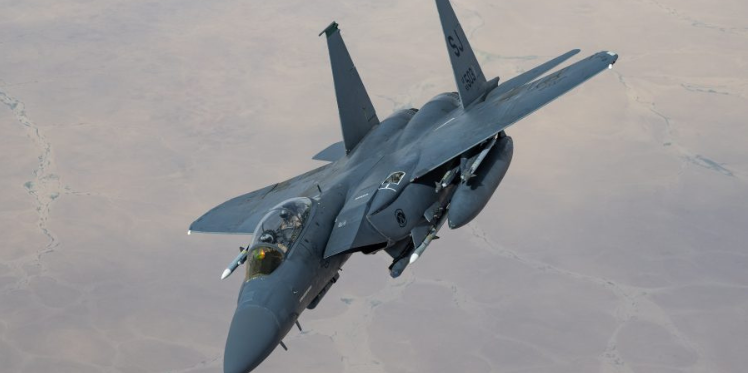
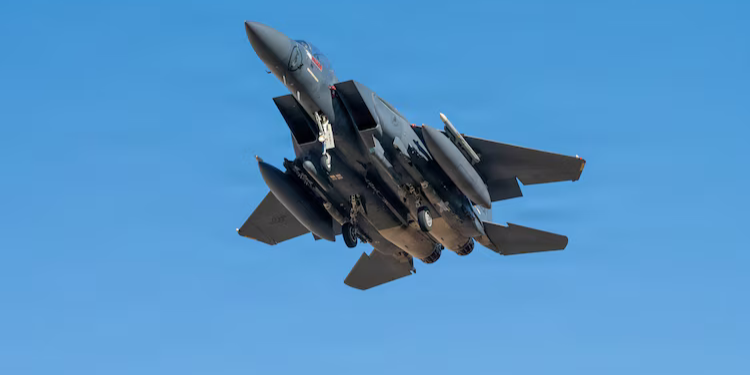
Media reports indicated that the pictures of the wreckage resembled an American F-15E Strike Eagle and not a U.S. F-35 stealth fighter.
Search for pilots underway.
Axios, while citing Iranian media and a source familiar with the incident, confirmed that Iran had indeed shot down the fighter jet.
Two pilots reportedly ejected successfully, and Iran is actively urging civilians to report or take them to the authorities if they spot them, and get a reward.
U.S. military aircraft were also reportedly seen moving around the area where the jet was downed. It was said they were searching for the two pilots who had ejected from the fighter.
Earlier in the conflict, one F-35 sustained damage from suspected Iranian fire and made an emergency landing at a regional U.S. base.
American officials said it was the first time a U.S. plane had been hit for sure during combat missions over Iran.
As of April 2, 2026, the Pentagon says that no American fighter jets have been completely shot down. However, they admit they are still investigating the loss of drones and other assets.
Also Read: Iran Confirms Shooting Down Another U.S. Fighter Jet
The war started when the U.S. and Israel bombed Iran’s missile systems, air defenses, and nuclear program.
Iran fired missiles and drones at U.S. positions and Gulf allies, blocked shipping in the strait, and attacked oil facilities in nearby countries.
Iranian sources say that thousands of people have died, but it is hard to get independent confirmation of this because of the chaos.
Diplomatic attempts are taking shape.
It is in the public domain that diplomatic efforts to end the fighting are still underway behind the scenes. Trump has said Iran’s leadership floated ceasefire ideas, but he conditioned any pause on reopening the strait and other concessions.
Iran has rejected key U.S. demands and denied seeking talks on American terms. A deadline of April 6 for the Strait to reopen has been reported, after which further U.S. strikes on energy sites could follow.
It is expected that the suggestion by Trump could pressure Iran to yield or harden its resistance, thereby escalating the war.