United States Vice President JD Vance has publicly responded to speculation about the 2028 Republican presidential race, brushing aside discussion of a possible future ticket with Secretary of State Marco Rubio.
On Wednesday, May 13, Vance sought to dismiss the mounting speculation just days after President Donald Trump publicly described the pair as a potential “dream team.”
Speaking at a White House news conference, the second-in-command indicated he had little interest in discussing future political ambitions while serving in the current administration.
“I think most Americans would rightly view someone who’s barely been in one office for a year and a half angling for a job two and a half years down the road negatively,” Vance said.
“There are few topics I want to talk about less,” he added.
Trump calls possible 2028 Vance, Rubio ticket ‘dream team’
The vice president’s remarks come amid increasing attention around possible Republican successors to Trump, even as the president himself remains constitutionally barred from seeking another term after the completion of his current presidency.
Speculation intensified earlier this week when Trump openly discussed both Vance and Rubio during a National Police Week dinner event held in the Rose Garden at the White House.
“Who likes J.D. Vance? Who likes Marco Rubio? All right. Sounds like a good ticket,” Trump told attendees while polling the audience.
“J.D. is a perfect — that was a perfect ticket,” the president continued before adding, “By the way, I do believe that’s a dream team.”
Trump stopped short of formally endorsing either man for a future presidential run, cautioning that his comments should not be interpreted as an official endorsement.
“That does not mean you have my endorsement under any circumstance,” he said. “But you know … I think it sounds like presidential candidate and vice presidential candidate.”
The comments nevertheless added fuel to ongoing discussions within Republican political circles over who could emerge as the party’s leading figure after Trump.
Both Vance and Rubio currently occupy prominent positions within the administration and have increasingly drawn attention from Republican voters, donors, and strategists.
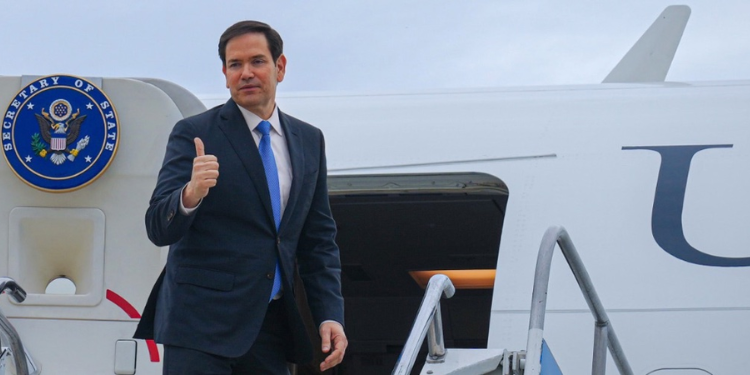
Rubio, who unsuccessfully sought the Republican presidential nomination in 2016 before losing to Trump during the primaries, later returned to the Senate and eventually joined Trump’s second administration as secretary of state.
In recent months, Rubio has also taken on additional responsibilities, including serving as acting national security adviser.
Trump has repeatedly praised Rubio’s performance in office. “Marco Rubio is doing a great job,” Trump told reporters in March.
“I think he’s going to go down as the greatest Secretary of State in history.”
Vance, meanwhile, was serving his first term in the Senate before Trump selected him as his running mate during the 2024 election campaign. Since taking office as vice president, he has become one of the administration’s most visible public defenders on both domestic and foreign policy issues.
Both leaders focused on the present
Despite continued questioning about their political futures, both Vance and Rubio have publicly maintained that their immediate focus remains on the current administration rather than future campaigns.
Also Read: Rubio vs AOC? Americans Reveal Early White House Favorite in New 2028 Poll
In an interview with Vanity Fair in December, Rubio said he would be “one of the first people to support” Vance if the vice president eventually pursued a White House bid.
Recent polling, however, suggests Vance currently holds an early advantage among Republican primary voters.
A new Focaldata poll, conducted in partnership with the Financial Times, showed Vance leading potential Republican contenders for 2028, with 40 percent support among likely GOP primary voters surveyed.
According to the poll, Rubio received 14 percent of the vote, while Donald Trump Jr. garnered 15 percent. Ron DeSantis trailed with 8 percent support.
The survey was conducted between May 1 and May 5 among 1,291 likely Republican primary voters.
Across the Democratic field, the same poll showed Kamala Harris leading with 38 percent support among likely Democratic primary voters, ahead of Gavin Newsom at 16 percent.