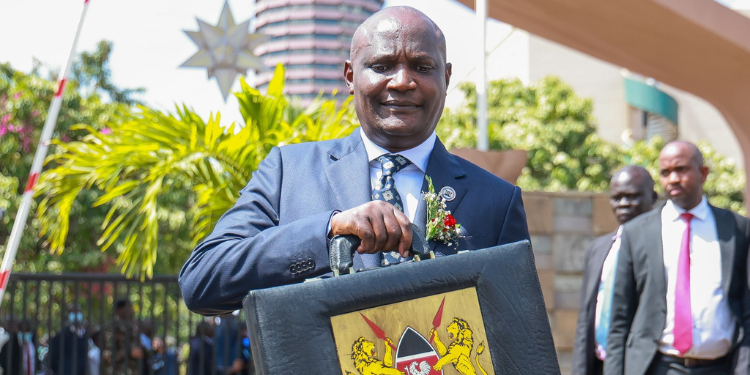
Cabinet Secretary for the National Treasury, John Mbadi, has confirmed that Kenya is preparing to raise KSh 27.2 billion (US$170 million) through a Japan-linked Samurai financing arrangement.
The new bond issuance in Japan will now be priced at an estimated 4.0%–5.0% per annum.
The development comes as Kenya continues to engage global financial markets to support budget financing and infrastructure development, while balancing rising debt servicing costs.
In recent years, Kenya has explored this market as part of efforts to diversify external borrowing away from dollar-heavy Eurobond exposure.
The country engaged the Japan-backed financing estimated at around US$169 million, which have supported development-oriented projects in infrastructure and industrial sectors.
Kenya’s Renewed Push into Japanese Capital Markets
Kenya’s engagement with Japanese financial markets has gradually expanded over time, with the government increasingly looking at Samurai bonds and related financing structures as alternative sources of funding.
Samurai bonds are yen-denominated debt instruments issued in Japan by foreign governments or corporations, aimed at tapping Japanese institutional investors.
Also Read: Kenya Asks for Emergency Loan From World Bank to Protect Itself Against Iran War
In April, Kenya was set to receive a combined KSh 43.3 billion ($335 million) in funding from the African Development Bank (AfDB) and a Samurai loan deal secured in 2025 and the funds were expected before June 30, 2026.
The two inflows are expected to complement other major external disbursements, including a KSh 96.9 billion (US$750 million) World Bank loan and a KSh 64.6 billion (US$500 million) sustainability-linked financing facility designed to support Kenya’s external borrowing target of KSh 225.8 billion for the fiscal year ending June 30.
In this latest move, the National Treasury is seeking to raise KSh 27.2 billion (US$170 million), continuing a trend of targeted engagements with Japan-based lenders and investors.
In August 2025, the Kenyan government secured a Japan-backed financing facilities at US$169 million (25 billion yen), which was set to support development projects in sectors such as infrastructure and industrial growth.
Diversification of Borrowing Strategy and Debt Management Focus
Kenya’s external financing approach has increasingly emphasized diversification, with Samurai-linked instruments forming part of a broader mix that includes Eurobonds, concessional loans, and other emerging market instruments.
Also Read: Brand-New Vehicles in Kenya to Cost the Same as Used Imports as Local Assembly Takes Off
The Treasury has been pursuing options that help reduce reliance on high-cost commercial borrowing while spreading currency exposure across different markets.
Samurai financing arrangement is seen as part of this shift, particularly given the potential benefits of accessing Japan’s relatively low-interest-rate environment.
The National Treasury has also been exploring other international financing mechanisms, including sustainability-linked instruments and regional market participation, as part of efforts to strengthen fiscal resilience and broaden investor participation in Kenya’s sovereign funding programs.