Equity Group Holdings has disclosed a KSh99.5 billion investment in social impact and sustainability initiatives in 2025, alongside KSh404 billion in loans extended to micro, small and medium-sized enterprises (MSMEs).
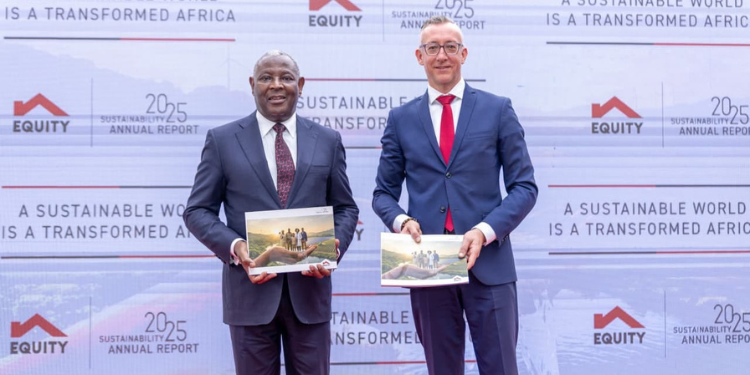
The figures were published in the Group’s 2025 Sustainability Report released on Thursday, November 5, detailing its financing and development programmes across Kenya and other regional markets.
The report shows that Equity also reached 622,525 small and medium-sized farmers through agricultural programmes and supported 60,009 scholars through university, technical and vocational education and global scholarship initiatives.
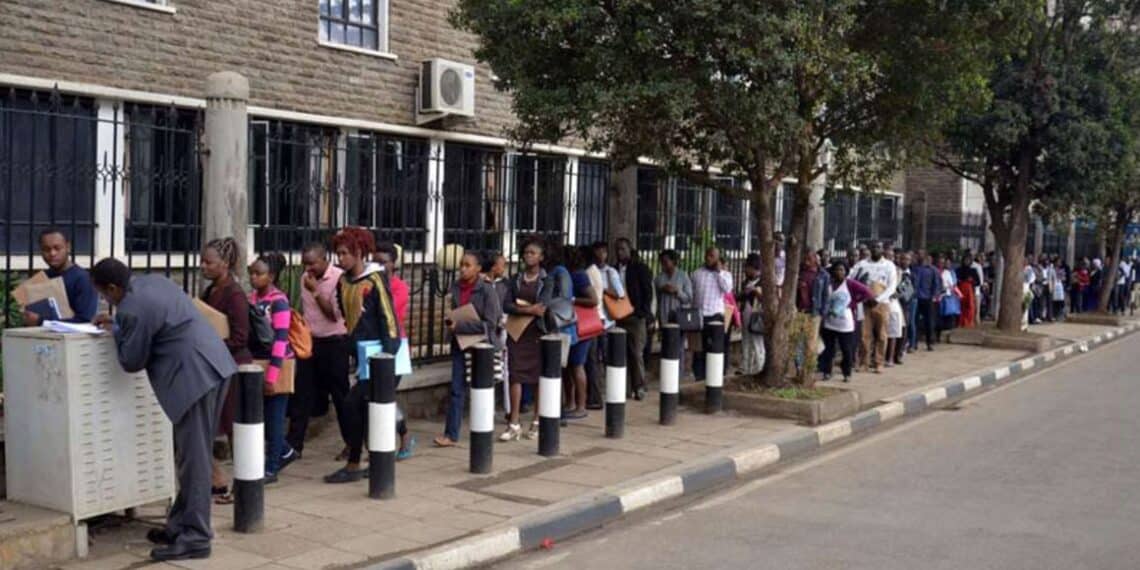
The KSh404 billion (US$3.11 billion) in MSME financing was channelled through the Group’s Enterprise Development and Financial Inclusion programme, which seeks to expand access to credit and support business growth.
Beyond lending, the Group trained 962,924 entrepreneurs in business management and entrepreneurship through the Equity Group Foundation. It also provided financial education to 2,490,471 women and young people.
Local suppliers accounted for 90 per cent of Equity’s procurement expenditure in 2025, representing KSh47.59 billion.
Equity’s Support for Farmers 60,009 Students Receive Scholarships
The Group reached 622,525 small and medium-sized farmers through climate-smart agricultural financing, capacity building and agricultural value-chain programmes.
The interventions were designed to improve farm productivity, strengthen food security and help farmers manage climate-related risks.
The report, however, does not provide a separate monetary figure for financing specifically allocated to farmers.
Education remained another major area of investment, with the Group reporting 60,009 scholarships across its programmes.
These included 29,515 university scholars, 4,039 students in technical and vocational education and training institutions and 1,115 global scholars.
Equity also facilitated 9,772 paid internships to support young people’s transition from education into employment.
Through the Equity Leaders Programme, 415 innovators secured employment after completing a 12-month technology apprenticeship.
The foundation also maintained partnerships with organisations including Huawei ICT Academy, Amazon Web Services, Moringa School and WorldQuant University to expand digital skills development.
Also Read: Equity CEO James Mwangi Appointed to New Global Role
Healthcare and Social Protection
The report further details the Group’s interventions in healthcare and social protection.
Equity’s medical franchise, Equity Afya, expanded to 150 outpatient medical centres in Kenya and the Democratic Republic of Congo, recording more than 4.62 million cumulative patient visits.
Meanwhile, its social protection programmes reached 5.94 million people, with KSh173.5 billion disbursed through cash transfers.
The programmes also extended to refugees, with 115 receiving loans worth KSh57.9 million and 772 benefiting from training.
Equity’s Climate Investment
On environmental conservation, Equity deployed more than KSh26 billion in sustainable and climate-aligned financing during 2025.
It recorded more than 47,000 climate-related transactions under the International Finance Corporation’s Climate Adaptation Finance Initiative.
The Group also distributed 75,855 clean-energy products and planted 9.1 million trees during the year, bringing its cumulative tree-planting total to 44.6 million.
Also Read: Equity Group Appoints New Company Secretary
James Mwangi on the Investment
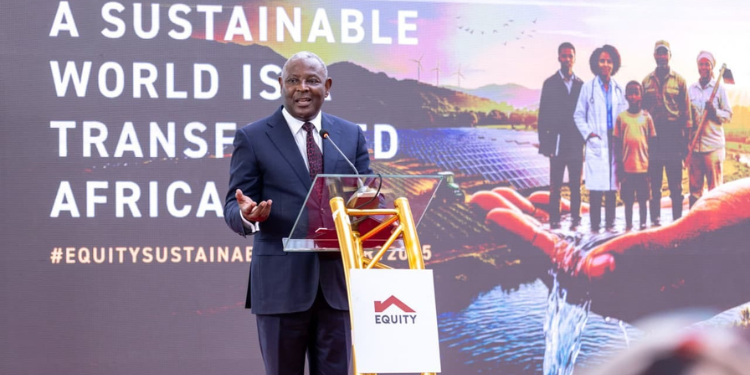
Equity Group Managing Director and Chief Executive Officer James Mwangi said the results demonstrated how commercial growth could support sustainable development.
“Our 2025 performance demonstrates that commercial success and sustainable development are not competing priorities, but mutually reinforcing drivers of long-term prosperity,” Mwangi said.
He added that the Group would continue directing financing towards economic resilience while protecting the natural systems that support prosperity.
Separately, Equity Bank Kenya published its inaugural Sustainable Development Impact Disclosure, setting out targets for the composition of its loan book by 2030.
The bank plans to increase the share of lending allocated to food and agriculture to 30 per cent, MSMEs to 65 per cent and manufacturing to 15 per cent.
It also plans to double its Equity Afya network to 300 clinics.
The disclosure shows that MSMEs accounted for 56.6 per cent of the bank’s loan book in 2025, up from 50.1 per cent in 2023. Lending to women increased from 18 per cent to 23.9 per cent over the same period.
The bank committed to monitoring and reporting its progress annually, including the positive and negative impacts of its activities.
Follow our WhatsApp Channel and X Account for real-time news updates, and subscribe to our YouTube Channel for in-depth interviews.