The World Bank has exposed questionable electricity contracts, alleged bribery involving Kenya Power employees and undisclosed ownership of power generation companies, raising fresh concerns over the factors driving up electricity bills for Kenyan households and businesses.
In its November 2026 Kenya Economic Update, the lender said Kenya’s electricity costs were significantly higher than those of several comparable economies, despite the country’s progress in expanding access to power and investing in renewable energy.
Kenyan businesses pay 17.5 US cents per kilowatt-hour, compared to 11.8 cents in Uganda, 10 cents in South Africa and 7.8 cents in Vietnam, according to the report.
For households, the average cost stands at 22 US cents per kilowatt-hour, compared to 17.2 cents in Uganda, 11.9 cents in Morocco, and 7.8 cents in Vietnam.
The World Bank noted that business electricity costs in Kenya were nearly 50 per cent higher than in Uganda and more than double those in Vietnam.
“While Kenya has made impressive gains in expanding access to electricity, power remains costly compared to structural and aspirational peers,” the lender stated.
It attributed the high costs partly to expensive power purchase agreements (PPAs), limited competition in awarding electricity generation contracts and weaknesses in the management of the power sector.
World Bank exposes power deals driving up electricity costs
The report identified power purchase agreements between Kenya Power and independent power producers (IPPs) as one of the major areas raising concerns over electricity costs.
These long-term contracts determine the terms under which electricity is purchased from private generators and supplied to the national grid.
The World Bank said some agreements were negotiated without competitive procurement, creating opportunities for expensive contracts that ultimately affect consumers.
“Opaque and rent-generating power purchase agreements (PPAs), stemming from governance weaknesses in the procurement of electricity from private providers, have contributed to high costs in the electricity sector,” the report stated.
The lender traced some of the agreements to emergency electricity procurement following declining hydropower generation during droughts in the late 1990s and late 2000s.
Although the emergency purchases were necessary to address electricity shortages at the time, the World Bank questioned why similar procurement practices continued without consistently applying competitive procedures.
A 2021 assessment by Energy, Environment and Development Advisory and the Energy for Growth Hub found that only 24 per cent of 42 power purchase agreements signed by Kenya Power were known to have undergone competitive procurement.
The report noted that, based on international evidence, competitively procured solar projects were about 47 per cent cheaper than directly negotiated deals.
Kenya drafted a Renewable Energy Auction Policy in 2021 to introduce a more competitive framework for awarding electricity generation contracts. However, the World Bank said the policy had not yet been implemented.
Also Read: Kenya Power Orders Several Kenyans to Vacate Land Within 90 Days
Nine power companies with undisclosed owners
The lender also raised questions about the ownership of companies supplying electricity to Kenya, warning that limited transparency could conceal conflicts of interest.
Citing findings by The Institute for Social Accountability (TISA), the World Bank revealed that the beneficial owners of nine independent power producer companies had not been disclosed, even when requested by Parliament’s Energy Committee.
The Business Registration Service had provided the committee with lists of shareholders and directors, but most of the companies listed foreign corporations as shareholders, making it difficult to establish their ultimate beneficial owners.
The World Bank said this was particularly concerning because the Companies Act, 2015, requires companies, including those registered in other jurisdictions, to disclose their beneficial owners to the Business Registration Service.
The report also found that some public officials involved in approving electricity projects later worked for or became owners of companies involved in power generation.
“For several IPPs, public officials involved in the approval of the projects were later employed by or owned relevant generation companies, raising concerns about conflicts of interest,” the lender disclosed.
The institution noted that amendments to some power purchase agreements also appeared to favour electricity providers without public disclosure or clear justifications.
It added that some renewable energy projects were awarded without competitive bidding and despite not appearing in Kenya’s Least Cost Power Development Plan.
KSh19 billion paid for electricity that was never used
The World Bank also revisited the Lake Turkana Wind Power project, highlighting the financial consequences of delays in connecting electricity generation projects to the national grid.
According to the report, delays in constructing the transmission line connecting the project to the grid resulted in the government paying approximately USD150 million under take-or-pay clauses, also known as deemed generated energy penalties, for electricity that was never used.
The amount translates to approximately KSh19.5 billion at an illustrative exchange rate of KSh130 to the dollar.
The lender also cited allegations that land for the project had been acquired unprocedurally.
It further noted that investigations by the Ethics and Anti-Corruption Commission (EACC) into the project had recommended the prosecution of several officials over alleged conspiracy to commit an economic crime, abuse of office, conflict of interest and failure to comply with procurement laws.
The recommendations did not amount to convictions.
The report also noted that some thermal power agreements contained take-or-pay clauses, which guarantee revenue to electricity producers through capacity charges even when they do not sell the full contracted electricity.
It said the guaranteed charges varied significantly across contracts, with some high-cost thermal power plants raising concerns over conflicts of interest.
Also Read: World Bank Exposes the Reality of Kenya’s Job Market as Millions of Youth Seek Employment
World Bank exposes alleged bribery at Kenya Power
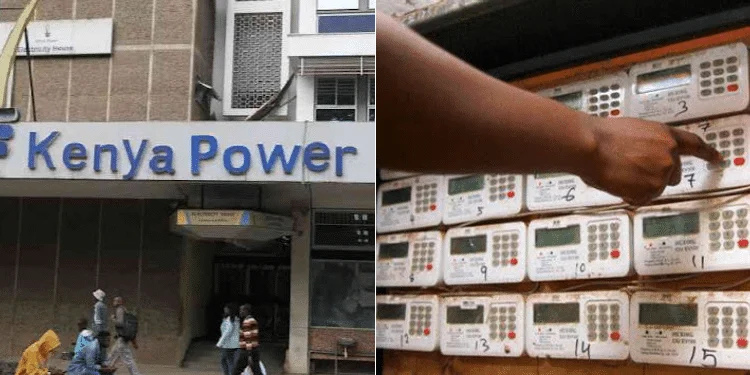
Beyond the contracts with independent power producers, the World Bank raised concerns over alleged corruption involving Kenya Power employees responsible for electricity distribution and customer billing.
Citing EACC audits and investigations into managerial and technical staff since 2023, the lender identified cases in which employees allegedly demanded substantial bribes for illegal electricity reconnections.
The investigations also highlighted the alleged manipulation of prepaid and postpaid electricity systems to divert millions of shillings.
“Integrity challenges at KPLC include systemic issues with employees demanding substantial bribes for illegal reconnections or manipulating prepaid/postpaid systems to divert millions of Kenyan shillings,” the report stated.
The World Bank linked these concerns to persistent electricity theft, billing anomalies and collusion, which contribute to losses within the distribution system.
According to the report, electricity transmission and distribution losses had remained above 23 per cent, against the Energy and Petroleum Regulatory Authority’s target of 16.5 per cent for the 2025/26 financial year.
The regulator’s longer-term target is to reduce the losses to 15 per cent by 2029/30.
The lender attributed the losses to inadequate investment in electricity networks, rapid expansion of rural electricity access, theft and billing irregularities enabled by collusion.
Seven-year moratorium on electricity contracts
The World Bank also noted that concerns about power purchase agreements had previously prompted investigations by the Presidency and Parliament.
The government imposed a moratorium on new power purchase agreements between 2018 and 2025 following concerns over the quality of electricity contracts and their impact on costs.
A Presidential Task Force investigated high electricity prices between 2021 and 2023 and recommended a forensic audit of independent power producers.
The National Assembly subsequently conducted an inquiry into electricity costs in 2025.
The Parliamentary Committee on Energy recommended investigating the fast-tracked approval of a power purchase agreement despite concerns raised by the National Treasury.
The World Bank said the governance problems identified in the investigations pointed to collusive practices involving government and regulatory institutions, state-owned energy companies and independent power producers.
It argued these weaknesses contributed to technical challenges, including high transmission losses and delays in completing transmission lines, as well as higher electricity contract costs.
How cheaper electricity could benefit Kenyans
The lender warned that high electricity costs were affecting manufacturers, increasing operating expenses and undermining the competitiveness of Kenyan businesses against regional and international rivals.
Kenya has made significant progress in expanding electricity access, with approximately 75 per cent of the population connected to power, compared with the Sub-Saharan African average of 53.3 per cent in 2023.
However, the World Bank said the gains in access needed to be accompanied by reforms that would make electricity more affordable.
To demonstrate the potential economic benefits, the lender modelled the impact of a permanent 10 per cent reduction in electricity costs beginning in 2026.
Under its assumptions for a lower-middle-income economy, Kenya’s Gross Domestic Product could increase by approximately 0.27 per cent relative to the baseline.
Private investment could rise by 0.33 per cent, while the real wage bill could increase by 0.29 per cent.
The projections suggest that reducing electricity costs could support manufacturing, encourage investment and improve earnings over the medium term.
The World Bank called for greater competition, transparency and adherence to procurement rules in the power sector, alongside measures to address conflicts of interest.
It also pointed to the need for stronger oversight of electricity contracts and better management of the institutions responsible for generating, transmitting and distributing power.
For Kenyan households and businesses, the findings raise questions about how electricity contracts are negotiated, who ultimately benefits from them and why the cost of power remains higher than in several comparable economies.
Follow our WhatsApp Channel and X Account for real-time news updates and subscribe to our YouTube Channel for in-depth interviews.