
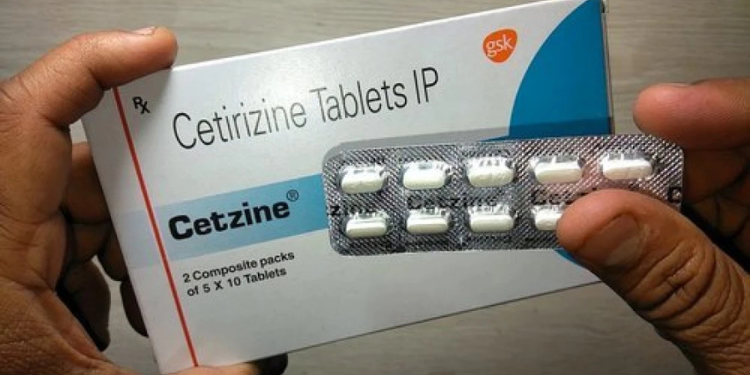
The Ministry of Health has warned Kenyans against misusing cetirizine, an allergy medication that has recently gone viral on social media over claims that it can suppress sexual desire.
Speaking during a High-Level Health Products and Technologies (HPT) Stakeholder Meeting in Nairobi, on Wednesday, November 4, Principal Secretary for Medical Services Ouma Oluga said some Kenyans were discussing the medicine jokingly on social media.
He warned that such conversations could encourage sections of the public to misuse pharmaceutical products.
“I saw people discussing this medicine in a manner that is like a joke, but this also influences some sections of the public to misuse products and medicine,” Oluga said.
The PS revealed that the government could develop a system to trace individuals purchasing cetirizine as part of efforts to monitor its use and prevent potential misuse.
“What we can assure Kenyans is that we can develop a system that can trace everyone, for instance, who has gone to buy cetirizine,” he said.
Also Read: Why Kenya is Using COVID-19 Drug to Treat Ebola
Oluga added that authorities could consider interventions such as directly observed therapy where necessary to ensure patients use medicines appropriately.
He further called for a traceability system that would establish the origin of medicines, the distributors involved and the patients who receive them.
“From a medicine control perspective, it is very important that we trace who manufactured this cetirizine and who sold it, to which patient?” Oluga said.
Ministry of Health Warns Against Cetirizine Misuse as Government Considers Tracking Buyers
According to the PS, such information would enable community health promoters to reach out to individuals who have purchased the medication and help monitor its use.
The remarks come amid growing social media discussions about cetirizine, with claims circulating online that the allergy medication can be used to reduce sexual desire.
Posts circulating online allege that inserting cetirizine, a commonly used oral antihistamine, into the vagina can reduce natural vaginal secretions, creating a sensation of tightness.
The trend reportedly gained momentum after several female users on X promoted the drug’s supposed effectiveness.
It has since been linked to increased demand in local markets, with reports of panic buying, pharmacy shortages in Nairobi and prices tripling.
What is Cetirizine?
Cetirizine is an antihistamine commonly used to relieve allergy symptoms such as sneezing, a runny nose, itchy eyes and hives, and it works by blocking histamine, a chemical released by the body during allergic reactions.
It works by selectively blocking H1 histamine receptors in the body, providing relief from seasonal and perennial allergic rhinitis, hay fever, and chronic hives by reducing systemic allergy responses and body secretions like nasal mucus and watery eyes.
The medicine is designed for oral use, with common side effects including drowsiness, headache, dizziness, and dry mouth.
It is engineered solely for gastrointestinal absorption when swallowed and was never designed, tested, or approved for topical or intravaginal application.
Cetirizine is an antihistamine used to relieve allergy symptoms such as sneezing, a runny nose, itchy eyes and hives. It works by blocking histamine, a chemical released by the body during allergic reactions, helping to reduce symptoms associated with hay fever and other allergies.
The medicine is taken orally and is commonly used to treat seasonal and year-round allergic rhinitis as well as chronic hives. Its possible side effects include drowsiness, headaches, dizziness and dry mouth.
Cetirizine is formulated for swallowing and absorption through the digestive system. It is not designed, tested or approved for application to the skin or inside the vagina.
Also Read: FDA Recalls Popular Blood Pressure Drug Nationwide: Tablets May Not Dissolve in Your Body
Health Risks of Misusing Cetirizine in the Vaginal Canal
The vaginal walls rely on natural moisture and mucosal lubrication to maintain tissue elasticity, reduce friction and protect the vaginal microbiome.
In a previous journal article, Canadian gynaecologist Dr Jen Gunter warned against inserting oral antihistamines into the vaginal canal, citing the risk of tissue damage.
“Inserting an oral antihistamine directly into the vaginal canal carries severe risks, starting with severe friction, tissue trauma, and micro-tears. Drying out the natural mucosal membrane deprives the vagina of essential lubrication, creating extreme friction during intercourse that leads to dyspareunia, epithelial tearing, and vaginal abrasions,” she wrote.
Gunter further warned that the resulting micro-tears and lacerations could compromise the vaginal wall’s protective barrier, increasing vulnerability to sexually transmitted infections, including HIV and human papillomavirus (HPV).
Follow our WhatsApp Channel and X Account for real-time news updates, and subscribe to our YouTube Channel for in-depth interviews