
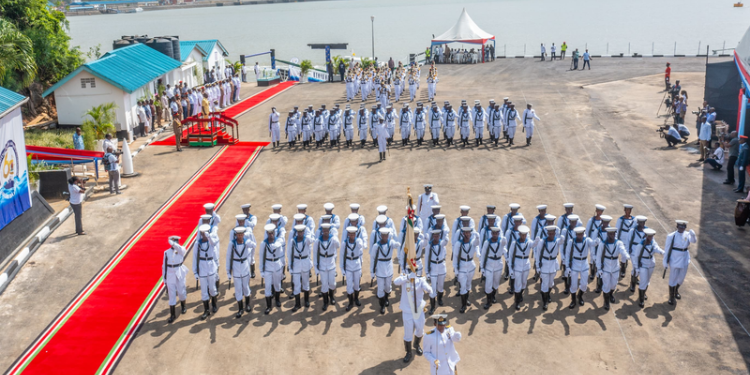
Kenya has received the first batch of military equipment under a Ksh3 billion security support programme funded by the European Union (EU), marking a major step toward strengthening maritime security along the country’s coastline and the wider Western Indian Ocean.
The equipment was officially handed over in a ceremony attended by the EU Ambassador to Kenya and senior officers from the Kenya Navy.
The delivery forms part of an EU-backed initiative to boost Kenya’s capacity to combat piracy, maritime terrorism, trafficking, illegal fishing, and other threats facing one of Africa’s busiest maritime corridors.
EU-Backed Security Partnership
The support package, valued at about KSh3 billion, is being financed through the European Peace Facility (EPF), a fund established by the EU to support peace, stability and security among partner countries.
EU expects the programme to enhance the Kenya Navy’s operational capabilities through the provision of specialised equipment, training and capacity-building support.
Also Read: Why Kenyan Companies Are Not Hiring Despite Rising Sales
According to the EU, the latest delivery represents the first phase of equipment expected under the broader package.
The support was designed to improve surveillance, maritime domain awareness and rapid response capabilities as Kenya seeks to strengthen the protection of its territorial waters and critical maritime infrastructure.
Kenya’s strategic location along the Indian Ocean makes maritime security a key national priority.
The country hosts the Port of Mombasa, one of the busiest ports in East and Central Africa, serving several landlocked nations and handling millions of tonnes of cargo annually.
According to the European Union and Kenya Navy, common threats in the Western Indian Ocean include piracy, maritime terrorism, trafficking networks and illegal fishing, which continue to threaten regional security and international shipping routes.
Kenya Navy Commander Major General Paul Otieno has previously hailed the partnership with the EU, noting that international cooperation remains critical in safeguarding shipping routes, protecting maritime infrastructure and promoting regional prosperity.
Major Challenges Facing Kenya in Combating Maritime Crime
Kenya faces several challenges in its efforts to combat maritime crime.
Inadequate security resources remains a major obstacle.
The Kenya Coast Guard Service operates across extensive coastal and inland waters, requiring sufficient patrol vessels, trained personnel and surveillance equipment.
In its 2025 State of National Security Report, the government identified the need for additional patrol vessels, increased operational funding and improved surveillance capabilities.
Porous maritime borders expose the country to drug trafficking, contraband smuggling and illegal fishing.
Criminal networks exploit poorly monitored landing sites and international shipping routes to transport prohibited goods.
Weak enforcement and prosecution also undermine maritime security.
The government has identified gaps in law enforcement, limited prosecution of fisheries-related offences and inadequate controls over transboundary water bodies.
Also Read: Ministry of Education Announces Opening Date and 2027 School Calendar
Limited regional cooperation has complicated enforcement because criminal activities often cross national boundaries.
Differences in fishing regulations, licensing systems and enforcement practices between neighbouring countries have made coordinated action difficult.
Environmental degradation further compounds the problem through marine pollution, habitat destruction and declining fish stocks.
Why the Kenya-EU Deal Matters
Kenya’s maritime sector has boosted international trade through the Port of Mombasa, which handled a record 45.45 million metric tonnes of cargo in 2025, up from 40.99 million tonnes in 2024, representing 10.9 per cent growth.
The sector has also created employment in shipping, logistics, cargo handling and fishing.
According to the National Treasury’s 2025 sector report, the government trained 13,455 young people in maritime courses and recruited 4,821 seafarers into international vessels.
Additionally, marine fisheries produced 39,950 metric tonnes of fish valued at Ksh9.9 billion in 2023, supporting coastal livelihoods and businesses.
Follow our WhatsApp Channel and X Account for real-time news updates and our YouTube Channel for in-depth interviews.