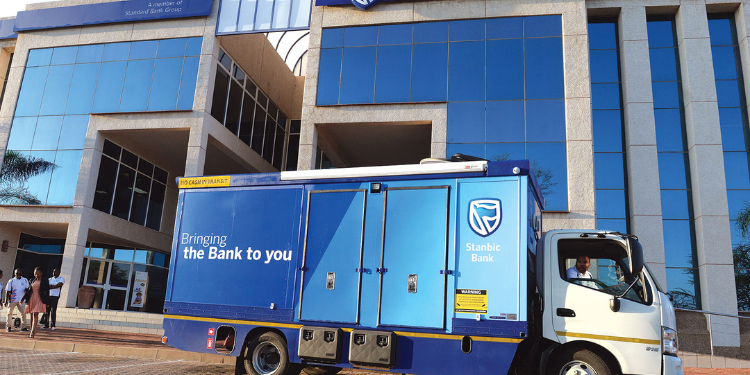

Kenyan companies are slowing down recruitment despite receiving more orders and recording stronger sales, with rising operating costs and cash-flow difficulties emerging as some of the pressures facing businesses.
The latest Stanbic Bank Kenya Purchasing Managers’ Index (PMI) shows that new orders grew at the fastest pace in almost a year in October, driven by increased customer activity, referrals, higher footfall and new contracts.
However, the improvement in demand did not translate into faster job creation. Employment increased for the fifth consecutive month, but the hiring rate was the slowest in the current five-month expansion period.
The findings point to a gap between growing demand for goods and services and the pace at which companies are expanding their workforces.
Stanbic PMI Exposes Growing Gap Between Sales and Job Creation in Kenya
The Stanbic PMI report noted that rising demand had increased the volume of unfinished orders, while funding gaps and processing delays also affected some businesses.
“The Kenyan private sector registered a further uptick in outstanding business. October’s rise was the fifth seen in a row, and the fastest in exactly seven years. Panellist reports suggested that high demand led to a build-up of unfinished orders, while some businesses signalled that funding gaps and processing delays also contributed to the rise.
“As a result, domestic firms reported sustained efforts to increase their headcounts. Staffing levels expanded for the fifth month running and across all sectors, although the overall rate of growth was only modest and the slowest in the current sequence.”
Business activity returned to growth in October for the first time since February, ending eight months of contraction.
The headline PMI rose to 52.5 from 51.3 in September, marking the strongest reading recorded in 2026 so far.
The index measures changes in private sector business conditions. A reading above 50 indicates improvement compared with the previous month, while a figure below 50 signals deterioration.
Despite the stronger sales, companies faced mounting pressure from rising costs.
Around 36 per cent of surveyed firms reported an increase in input costs in October, compared with only two per cent that recorded a decline.
The report attributed much of the increase to higher fuel and transport expenses, which pushed input cost inflation to its fastest pace since November 2023.
Also Read: Ruto Targets Russian Billionaires to Spur Employment in Kenya
Firms also raised the prices of goods and services to protect their profit margins and recover some of the additional expenses.
Input cost inflation also affected the pace at which firms adjusted their selling prices.
The report found that the rate of increase in output prices was the second-fastest in three years, after the rise recorded in June.
Rising Demand Pushes Kenyan Businesses to Seven-Year Backlog High
Christopher Legilisho, an economist at Stanbic Bank, said stronger demand was putting pressure on companies’ ability to handle their workloads.
“Backlogs accumulated at the fastest pace in seven years,” he said, pointing to the growing volume of unfinished orders.
Also Read: World Bank Exposes the Reality of Kenya’s Job Market as Millions of Youth Seek Employment
The report further noted that cash-flow difficulties and inflation concerns limited the expansion in business activity, despite the increase in customer demand.
Legilisho said: “Rising costs remain a key constraint for the recovery.”
He added that higher fuel and transport expenses had pushed input cost inflation to its highest level since November 2023, while businesses raised selling prices to protect their margins.
The survey also found that firms were increasing their purchases of raw materials and other inputs to meet demand. Purchasing activity rose at the fastest pace since January, while stocks of purchases increased at the quickest rate in four years.
Despite the slower pace of recruitment, business expectations improved significantly.
About 51 per cent of surveyed companies expect activity to increase over the next 12 months, compared with 31 per cent in September. Confidence reached its highest level since March 2020.
The October PMI was compiled by S&P Global from responses collected between October 12 and 28 from purchasing managers at around 400 private sector companies in Kenya.
Follow our WhatsApp Channel and X Account for real-time news updates and subscribe to our YouTube Channel for in-depth interviews.