
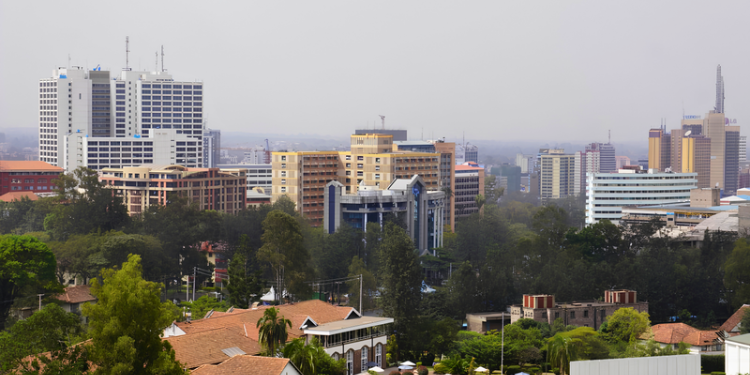
Nairobi land prices recorded their slowest growth in three years in the third quarter of 2026, with declining demand and lower investor returns slowing what has long been one of the country’s strongest property sectors, according to the latest Hass Land Index Q3.2026.
The report shows that Nairobi land prices in the suburbs rose by 0.7 per cent in the three months to September, down from 1.4 per cent in the second quarter. The growth rate was the weakest quarterly performance registered in three years.
The average price of an acre in Nairobi suburbs stood at KSh233.5 million during the quarter.
Despite the slowdown, 13 out of 18 suburbs still recorded positive growth.
Nairobi Land Prices Post Weakest Growth in Three Years
Among Nairobi suburbs, Karen posted the highest quarterly growth at 3.0 per cent, followed by Westlands at 2.7 per cent and Kitisuru at between 2.6 and 2.7 per cent, helping support overall Nairobi land prices despite a broader market slowdown.
Karen also recorded the strongest annual growth at 10.9 per cent.
On the other hand, Muthangari registered the steepest quarterly decline after prices fell by 3.1 per cent.
Also Read: Investors Offer CBK Nearly KSh100 Billion as Govt Seeks New Borrowing
Gigiri followed with a 2.2 percent decline, while Riverside and Spring Valley recorded declines of 1.5 percent and 1.2 percent respectively.
Muthangari also posted the weakest annual performance, with prices falling 8.6 per cent over the past year.
“The sharp moderation in the third quarter suggests that the previous quarter’s rebound was a temporary acceleration rather than a sustained shift in land-price momentum. Nairobi’s land market appears to be returning to a period of more measured appreciation, following the stronger gains recorded earlier in the year,” said Sakina Hassanali, HassConsult Co-CEO & Creative Director
The report also highlighted a sharp slowdown in areas that had led growth earlier in the year.
Lang’ata’s quarterly growth fell from 4.1 percent in the second quarter to 0.2 percent in the third quarter.
Ruiru, Thika and Ruaka also recorded slower appreciation rates during the period.
The slowdown extended to satellite towns surrounding Nairobi.
Land prices in the satellite towns grew by 0.65 per cent during the third quarter, compared to 1.4 per cent recorded in the previous quarter.
The average price of an acre in the towns stood at Ksh33.7 million.
Nine of the 14 towns recorded positive growth, up from seven in the previous quarter.
Ngong registered the highest quarterly growth among satellite towns at 2.2 per cent, while Ruiru recorded the highest annual growth at 11.5 per cent.
Also Read: Kenya Acquires New Military Equipment as Part of Ksh3 Billion Deal
Mlolongo registered the sharpest quarterly decline after prices fell 2.2 per cent, while Athi River posted the weakest annual performance, down 2.3 per cent.
Treasury Bills Outperform Land in Most Satellite Towns
The report also shows that land has delivered lower returns than government securities in most satellite towns.
Over the past two years, land appreciation in 12 out of 14 satellite towns trailed returns from rolling 91-day Treasury bills.
Only Ruiru and Juja recorded gains that exceeded Treasury bill returns during the period.
“Satellite towns have historically attracted buyers investing in land for future capital appreciation. However, as returns from passive landholding become less competitive with alternative investments, the economic justification for purchasing land may increasingly depend on its intended use,” Sakina Hassanali added.
Historical data contained in the report shows that Nairobi land prices in the surburbs had their values risen 7.72 times since 2007.
Average suburban land prices have increased from Ksh30.3 million per acre in 2007 to Ksh233.5 million in 2026.
Satellite town land values have recorded even stronger long-term growth.
Average prices have increased 13.8 times from Ksh2.4 million per acre in 2007 to Ksh33.7 million per acre in 2026.
Follow our WhatsApp Channel and X Account for real-time news updates and our YouTube Channel for in-depth interviews.

PHOTO | Am Kagunda