The Central Bank of Kenya (CBK) has identified nearly 300 areas where it plans to use artificial intelligence (AI), including economic forecasting, inflation monitoring and payment services.
CBK Director of Research Prof Robert Mudida said the applications had been identified across 14 departments, with the regulator already implementing some of them.
Speaking on Saturday, October 31, Mudida said the bank was exploring different ways of using AI to reduce the time spent on routine tasks, improve economic forecasts and analyse large volumes of information.
“So we got almost 300 use cases from the 14 departments. And now what we’re doing is we’re implementing them,” Mudida said.
He explained that the bank was looking at four main levels of AI: routine automation, machine learning, generative AI and agentic AI.
One of the areas where the technology is already being used is routine automation, which allows employees to complete tasks that previously took several hours in less time.
Mudida said CBK had introduced such applications in banking, payments and research, among other departments.
How CBK plans to improve economic forecasts
The Research Department is also using machine learning to improve economic forecasts, particularly during periods of uncertainty when traditional forecasting methods may produce larger errors.
Mudida cited the volatility in inflation forecasting following the energy crisis that began in late February, explaining that machine learning could help the bank adjust its projections based on previous mistakes.
For instance, if a previous forecast underestimated the second-round effects of an economic shock, the system could learn from that error and give those effects greater weight in future projections.
The bank is combining these models with its existing forecasting methods to improve the accuracy of its projections.
“We’re using it to complement our traditional models,” Mudida said.
He noted that human judgment would remain important when interpreting forecasts and making decisions, particularly on matters that affect the economy.
“AI augments intelligence. So you still need human judgment in a very critical way,” he said.
Also Read: CBK Reveals How Kenyan Shilling Is Performing Against Dollar as Global Oil Prices Rise
CBK eyes AI to track the economy before GDP data is released
Another area the regulator is exploring is nowcasting, which involves estimating the current state of the economy using information available before official statistics are published.
Mudida explained that delays in the release of economic data make it difficult for policymakers to establish the state of the economy at the time they meet to make monetary policy decisions.
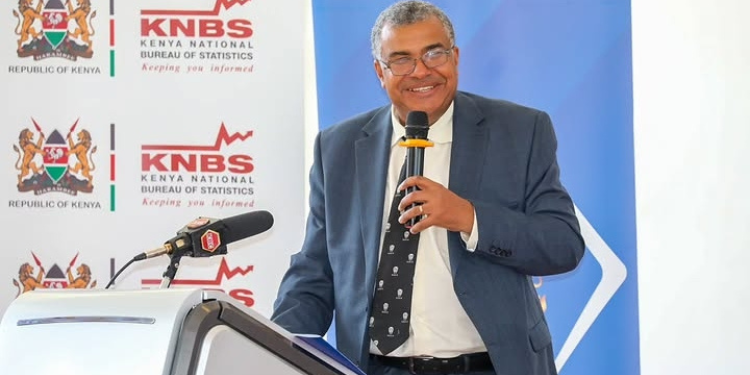
He cited GDP figures released by the Kenya National Bureau of Statistics (KNBS), which typically come with a one-quarter delay.
For example, second-quarter GDP figures were released at the beginning of October, meaning the Monetary Policy Committee could be assessing economic conditions using information that does not fully reflect what is happening at the time of its meeting.
To address this gap, CBK is looking at ways of using AI to analyse information collected more frequently and develop estimates of economic activity.
One example involves satellite images, which could help researchers assess activity in different parts of the country.
Mudida explained that night lights captured by satellites could provide clues about industrial activity and electricity consumption, while changes in vegetation could help indicate agricultural activity.
Generative AI could then analyse satellite images and turn the information into text and economic assessments that researchers can use alongside existing data.
The regulator is also examining mobile payments data to estimate economic activity.
Mudida said researchers had observed a relationship between the value of mobile payments and GDP over time.
He gave an illustrative estimate that the value of mobile payments could be about two and a half times GDP.
By examining daily, weekly and monthly mobile payments, the bank could use the relationship established over time to develop an estimate of economic activity during a particular period.
He clarified that such estimates would complement existing measures rather than replace official economic statistics.
Also Read: CBK Summons Two Banks Struggling to Raise Capital
How CBK wants to use AI to monitor inflation
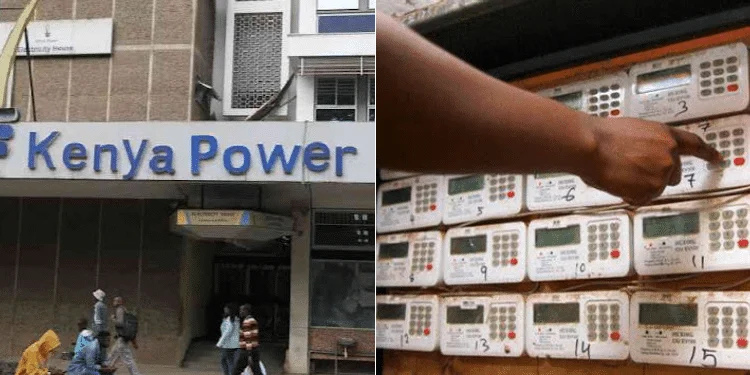
The regulator is also exploring ways of using AI to monitor inflation pressures without waiting for the monthly figures published by KNBS.
Mudida said CBK already conducts several surveys to understand price movements and inflation expectations.
These include agricultural surveys, CEO surveys and market perception surveys, which provide information on developments in different sectors of the economy.
However, the bank wants to supplement the information collected through these surveys with prices obtained from online supermarkets.
Through a process known as web scraping, researchers can collect information on products sold online and monitor changes in their prices.
Mudida explained that CBK was looking at matching the information with the 330 items used by KNBS in calculating the Consumer Price Index (CPI).
The process would involve identifying different product brands, quantities and prices to establish how much consumers are paying for various goods.
Large language models could also help the bank check and validate some of the information collected.
This would give CBK additional information on price movements during the month, including periods before the official inflation figures are released.
CBK considers agentic AI in payments
The fourth area the regulator is examining is agentic AI, which involves training AI agents to perform tasks and undertake certain decisions that would otherwise be handled by people.
Mudida said the technology could have applications in payments and other areas of central banking, although the regulator was taking a gradual approach because of the risks involved.
“That has great opportunities, but also great dangers,” he said.
He explained that the bank was still assessing where the technology could be introduced and how its risks could be managed.
CBK warns against risks of AI adoption
Despite the applications already being tested, Mudida said the regulator was conscious of the risks that come with adopting AI.
One of the concerns is the handling of sensitive information, particularly when employees use AI tools to complete routine tasks.
He warned that staff could accidentally expose confidential information by placing it on public online platforms where it could be accessed by unauthorised parties.
The bank is therefore assessing each application separately to establish the benefits and the safeguards required before expanding its use.
Mudida also revealed that CBK’s Financial Markets Department was piloting an AI-based chatbot as part of the bank’s wider efforts to introduce the technology across its operations.
He said the regulator wanted to move forward with the applications while ensuring that the risks associated with their use were properly managed.
Follow our WhatsApp Channel and X Account for real-time news updates and subscribe to our YouTube Channel for in-depth interviews.