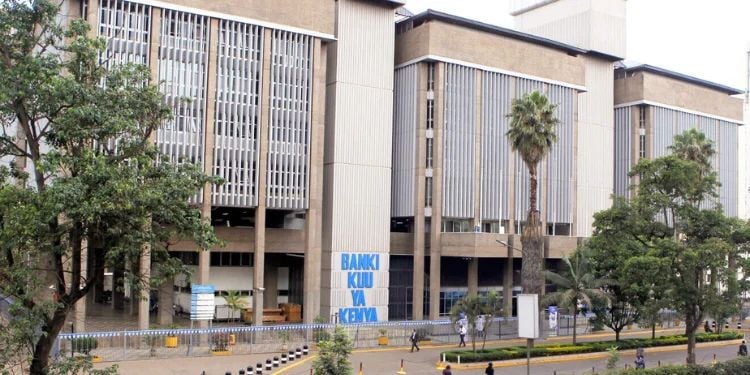
The Central Bank of Kenya (CBK) has summoned two commercial banks over failure to meet the 2026 core capital target, as the regulator pushes lenders to strengthen their financial positions.
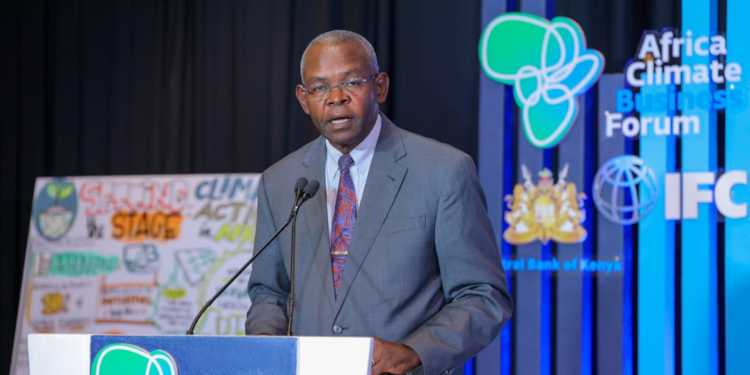
CBK Governor Kamau Thugge disclosed the development on October 31, while appearing before the National Assembly’s Finance Committee, revealing that two banks had fallen behind the capital-raising target while the rest of the industry had made progress.
The governor explained that the two banks t would be required to appear before the regulator and explain how they intend to raise the required capital.
Additionally, the governor emphasised that banks needed to meet the target in order to withstand emerging shocks, including cyberattacks and climate change.
“Hon. Chair, we are engaging with the National Treasury because there’s a reason we felt we need banks to have a solid capital base so they can cushion themselves from emerging shocks. We have a few banks that are yet to meet our target of KSh 5bn, but we are talking to them,” the CBK governor stated.
How the KSh 10 Billion Capital Requirement Works
The disclosure follows the introduction of higher minimum capital requirements under the Business Laws (Amendment) Act, 2024.
Following the amendment, the Banking Act raised the minimum core capital for commercial banks from KSh 1 billion to KSh 10 billion.
Under the original implementation schedule, banks were required to increase their core capital progressively, reaching KSh 3 billion by December 2025.
By December 2026, the capital rose to KSh 5 billion before eventually attaining the KSh 10 billion target set for December 2029.
However, the Finance Act 2026 revised the timeline by removing the annual capital milestones and extending the deadline for achieving the KSh 10 billion requirement to December 31, 2032.
Additionally, under the Act, commercial banks must maintain separate core capital ratios of at least 8% of risk-weighted assets and 8% of deposit liabilities.
Also Read: CBK Invites Kenyans to Invest in KSh50 Billion Treasury Bonds Paying Up to 12.5%
CBK Defends Higher Capital Requirements
Finance Committee Chairperson Kuria Kimani sought clarification on whether the CBK and the National Treasury had agreed on the proposed increase in commercial banks’ capital requirements.
Kimani noted that the two institutions had previously expressed differing positions, with the Treasury favouring a more flexible approach that would allow local banks to grow.
“Has there now been a convergence of thoughts in terms of capital requirements for commercial banks?” Kuria Kimani questioned.
In response, Thugge maintained that stronger capital bases were necessary to ensure banks could withstand emerging financial and operational risks.
The governor argued that banks need adequate resources to absorb unexpected losses and invest in technology to protect their operations against cyberattacks.
CBK Holds Lending Rate at 8.75% as Inflation Remains Within Target
Beyond the banking sector capital requirements, the parliamentary engagement also examined Kenya’s monetary policy and the performance of the domestic economy.
Thugge explained to the lawmakers that global inflation rose in 2026 due to higher food and energy prices as conflicts in the Middle East continue.
Despite these pressures, Kenya’s overall inflation remained within the government’s target range of 5%, with a margin of plus or minus 2.5 percentage points.
Inflation, however, rose slightly to 6.8% in September 2026 from 6.6% in August.
The governor attributed the relatively stable domestic environment to prudent monetary policy, government interventions and a stable exchange rate supported by adequate foreign exchange reserves.
He also emphasised that the CBK has maintained the Central Bank Rate (CBR) at 8.75% since February 2026 to keep inflation expectations anchored and support exchange rate stability.
“The Monetary Policy Committee (MPC) has kept the Central Bank Rate (CBR) unchanged at 8.75 percent since February 2026 to ensure inflation expectations remain anchored within the target range and the exchange rate stays stable,” the governor explained.
Thugge also reported that Kenya’s economy recorded average GDP growth of 5.1% in the first half of 2026, prompting an upward revision of the full-year growth projection to 5.0%, up from 4.6% in 2025.
He attributed the performance to activity in the services and industrial sectors, alongside growth in construction supported by affordable housing and infrastructure projects.
Lower Lending Rates Support Private Sector Credit
The governor also clarified the implementation of the revised Risk-Based Credit Pricing model in March 2026, which had improved transparency in how commercial banks price loans.
According to the governor, the model was introduced to strengthen the transmission of monetary policy decisions to borrowers by linking lending rates more closely to banks’ funding costs and borrower-specific risks.
Thugge noted that average commercial bank lending rates declined after its implementation, while credit flows to sectors such as trade, agriculture, manufacturing and construction improved.
He further maintained that Kenya’s banking sector remained stable and resilient despite external economic pressures.
Also Read: CBK Report Reveals Why Many Kenyans Are Still Struggling to Find Jobs
Committee Raises Questions Over Bad Loans and Diaspora Remittances
Lawmakers also questioned the CBK governor on the impact of geopolitical tensions on commercial banks, particularly their exposure to non-performing loans.
Chesumei MP Paul Biego sought clarification on the extent of banks’ exposure to bad loans arising from geopolitical developments and the measures being taken to address the risks.
The committee also examined the decline in diaspora remittances, particularly inflows from traditional labour markets such as Saudi Arabia.
Thugge argued that the decline in remittances from Saudi Arabia was partly due to changes in the country’s labour laws, which have increasingly prioritised skilled workers over semi-skilled labour.
He clarified that the changes had reduced the number of Kenyan workers remaining in the Gulf country, affecting the flow of money sent home.
Follow our WhatsApp Channel and X Account for real-time news updates and subscribe to our YouTube Channel for in-depth interviews.