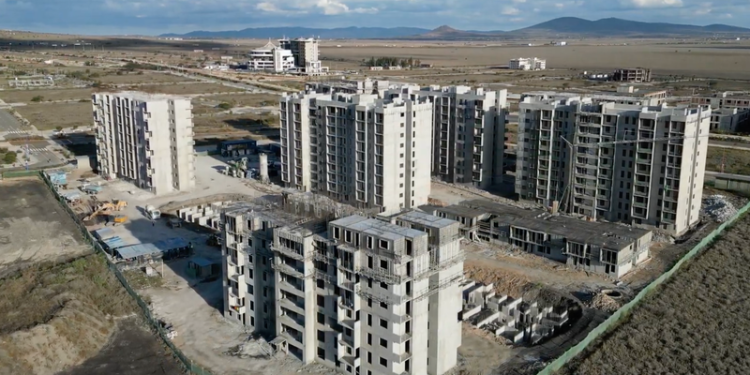
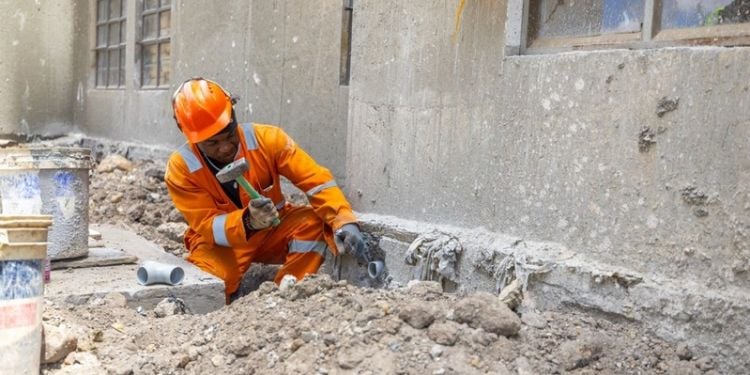
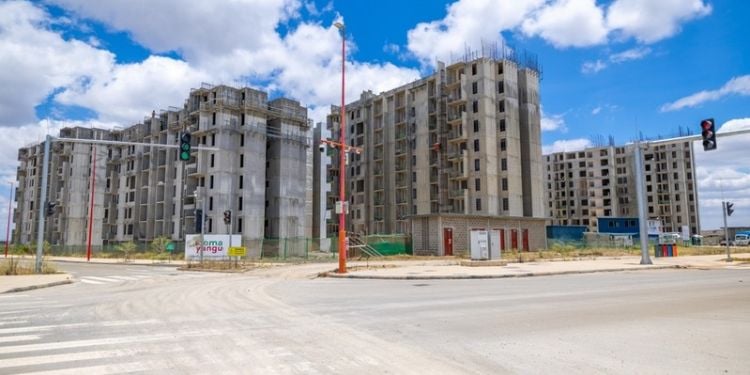
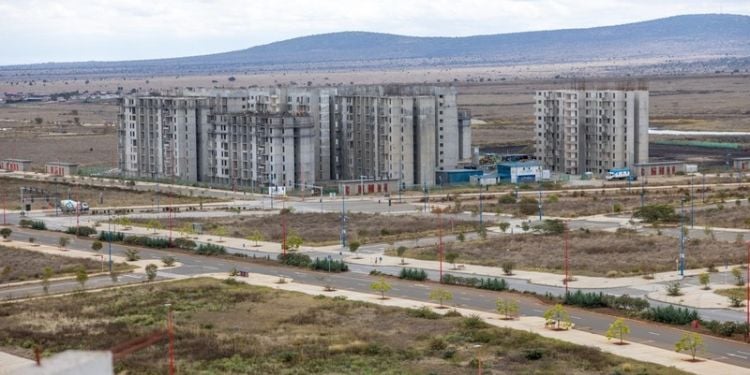
At Konza Technopolis in Malili, Makueni County, the construction of affordable housing is taking shape alongside the roads, walkways and infrastructure designed to support movement within Kenya’s emerging smart city.
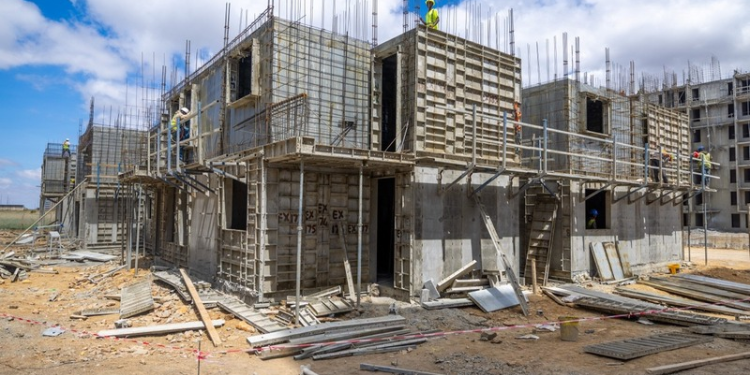
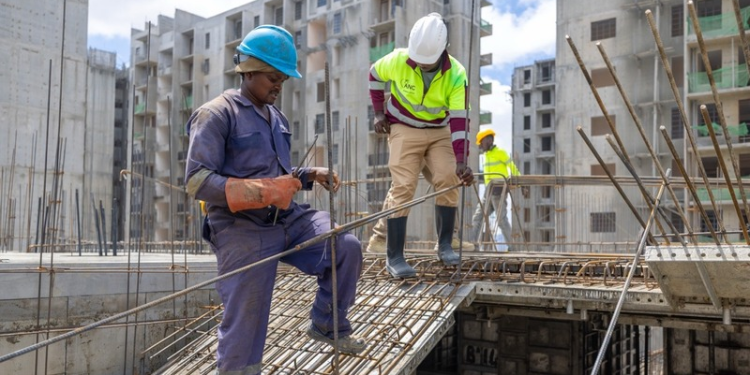
Using modern aluminium formwork technology, construction teams are raising residential blocks while creating employment and equipping workers with new skills. The development’s 1,042 housing units are intended to accommodate workers, families and future residents as Konza’s industrial, commercial and educational facilities expand.
Supplied through South Korean firm Kumkang, the aluminium formwork system enables workers to cast concrete walls and floors into precise dimensions. The panels are removed and reused on subsequent sections, reducing dependence on timber and plywood while supporting consistency in construction.General Foreman Fredrick Muli says the construction team works towards completing a floor cycle in approximately seven days using the aluminium formwork system. The process allows the team to repeat the casting sequence across successive floors as the residential blocks rise.Supervising Engineer Caleb Chege says the technology produces smooth concrete surfaces that require less finishing than conventional masonry walls. Reusable panels also reduce construction debris associated with timber and plywood, helping maintain a cleaner site.The project is also supporting local enterprise by engaging Jua Kali artisans to manufacture doors and windows. The use of standardised building components allows local workshops to produce items to specified dimensions, creating business opportunities beyond the construction site.
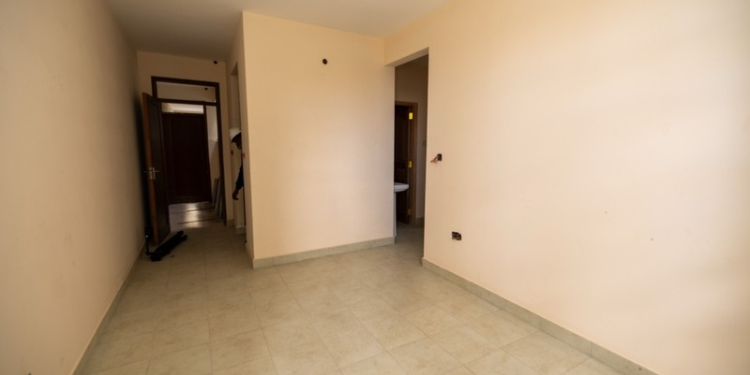
The first phase of the Konza affordable housing development comprises 1,042 units across 11 blocks, covering social, affordable and market housing categories. Beyond providing accommodation for the emerging smart city’s workforce and residents, the project is creating jobs, developing technical skills and generating opportunities for businesses in surrounding communities.The planned urban layout is intended to improve connectivity between residential areas, workplaces and essential services, making it easier for residents and workers to move around the city as Konza’s industrial, commercial and institutional facilities expand.
Mary Wanjohi is a digital news correspondent at The Kenya Times driven by a deep commitment to truth, storytelling, and public service. With a background in Communication and Journalism, she has developed a strong foundation in news reporting, feature writing, and investigative research. Mary is passionate about uncovering stories that matter from community issues and social justice to politics and culture. She approaches every assignment with curiosity, integrity, and a dedication to accuracy. Her work reflects a belief that journalism is not just about reporting facts, but about giving voice to the voiceless and holding power to account. She can be reached at [email protected]
We use cookies on our website to give you the most relevant experience by remembering your preferences and repeat visits. By clicking “Accept”, you consent to the use of ALL the cookies.
This website uses cookies to improve your experience while you navigate through the website. Out of these cookies, the cookies that are categorized as necessary are stored on your browser as they are essential for the working of basic functionalities of the website. We also use third-party cookies that help us analyze and understand how you use this website. These cookies will be stored in your browser only with your consent. You also have the option to opt-out of these cookies. But opting out of some of these cookies may have an effect on your browsing experience.
Necessary cookies are absolutely essential for the website to function properly. This category only includes cookies that ensures basic functionalities and security features of the website. These cookies do not store any personal information.
Functional cookies help to perform certain functionalities like sharing the content of the website on social media platforms, collect feedbacks, and other third-party features.
Performance cookies are used to understand and analyze the key performance indexes of the website which helps in delivering a better user experience for the visitors.
Analytical cookies are used to understand how visitors interact with the website. These cookies help provide information on metrics the number of visitors, bounce rate, traffic source, etc.
Advertisement cookies are used to provide visitors with relevant ads and marketing campaigns. These cookies track visitors across websites and collect information to provide customized ads.