Tech leaders predict artificial intelligence (AI) could transform Africa’s economy on a scale greater than the mobile money revolution, urging governments to invest in local data centres, reliable electricity, and renewable energy.
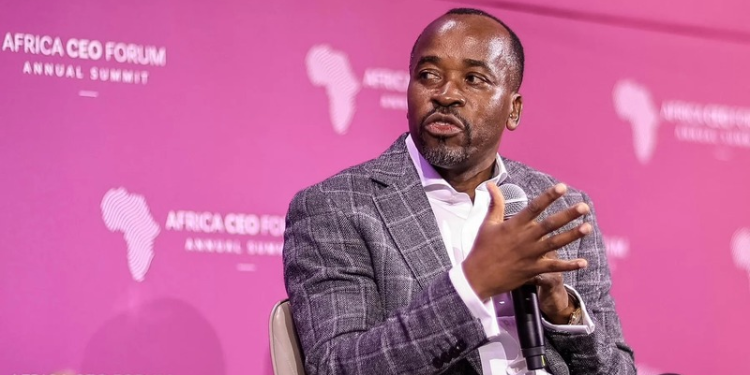
Hardy Pemhiwa, Chief Executive Officer of Cassava Technologies, said AI could unlock economic opportunities for millions of Africans by overcoming barriers such as language and expanding access to digital services.
Speaking on BBC Africa Enterprise, Pemhiwa said mobile money had brought millions of previously unbanked people into the financial system, while AI could reach people excluded from other opportunities because of language barriers.
“Where the mobile money revolution was about bringing the previously excluded into the financial ecosystem, AI is about bringing everybody else who was excluded by virtue of language,” Pemhiwa said.
He added that AI could have a “100x impact” compared with the gains made through mobile money.
Why Africa Needs Its Own AI Infrastructure
Despite the projected economic benefits, Pemhiwa warned that Africa risks losing out if it does not build the infrastructure needed to develop and run AI technologies locally.
Also Read: Artificial Influence: How AI Is Reshaping International Relations
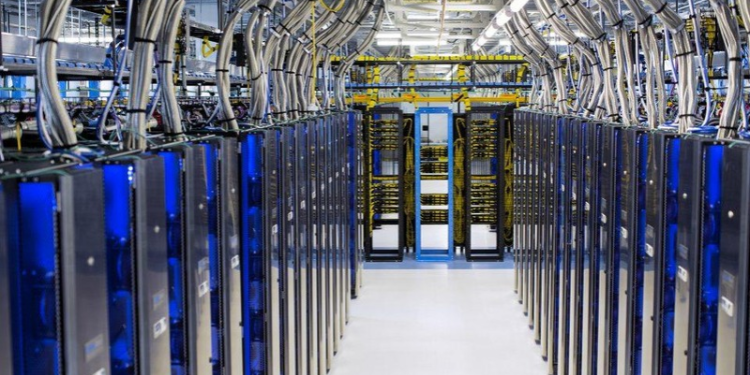
Africa accounts for about 1% of the world’s data centres despite having an economy worth an estimated $3.5 trillion, according to figures cited in the discussion.
Without sufficient local computing capacity, much of the continent’s data and digital activity will continue to depend on infrastructure outside Africa.
Pemhiwa said this could repeat a pattern in which African countries export raw materials and later import higher-value products made from those resources.
“If we don’t have our own AI compute solutions and our own digital infrastructure on the continent, we are repeating exactly the same pattern that we have seen over the years,” he said.
“We’ve done it with cocoa; we’ve done it with minerals. The data sits here with us. It doesn’t have to be exported.”
He argued that African countries could create more economic value by developing AI systems using locally generated information, including mining records, hospital data and other specialised regional datasets.
Cassava Technologies is building a 110,000-kilometre fibre-optic network linking Cairo to Cape Town. The company is also developing AI data factories in regional hubs, including South Africa, Kenya, Nigeria, Egypt and Morocco.
Electricity Emerges as a Major Challenge
Building AI infrastructure will require large and reliable electricity supplies, making power generation and grid capacity essential to Africa’s digital ambitions.
Linda Mabhena-Olagunju, founder of DLO Energy Resources Group, said a shortage of early-stage funding was holding back the development of renewable energy projects.
Also Read: A Guide to Mastering Blockchain Intelligence and Analytics Tools
Speaking on BBC Africa Enterprise, she explained that projects often need substantial investment before construction can begin, including funding for permits, feasibility studies and grid assessments.
“Most of the funding we need on this continent is for early-stage development,” she said.
“When there’s a piece of land that has absolutely nothing on it, when it requires permitting, a feasibility study, grid studies… no one is looking at deploying capital to the early-stage risk.”
Mabhena-Olagunju warned that electricity grids, power supplies and water would become increasingly important as AI expands globally.
Without more investment in energy infrastructure, African countries could struggle to supply the power required by data centres and other digital services.
Call for More Investment in Local Energy Companies
Mabhena-Olagunju urged African governments to establish clear regulatory frameworks and integrated energy plans to give investors greater confidence to finance new power projects.
She also called for more investment in local developers and manufacturers, arguing that locally owned companies could help retain more profits and create jobs within African economies.
“When you have massive foreign participation and shareholding, that’s capital outflows. That money leaves,” she said.
“When you have a local developer, the dividends we make stay on this continent. We should really be thinking about how we invest in local developers and local manufacturers because the job is created here.”
Follow our WhatsApp Channel and X Account for real-time news updates, and subscribe to our YouTube Channel for in-depth interviews.