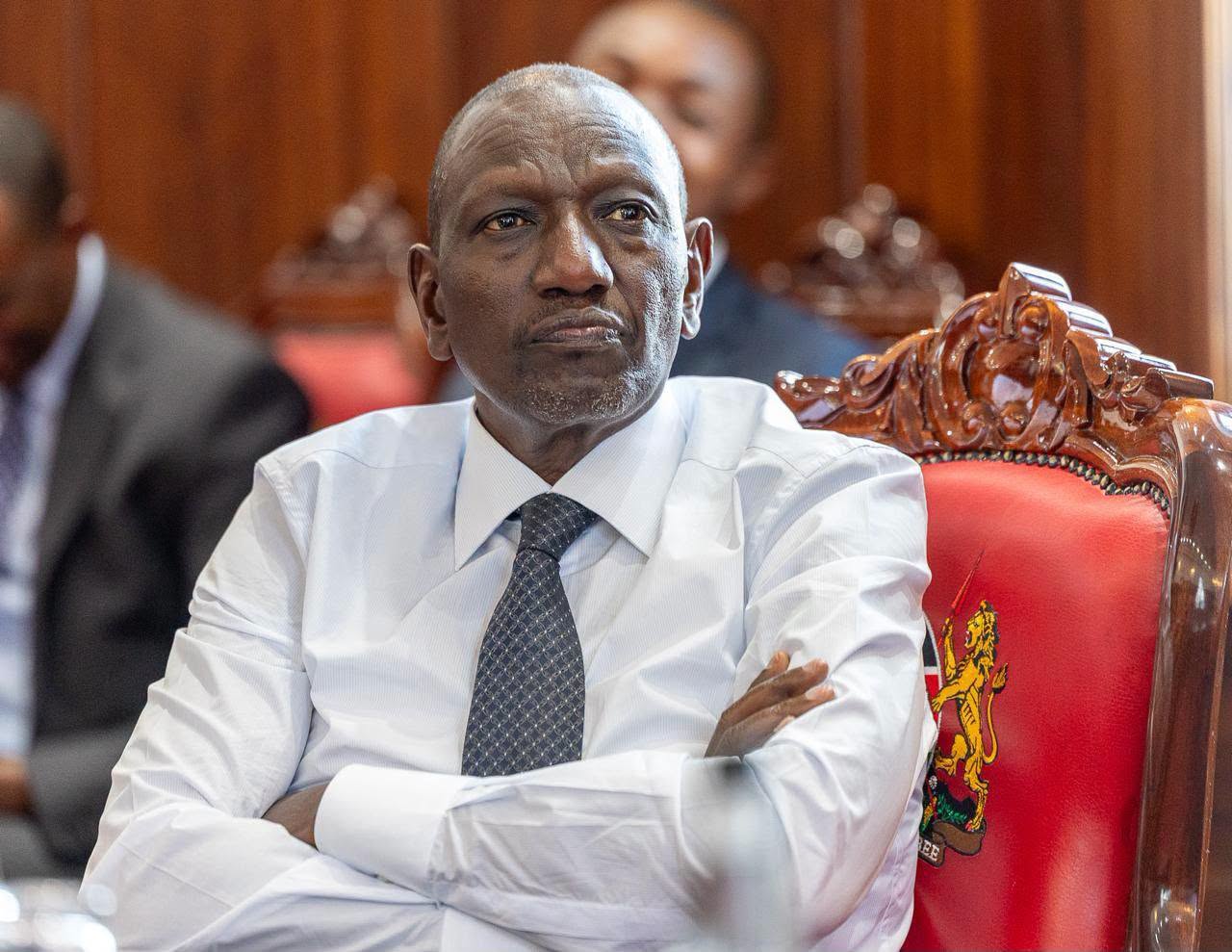
William Samoei Ruto rose from a rural upbringing in Uasin Gishu County to become Kenya’s fifth president in September 2022.
His political career spans nearly three decades, from his election as Eldoret North MP in 1997 to his years in Cabinet, two terms as deputy president and his victory in the 2022 presidential election.
Ruto campaigned on an economic transformation agenda that promised to prioritise ordinary Kenyans, small businesses and low-income households. However, his presidency has also drawn criticism over taxation, the cost of living, police conduct, public spending, and the government’s approach to accountability.
His political journey has included alliances with former President Uhuru Kenyatta, a high-profile case at the International Criminal Court (ICC), disagreements with the judiciary and nationwide protests that forced his administration to withdraw the Finance Bill 2024.
William Ruto at a Glance
- Full name: William Samoei Ruto
- Date of birth: December 21, 1966
- Age: 60 Years
- Birthplace: Sambut, Kamagut Location, Uasin Gishu County, Kenya
- Profession: Politician and botanist
- Primary education: Sambut Primary School
- Secondary education: Wareng Secondary School, Eldoret
- Advanced-level education: Kapsabet High School, Nandi County
- University education: University of Nairobi, where he studied Botany and Zoology
- Postgraduate education: Master of Science in Plant Ecology, awarded in 2008
- Doctoral degree: PhD in Plant Ecology, awarded in December 2018 by the University of Nairobi
- First elected office: Member of Parliament for Eldoret North in 1997
- Political party: United Democratic Alliance (UDA)
- Previous party affiliation: Kenya African National Union (KANU)
- Cabinet positions: Minister for Agriculture and Minister for Higher Education
- Deputy president: April 3, 2013, to September 12, 2022
- Presidential election: Elected on August 9, 2022, under the Kenya Kwanza Alliance
- Sworn in as president: September 13, 2022
- Spouse: Rachel Chebet Ruto
- Children: Seven, according to the Office of the President
- Major controversies: The ICC case linked to the 2007–2008 post-election violence, the Weston Hotel land dispute, taxation and the cost of living, and criticism of the government’s handling of protests and police accountability.
Early Life and Education
Ruto was born on December 21, 1966, in Sambut, Kamagut Location, in Uasin Gishu County, according to the Office of the President.
He attended Sambut Primary School before joining Wareng Secondary School in Eldoret. He later proceeded to Kapsabet High School in Nandi County for his advanced-level education.
Ruto subsequently joined the University of Nairobi, where he studied Botany and Zoology. He graduated with a Master of Science degree in Plant Ecology in 2008 and earned a PhD in Plant Ecology from the same university in December 2018.
The President is married to Rachel Chebet Ruto, and the couple have seven children, according to the official presidential website.
Ruto has often described the poverty of his youth, recalling how he went barefoot for many years and sold peanuts and chickens on the side of the road to make money.
Entry Into Politics and Rise Through KANU
William Ruto entered elective politics in 1997 when he was elected Member of Parliament for Eldoret North on a Kenya African National Union (KANU) ticket.
In the run-up to the general election held that year, he helped found the Youth for KANU 1992 group, which supported the presidential candidacy of the late President Daniel arap Moi of the KANU party.
He retained the seat in the 2002 general election before leaving KANU and joining the Orange Democratic Movement (ODM) in 2007. He won re-election that year on an ODM ticket and continued representing Eldoret North until 2013, serving three consecutive terms.
His early political career developed during a period when KANU was losing its grip on power following the end of its long rule.
In the 2002 general election, Ruto campaigned for Uhuru Kenyatta, KANU’s presidential candidate, but the party lost to Mwai Kibaki of the National Rainbow Coalition.
Following the election, Ruto remained active in politics and opposition activities. He chaired the Parliamentary Select Committee on Constitutional Reform in the Ninth Parliament and participated in the constitutional reform process.
In 2005, he was elected KANU secretary-general, a position that strengthened his standing within the party.
That same year, the government held a referendum on a proposed new constitution. Ruto opposed that constitution and allied with prominent figures from other political parties to campaign against it.
Their efforts succeeded, as most voters rejected the document. The next year, Ruto announced his intent to run for president, which KANU did not welcome.
Consequently, he sought the nomination of the Orange Democratic Movement (ODM), the coalition formed by the alliance that had campaigned against the 2005 constitution.
Still, he lost the ODM nomination to Raila Odinga. Ruto officially resigned as KANU secretary-general in October 2007.
Cabinet Career and Partnership With Uhuru Kenyatta
Ruto joined the coalition government formed in 2008 following the disputed 2007 presidential election and the violence that followed.
He was appointed Minister for Agriculture and served from 2008 to 2011. The Office of the President credits his tenure with efforts to revive irrigation schemes, provide affordable fertiliser to farmers, and support major agricultural sectors.
He later served as Minister for Higher Education from April to October 2010, where he oversaw education policy, skills development, and knowledge acquisition.
In 2012, Ruto joined Kenyatta in forming the Jubilee Alliance, which brought together Ruto’s United Republican Party (URP) and Kenyatta’s The National Alliance (TNA).
The alliance won the 2013 presidential election, with Kenyatta becoming president and Ruto deputy president. They retained power in the 2017 election.
Ruto served as deputy president from April 3, 2013, to September 12, 2022. During that period, he built his own political following while remaining part of the Jubilee administration.
During his second term as deputy president, Ruto’s relationship with Kenyatta cooled considerably.
In contrast, Uhuru and Odinga unexpectedly reconciled in 2018. They went on to collaborate on the Building Bridges Initiative (BBI) task force, which studied the challenges facing the country and proposed solutions.
The high-profile collaboration between the two men exacerbated Ruto’s alienation from Kenyatta and contributed to the loss of his status as the presumptive heir to the presidency.
After the BBI’s recommendations were adopted into a constitutional amendment bill, Ruto was among the detractors who thought the bill would be too costly to implement and saw it as a political power play. He also celebrated in March 2022 when the court ruled the bill unconstitutional and unenforceable.
The 2022 Presidential Election
Ruto contested the August 9, 2022, presidential election on a United Democratic Alliance (UDA) ticket under the Kenya Kwanza Alliance.
His campaign centred on the bottom-up economic model, which he said would support small traders, farmers, young people and other groups he considered neglected by established political and economic systems. He also promised economic transformation, job creation and greater inclusion in government programmes.
Ruto’s main challenger was former Prime Minister Raila Odinga, who ran on the Azimio la Umoja One Kenya Coalition ticket with the backing of outgoing President Uhuru Kenyatta. The two were the front-runners in a field of four presidential candidates.
During the campaign, Ruto popularised the term “hustler” to describe ordinary Kenyans who worked hard to make ends meet but struggled to improve their economic circumstances.
He framed the election as a contest between the “hustlers”, including himself, and established political dynasties, which he linked to Odinga and Kenyatta.
Ruto was declared the winner with 50.49 per cent of the vote, defeating Odinga, who garnered 48.85 per cent. Odinga challenged the results at the Supreme Court, which upheld Ruto’s election.
Ruto was sworn in on September 13, 2022, becoming Kenya’s fifth president since independence.
Also Read: How Ruto Could Win 2027 Without Mt Kenya Votes – VIDEO EXPLAINER
The ICC Case That Followed Him Into the Presidency
One of the most consequential episodes in Ruto’s political career was his prosecution at the International Criminal Court over Kenya’s 2007–2008 post-election violence.
The ICC charged Ruto with three crimes against humanity: murder, deportation or forcible transfer of population, and persecution—the allegations related to violence that followed the disputed 2007 presidential election.
Ruto denied the accusations.
The case was closely watched in Kenya because the violence had killed more than 1,000 people and displaced hundreds of thousands, according to accounts of the crisis.
Ruto appeared before the ICC alongside former radio broadcaster Joshua Arap Sang. Their case became a major issue in the 2013 presidential election, when Ruto ran as Kenyatta’s deputy.
The two leaders portrayed the ICC proceedings as politically motivated, while victims and rights advocates continued to demand accountability for the violence.
On April 5, 2016, the ICC terminated the case against Ruto and Sang and vacated the charges. The judges did not acquit them. The prosecution had raised concerns about witness interference and the circumstances that had undermined its case.
The ICC prosecutor at the time, Fatou Bensouda, said witness interference and politicisation of the judicial process had severely undermined the trial.
The case remains a defining part of his political history because it placed questions of justice, witness protection and accountability at the centre of Kenya’s national debate.
Presidency and the Bottom-Up Economic Agenda
Ruto entered State House promising to improve the economic position of ordinary Kenyans. His administration presented the bottom-up economic transformation agenda as a framework to support agriculture, small businesses, affordable housing, healthcare, and employment.
The government introduced or expanded programmes intended to increase access to credit, support farmers and provide housing opportunities.
However, implementing the agenda has required difficult decisions on revenue collection, borrowing and public expenditure.
Ruto inherited a country facing substantial public debt, pressure on government finances, unemployment and a high cost of living. His administration argued that it needed additional revenue to fund public services and reduce reliance on borrowing.
During his presidency, William Ruto has faced challenges such as public dissatisfaction over tax increases, a high cost of living, and protests against his administration’s policies.
The 2024 Gen Z Protests and Finance Bill Withdrawal
The protests against the Finance Bill 2024 became a major turning point in Ruto’s presidency.
Demonstrations began in June 2024, led largely by young Kenyans who opposed proposed tax increases. The movement expanded beyond the bill to include concerns about unemployment, corruption, government spending and the rising cost of living.
The protests gained momentum through social media, with young people mobilising across the country and demanding that the government reconsider its plans.
On June 25, 2024, demonstrators entered Parliament after lawmakers passed the Finance Bill. Police fired at protesters outside the parliamentary complex, and people were killed during the unrest.
The demonstrations continued despite the government’s initial resistance.
On June 26, Ruto announced that he would not assent to the Finance Bill 2024 and would withdraw it. He subsequently announced spending cuts and changes to his administration, including the dismissal of nearly all Cabinet secretaries in July 2024.
The decision to withdraw the bill marked a significant retreat from the government’s revenue plans and demonstrated the political impact of the youth-led movement.
However, the protests did not end public dissatisfaction with the administration. Questions about police accountability, public spending and economic hardship continued to feature in subsequent demonstrations.
The episode also challenged Ruto’s political identity as a leader who had campaigned on behalf of ordinary Kenyans.
Police Conduct, Abductions and Human Rights Concerns
The administration’s handling of protests has become one of the most serious areas of criticism.
Human rights organisations have documented allegations of excessive force, unlawful arrests, abductions and killings involving security personnel during demonstrations against government policies.
Human Rights Watch, in its World Report 2025, reported that authorities restricted peaceful protests and that activists, protest leaders and civil society groups faced harassment, intimidation and arrests.
The organisation also raised concerns about the investigation and prosecution of security officers implicated in alleged abuses.
During and after the 2024 protests, human rights groups called for independent investigations into deaths, injuries and reported disappearances. These concerns continued during demonstrations in 2025, when young Kenyans again demanded accountability for police brutality and poor governance.
Ruto’s administration has faced pressure to investigate allegations against security officers and hold those responsible for unlawful actions accountable.
Sources: Human Rights Watch — World Report 2025: Kenya; Congressional Research Service — Kenya: Current Issues and U.S. Relations.
Weston Hotel Land Controversy
Ruto has also faced public scrutiny over the land occupied by Weston Hotel, a property associated with him and his family.
The controversy concerns land near Wilson Airport in Nairobi that the Kenya Civil Aviation Authority (KCAA) said belonged to the agency.
The National Land Commission investigated the dispute and found that the land had been irregularly allocated. In 2019, the commission directed Weston Hotel to pay for the land.
Also Read: Ruto Targets Russian Billionaires to Spur Employment in Kenya
Disagreements With the Judiciary
Ruto’s administration has also faced criticism over its relationship with the courts.
Several government policies, including tax measures and the planned deployment of Kenyan police officers to Haiti, faced legal challenges.
Courts issued decisions that limited or halted some government actions, prompting disagreements between the executive and the judiciary.
Human Rights Watch reported that senior government officials, including Ruto, had criticised courts over rulings concerning government initiatives. The organisation also raised concerns about public statements directed at judges and petitioners who challenged government policies.
The administration, meanwhile, has defended its development agenda and argued that some legal challenges have delayed government programmes.
The dispute has raised broader questions about the separation of powers and the constitutional obligation of the executive to comply with court orders.
Under Kenya’s Constitution, the judiciary is independent, and the courts can review government decisions. The president’s development agenda must therefore operate within the law, even when court decisions frustrate the administration’s plans.
Major Policies and Government Programmes
Despite the controversies, Ruto’s administration has pursued several programmes intended to address long-standing economic and social challenges.
Affordable housing
The government has made affordable housing central to its economic agenda. It argues that the programme can expand access to decent housing, create construction jobs, and support related industries.
However, the housing levy used to finance the programme has drawn criticism from workers and employers over salary deductions and questions about the fairness of the funding model.
Healthcare reforms
Ruto’s administration has overseen the transition from the National Health Insurance Fund (NHIF) to the Social Health Authority (SHA).
The government has presented the new system as part of efforts to expand access to healthcare and move towards universal health coverage.
Implementation has, however, raised concerns among patients, healthcare providers and other stakeholders over registration, payments, access to services and the handling of claims.
Agriculture and farmers
Agriculture has remained a key part of Ruto’s economic agenda. The government has promoted fertiliser subsidies and measures intended to increase food production and support farmers.
The administration argues that improved agricultural productivity can reduce food imports, stabilise supplies and lower prices.
Hustler Fund and access to credit
The Financial Inclusion Fund, commonly known as the Hustler Fund, was introduced to provide credit access for individuals and small businesses that may struggle to obtain loans from conventional financial institutions.
The programme reflects Ruto’s campaign promise to support the informal sector and small-scale traders.
Family and Personal Life
Ruto is married to Rachel Chebet Ruto, who has maintained a public profile through initiatives involving women, families and economic empowerment.
The couple have seven children, according to the Office of the President. They include Nick, June, Charlene, Stephanie, Cullie, George and Nadia Cherono.
Follow our WhatsApp Channel and X Account for real-time news updates and subscribe to our YouTube Channel for in-depth interviews.