WhatsApp usernames are under increasing scrutiny as users, businesses, and regulators worry the privacy-focused feature could make people harder to find, verify, and contact, especially in professional and commercial settings.
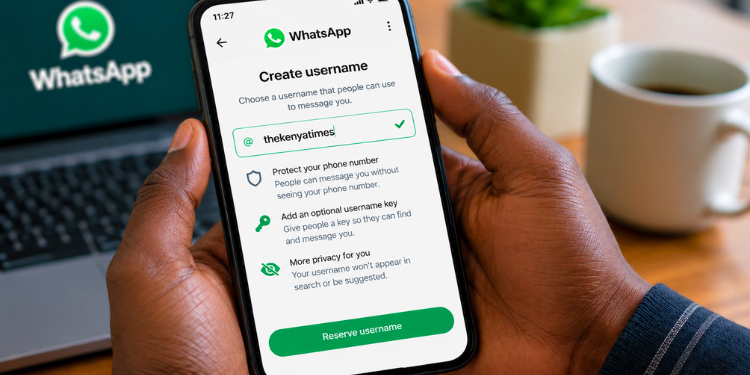
The feature lets users create unique usernames to share instead of mobile phone numbers, enabling communication on WhatsApp without revealing personal contact details.
The move gives users greater control over their privacy and reduces the need to share phone numbers with strangers, public groups, and casual contacts.
Under the new system, people can share a username instead of a phone number to start conversations.
Users can receive messages and calls on WhatsApp without sharing their mobile numbers, and an optional username key adds an extra layer of control over who can initiate contact.
Existing contacts who already have a person’s phone number can continue communicating normally.
Introducing the feature, WhatsApp said usernames were designed to give users a way to connect without sharing their phone numbers.
“Your phone number is personal and sometimes you want to connect without handing it over. That’s why we’re introducing usernames for WhatsApp,” the company said.
WhatsApp Username Feature Under Scrutiny
Despite these benefits, the feature has triggered debate among job seekers, freelancers, journalists, entrepreneurs, sales professionals and small business owners who rely on visibility and accessibility to build networks and create opportunities.
Some WhatsApp users argue that phone numbers remain an important professional tool.
In many industries, people use phone numbers for direct communication, verification, referrals, and business introductions.
They say replacing phone numbers with WhatsApp usernames may create an additional barrier between individuals and potential employers, clients or partners.
“WhatsApp usernames are seriously messing things up for businesses. You spend money running ads, chat with potential customers, close deals and dispatch orders, only to realise you never got the customer’s phone number. Now your rider is stranded, the customer is offline, and you have no direct way of reaching them. All because a username replaced a phone number,” said Muhammad Onyango, an authorized Apple, Samsung and Casio watches reseller at Umoja Marketplace Africa.
The concerns gained traction after social media users began publicly questioning whether the feature could reduce networking opportunities.
Critics of the feature argue that a person who only sees a username may be less likely to save contact details, make direct cellular calls or share information with others who may have professional opportunities.
For job seekers, the issue centres on discoverability.
Also Read: Govt Unveils Ksh13 Billion Plan to Connect Every Home With Electricity to Fixed Internet
Recruiters often use phone numbers to contact candidates directly, while entrepreneurs and freelancers often rely on referrals that start with someone sharing a contact number.
Critics say a username-only approach could limit those interactions by keeping communication largely within the WhatsApp ecosystem.
Businesses and Regulators Raise Red Flags
The debate has also attracted the attention of regulators.
In July, Reuters reported that India asked WhatsApp to halt the rollout of usernames while it conducted consultations and sought further explanations about the feature.
The move highlighted concerns that extend beyond individual privacy and touch on wider questions of digital identity, trust and communication.
Businesses have expressed a different set of concerns. While user interest in the WhatsApp Usernames appears high, some companies remain unconvinced about its practical value.
According to a Business Standard report, several businesses see limited commercial benefits from usernames despite growing consumer interest.
For many organisations, phone numbers serve as the foundation of customer relationship management systems.
Customer records, purchase histories, loyalty programmes and support platforms are commonly linked to mobile numbers.
Businesses fear that relying on usernames could complicate customer identification and make it harder to match conversations to existing records.
Verification is another concern.
Also Read: Kenya Emerges as World’s Fastest-Growing Digital Ads Market
Companies routinely use phone numbers to confirm identities, authenticate customers and prevent fraud.
Business groups argue that usernames could create additional challenges if organisations need to build new systems to manage interactions no longer centred on phone numbers.
Some industry observers have also warned about trust and impersonation risks. As seen on other digital platforms, users can create usernames with slight spelling variations that resemble legitimate individuals or brands.
Critics argue that this could increase the risk of confusion and place greater importance on verification mechanisms.
Supporters of the feature maintain that the privacy advantages outweigh the concerns.
They argue that users should not have to expose personal phone numbers to strangers just to communicate online and that the feature better protects against spam, harassment, and unwanted contact.
Follow our WhatsApp Channel and X Account for real-time news updates.