The government has unveiled a plan to connect every home with electricity and fixed internet as part of a KSh13 billion investment to expand Kenya’s fibre network by at least 27,000 kilometres.
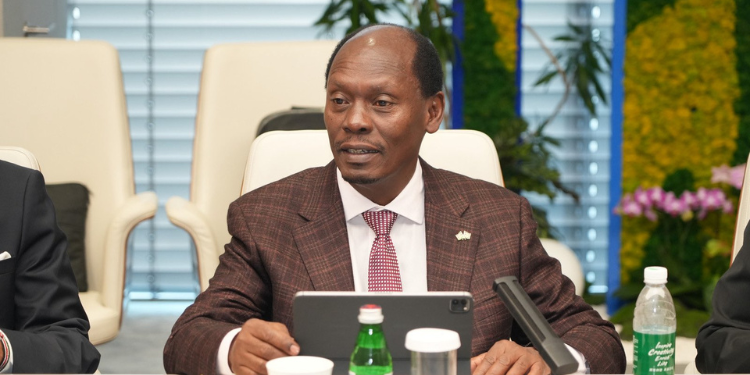
Speaking in Nairobi during a pre-bid session for the Framework Agreement Tender for Extending National Backbone and Cross-Border Links under the Kenya Digital Economy Acceleration Project (KDEAP), ICT Principal Secretary John Tanui said the government would provide KSh13 billion to support the expansion of fibre infrastructure.
The funding is expected to attract matching private-sector investment to extend backbone, middle-mile and cross-border fibre links, helping internet service providers reach more homes, businesses and public institutions.
The Government is making available KSh 13 billion to catalyse matching private-sector investment, with the expectation of delivering at least 27,000 additional kilometres of backbone, middle-mile and cross-border fibre infrastructure,” the PS stated.
Govt Targets More Than 8 Million Fixed Broadband Connections
Tanui said the government aims to expand fixed broadband to more than eight million connections, working to connect every home that already has an electricity connection.
He explained that expanding the national fibre network would provide the infrastructure internet providers need to extend services to more households, including communities that remain underserved.
The project also aims to close connectivity gaps, strengthen network resilience and make it more affordable for operators to connect customers. Improved access to reliable internet could support digital learning, online work, entrepreneurship and access to public services.
According to Tanui, Kenya’s existing digital infrastructure provides a foundation for further expansion. Data from the Communications Authority covering April to June 2026 recorded 88 million mobile subscriptions, 54.9 million mobile broadband subscriptions and 54 million mobile money subscriptions.
Fixed internet connections reached approximately 2.84 million by June 2026, up 32.4 per cent from June 2025. Fibre connections accounted for approximately 1.57 million of the total and grew by 29.7 per cent over the same period.
“Fixed internet connections reached approximately 2.84 million by June 2026, a 32.4% increase from June 2025.”
Tanui Explains How the KSh13 Billion Fibre Project Will Work
The government plans to allocate public support competitively through a Multi-Round Reverse Auction (MRRA), a process intended to mobilise private capital while maximising the value of public investment.
Also Read: Starlink Ranked Among Kenya’s Top 10 Fixed Internet Companies
Tanui said the initiative had already jointly identified and verified the missing links with the support of a consultant. The project will focus on extending national backbone infrastructure and cross-border links to address gaps in the existing network.
“Public support will be allocated competitively through a Multi-Round Reverse Auction (MRRA), designed to mobilise matching private capital and maximise value from public investment,” he explained.
The government expects private-sector participation to play a significant role in delivering the planned fibre expansion. Internet service providers and other industry players are expected to contribute investment alongside public funding.
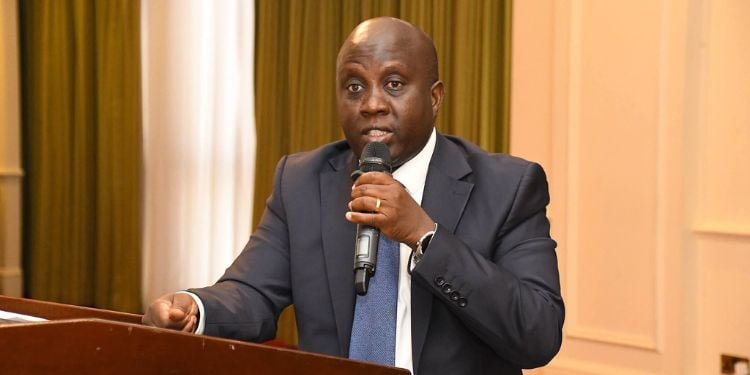
During the pre-bid session, Tanui engaged internet service providers, telecommunications operators, investors, financiers and development partners. ICT Authority Chief Executive Officer Jessy Maruti also attended the meeting.
Fibre Expansion Expected to Support Homes and Businesses
Tanui said Kenya’s submarine cables and cross-border fibre connections had strengthened its position as a regional digital gateway. The country had approximately 28.95 terabits per second of available international internet bandwidth, supporting services such as cloud computing, digital trade, business process outsourcing and innovation.
He also cited the growth of fibre infrastructure through public and private investment. In 2022, the private sector had approximately 24,000 kilometres of fibre, while the public sector had 12,500 kilometres.
Also Read: How Starlink Satellite Internet Works and Expands Access
Since then, the private sector has added a further 24,000 kilometres, while the public sector has added 17,000 kilometres.
The proposed expansion aims to build on that progress by extending connectivity beyond existing networks and making it easier for providers to reach more customers.
For learners, wider internet access could support digital education, while young people and entrepreneurs could use connectivity to access online work and business opportunities. Businesses could also reach wider markets, while households could access more services online.
The government’s stated target of connecting every home with electricity to fixed internet will depend on the expansion of fibre infrastructure and the extension of last-mile connections by service providers.
Follow our WhatsApp Channel and X Account for real-time news updates.