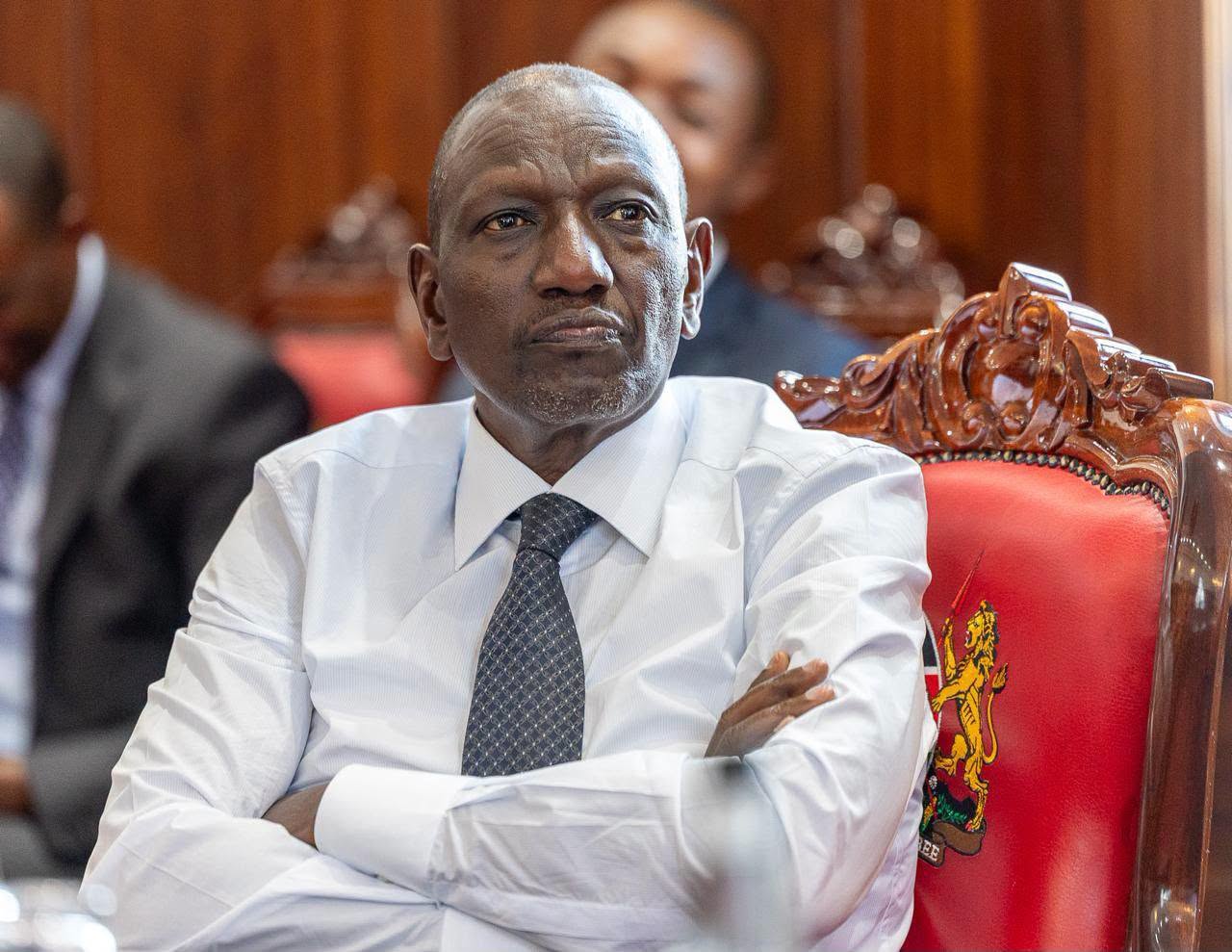
Halakhe Dida Waqo, the former Secretary and Chief Executive Officer of the Ethics and Anti-Corruption Commission (EACC), is seeking to lead the secretariat of the Independent Electoral and Boundaries Commission (IEBC).
Waqo, who headed EACC for six years, has a professional background spanning anti-corruption, international development, humanitarian work, peacebuilding and conflict management.
His public service and institutional leadership experience dates back several years before he joined EACC, where he became the commission’s first Secretary/CEO in January 2013.
His name has now emerged in the recruitment process for the IEBC Secretary/CEO position, bringing his previous leadership at the anti-graft agency into focus.
Halakhe Waqo’s Early Career
Before joining EACC, Waqo spent more than two decades working in international development and humanitarian programmes, with responsibilities covering conflict management, community mobilisation, policy advocacy and organisational management.
He held several positions with international and regional organisations, including ActionAid International, Oxfam GB, the International Union for Conservation of Nature (IUCN) and the African Council for Religious Leaders.
At ActionAid International, Halakhe Waqo served as an International Conflict and Emergencies Adviser for Eastern Africa.
He also worked as a Horn of Africa adviser for the African Council for Religious Leaders and coordinated Oxfam GB programmes in Kenya and Rwanda.
Waqo also served as the global coordinator of the World Initiative for Sustainable Pastoralism, a programme associated with IUCN.
His work extended to international development networks, where he served on the board of the International Council of Voluntary Agencies in Geneva, Switzerland. He also served on the boards of several local and regional development organisations.
In Kenya, he undertook consultancies that included training non-governmental organisations on conflict-sensitive programming following the 2007–2008 post-election violence. He also facilitated civic education training.
His earlier work placed him at the intersection of community development, conflict resolution and institutional engagement before he took up a senior public-sector position.
Also Read: IEBC Shortlists 9 Candidates for CEO Position
How Waqo Became EACC CEO
Waqo formally took office as EACC Secretary/CEO on January 21, 2013, after being sworn in at the Supreme Court of Kenya.
He succeeded Jane Muthaura, who served as acting Secretary/CEO until his appointment.
Halakhe Waqo became the first Secretary/CEO of the commission, which had been established in 2012 to replace the Kenya Anti-Corruption Commission.
As head of the secretariat, he was responsible for the commission’s administrative leadership and the management of its operations in carrying out its anti-corruption mandate.
His appointment placed him at the centre of an institution tasked with investigating corruption and economic crimes, preventing corruption and promoting integrity in public service.
Waqo served in the position until January 2019, when his six-year term ended.
Also Read: IEBC Completes Receipt of Authorised Party Officials Ahead of 2027 Polls
His Role in Multi-Agency Anti-Corruption Investigations
Beyond his leadership at EACC, Waqo helped lead Kenya’s multi-agency approach to investigating and prosecuting corruption cases.
He served as chairperson and convenor of the Investigations and Prosecution Multi-Agency Team from October 2015 to October 21, 2016. According to his official EACC profile, he remained a member of the team.
The team brought together agencies involved in investigating and prosecuting corruption-related offences, providing a platform to coordinate case handling.
Waqo also served on the executive committee of the East African Association of Anti-Corruption Agencies from September 2015, according to the profile.
His regional engagements included membership of Kenya’s national committee for the International Conference on the Great Lakes Region’s Committee for the Prevention of Genocide and Mass Atrocities between 2010 and 2012.
These roles formed part of his wider experience in institutional cooperation, governance and conflict prevention. Also Read:
Education and Professional Qualifications
Waqo’s academic background includes a Master of Arts in Sociology, a Master of Arts in Conflict Studies, and a Bachelor of Education (Arts), according to his official profile.
He studied at the University of Nairobi and Kenyatta University.
His professional qualifications include membership in the Chartered Institute of Arbitrators, where he has held the designation MCIArb since 2011. He is also a member of the Institute of Directors (Kenya).
Follow our WhatsApp Channel and X Account for real-time news updates and subscribe to our YouTube Channel for in-depth interviews.