Kenya has protested Saudi Arabia’s decision to suspend travel and visa services for people travelling from the country over Ebola concerns, describing the restrictions as excessive and unsupported by scientific evidence.
In a statement on Friday, October 30, the Ministry of Foreign and Diaspora Affairs asked Saudi Arabia to review and lift the measures, arguing that Kenya had contained the outbreak and recorded no new infections since October 19.
“The Ministry of Foreign and Diaspora Affairs presents is compliments to the Ministry of Foreign Affairs of the Kingdom of Saudi Arabia in Nairobi and wishes to convey its deep concern regarding the decision of the Government of Kingdom of Saudi Arabia, announced on Friday, 30th October 2026, to suspend travel to and arrivals from Kenya to prevent Ebola outbreak,” stated the Ministry.
The restrictions announced by Saudi Arabia bar its citizens from travelling to Kenya and suspend visa issuance for travellers coming from the country. They also cover people who have been in Kenya or another country experiencing an active Ebola outbreak within the 21 days before arriving in the Kingdom, including those travelling through third countries.
Kenya acknowledged Saudi Arabia’s right to introduce public health measures but said the restrictions went beyond what the situation in the country justified.
The diplomatic note said all reported infections were linked to one imported case, with secondary cases identified among people already in quarantine when they fell ill.
“With respect, while Kenya acknowledges the right of the Kingdom of Saudi Arabia to implement health measures in accordance with their national law to protect their citizens, the measures against Kenya are disproportionate and not supported by scientific health evidence,” the ministry stated.
Also Read: Saudi Arabia Imposes New Travel Restrictions on Kenya
Kenya Cites Ebola Containment Measures in Protest
Kenya told Saudi Arabia that it had traced all 135 contacts linked to the outbreak, with the first group completing 21 days in quarantine and being discharged on October 26.
The government said the remaining contacts were expected to leave quarantine on November 3, provided they continued testing negative.
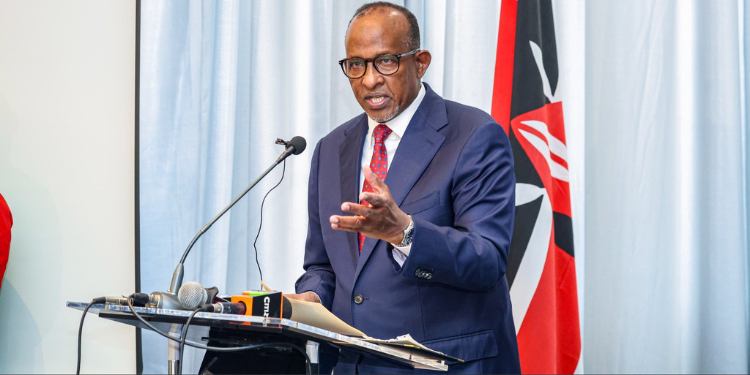
In a statement on Saturday, October 31, Health Cabinet Secretary Aden Duale said Kenya had confirmed eight cases linked to the imported infection, involving four healthcare workers and four close family members.
He said seven patients remained under treatment following the deaths of the initial patient and one additional patient.
According to Duale, five of the seven patients had returned an initial negative Ebola test and were awaiting a second test scheduled for Monday, November 2.
The government expected to discharge the patients on November 3, along with 46 contacts who had remained in quarantine without developing symptoms.
Duale maintained that Kenya had not recorded community transmission and had not reported a new infection since October 19.
Nairobi Asks Saudi Arabia to Lift Travel Restrictions
Kenya urged Saudi Arabia to reconsider the restrictions, warning that they could affect pilgrims, workers, students, trade and tourism between the two countries.
Also Read: Kenyan Workers in Saudi Arabia Issued Fresh Update From Embassy On Employment Ban
The government also asked Saudi Arabia’s national focal point to submit the scientific justification for the measures to the World Health Organization (WHO) under Regulation 43 of the International Health Regulations (2005).
The regulation requires countries introducing measures that significantly interfere with international traffic to provide their public health rationale to WHO within 48 hours and review the measures within three months.
Kenya also said it would raise the matter with the Africa Centres for Disease Control and Prevention (Africa CDC), arguing that the restrictions could set a precedent for other African countries facing disease outbreaks.
The Ministry of Health said Kenya needed international support and cooperation, not travel restrictions and isolation.
“Kenya has demonstrated leadership, Kenya has demonstrated transparency, what we require from the international community is support and collaboration, not condemnation, not travel restrictions and certainly not isolation,” Duale said.
Meanwhile, Saudi authorities maintained that the restrictions were based on epidemiological assessments by the Kingdom’s health agencies and were intended to prevent the virus from entering the country.
The Saudi Public Health Authority, Weqaya, said the country’s health situation remained stable, with surveillance systems in place to monitor potential risks.
Follow our WhatsApp Channel and X Account for real-time news updates and subscribe to our YouTube Channel for in-depth interviews.