Kenya’s gambling capital requirement for the National Lottery is set at Ksh2 billion under the new Gambling Control Regulation 2026.
The Ksh2 billion requirement for the National Lottery stands as the highest financial threshold in the country’s history for a gambling license.
According to the Gambling Control Act, every applicant must submit proof of the gambling capital set out in the Third Schedule before their application is processed by the Gambling Regulatory Authority of Kenya (GRA).
Capital requirement will ensure that the operator of the National Lottery possesses the liquid assets and financial stability necessary to sustain a high-volume business model.
“We are looking at the Kenyan lottery generating revenue that can be a financial enabler for the country and support economic and social transformation,” Peter Maina Karimi, Director General of the Gambling Regulatory Authority of Kenya, stated during a parliamentary committee hearing in March 2026, while presenting the GRA’s plans for the National Lottery and revenue management.
Tiered Capital Structure
In addition to the new set of National Lottery capital, the Third Schedule introduced a tiered system of capital requirements designed to scale with different gambling activities.
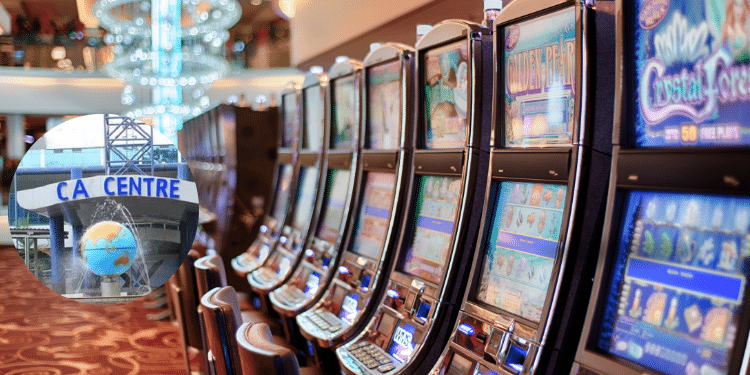
Operators in land-based casinos will be required to have a capital base of KSh100,000,000.
For online licensing of casinos, bookmakers, or lotteries, online entities must have KSh50,000,000 in capital.
A further hybrid license covering casino, bookmaking, lottery, and bingo will require KSh50,000,000 in capital.
Public lotteries and pool betting are mandated to have KSh 50,000,000 in capital, while small-scale bingo operators will be required to have KSh 500,000 in capital to operate.
Also Read: From Sports Betting to Casinos: The Evolution of Gambling in Kenya
Revised Gambling Fee
A significant rise in the gambling industry’s entry has increased the application fee for a hybrid online license to KSh 8,000,000 and the initial fee to KSh 12,000,000, according to the Kenya Gambling Control Regulations 2026.
Renewal of the hybrid online license requires payment of a license renewal fee of KSh20,000,000, in addition to an annual operating license fee of KSh6,000,000.
Land-based casino operators will be required to pay an application fee of KSh5,000,000 and a renewal fee of KSh9,000,000.
Also Read: Why Discipline Beats Strategy in 90% of Gambling Scenarios
Penalties
To prevent the circumvention of these rules, the 2026 Regulations introduced penalties for non-compliance, including a fine of up to one million shillings, a prison term of six months, or both for operating without a valid license.
Furthermore, licenses are strictly non-transferable, and any attempt to sell or transfer a license to another entity without the Authority’s approval will lead to a KSh1,000,000 fine.
The Authority also maintains the right to suspend or revoke a license if an operator becomes insolvent, fails to protect customer data, or provides false information during the application process.