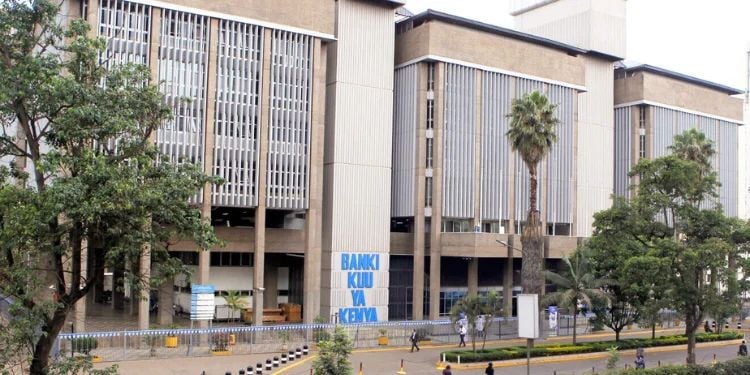



The Kenyan shilling weakened slightly against the US dollar as global oil prices declined during the week ending November 26, 2026, according to the latest Central Bank of Kenya (CBK) Weekly Bulletin.
In the report released on Friday, November 27, the Central Bank said the shilling traded at KSh130.06 against the US dollar on November 26, up from KSh129.99 on November 19.
The local currency lost seven cents against the dollar within a week, although CBK described its performance as relatively stable against major international and regional currencies.
“The Kenya Shilling remained stable against major international and regional currencies during the week ending November 26, 2026,” the Central Bank stated.
The movement in the exchange rate comes at a time when Kenya continues to rely on imports to meet its petroleum needs, making international commodity prices and currency movements important to the cost of doing business.
Foreign Exchange Reserves Decline to KSh1.79 Trillion as Kenyan Shilling Trades at Ksh 130
The Central Bank also reported a decline in the country’s foreign exchange reserves, which stood at approximately KSh1.79 trillion as of November 26.
This was down from approximately KSh1.81 trillion recorded on November 19.
The reserves provided 5.5 months of import cover, down from 5.6 months the previous week.
Despite the decline, the reserves remained above the statutory minimum requirement of four months of import cover.
CBK stated that “the foreign exchange reserves remained adequate” to support the country’s import requirements.
The reserves provide a buffer that helps the country meet its external payment obligations, including payments for imported goods and services.
Also Read: CBK Governor Explains Why Kenyan Shilling Has Stayed at KSh129 Against the Dollar for Over 2 Years
Global Oil Prices Fall to KSh11,503 Per Barrel
Meanwhile, international oil prices declined during the week, with Murban crude oil falling to approximately KSh11,503 per barrel on November 26.
The price stood at approximately KSh11,648 per barrel on November 19, down about KSh145 over seven days.
In explaining the decline, CBK noted that “concerns over potential oil supply disruptions eased amid heightened Middle East tensions.”
The reduction could offer some relief to Kenya’s petroleum import bill, given the country’s dependence on imported fuel.
Lower international oil prices can reduce the cost of importing petroleum products and ease pressure on businesses that rely on fuel for transport, manufacturing and other operations.
However, the decline in global crude prices does not automatically mean motorists will pay less at local filling stations. Domestic pump prices also depend on the cost of refined petroleum products, the exchange rate, taxes and other charges.
The weakening shilling could also reduce some of the gains from cheaper crude oil because importers need more Kenyan shillings to purchase foreign currency for international transactions.
Treasury Receives KSh48 Billion in Bids
Elsewhere, the CBK bulletin showed increased investor demand for government securities during the week.
The Treasury bill auction conducted on November 26 attracted bids worth KSh48.04 billion against an advertised amount of KSh28 billion.
This represented a performance rate of 171.6 per cent, meaning investors offered significantly more money than the government had planned to raise.
Interest rates on the 182-day and 364-day Treasury bills declined slightly, while the rate on the 91-day paper increased marginally.
The money market also remained liquid, with commercial banks’ excess reserves averaging KSh46.3 billion above the required cash reserve ratio.
The Kenya Shilling Overnight Interbank Average (KESONIA) remained unchanged at 8.75 per cent.
Also Read: Kenyan Shilling Hits Ksh130 Against US Dollar for First Time in 7 Months
Nairobi Securities Exchange Records Decline
At the Nairobi Securities Exchange (NSE), major share indices recorded losses during the week ending November 26.
The Nairobi All Share Index (NASI) declined by 2.37 per cent, while the NSE 20 and NSE 25 share price indices fell by 1.83 per cent and 2.71 per cent, respectively.
The total number of shares traded also decreased by 32.29 per cent, while equity turnover fell by 0.4 per cent.
In the international market, gold prices moved in the opposite direction to oil, rising to approximately KSh463,812 per ounce on November 26 from KSh458,112 a week earlier.
Follow our WhatsApp Channel and X Account for real-time news updates, and subscribe to our YouTube Channel for in-depth interviews