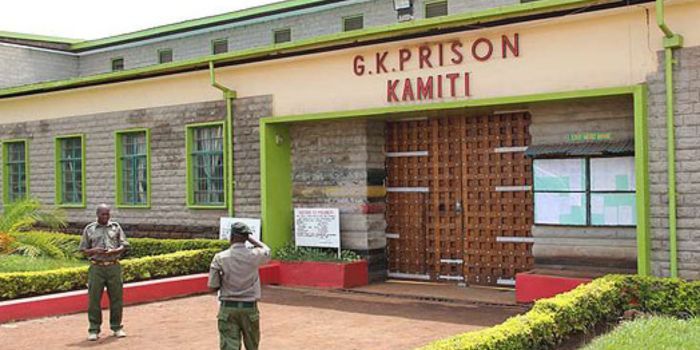


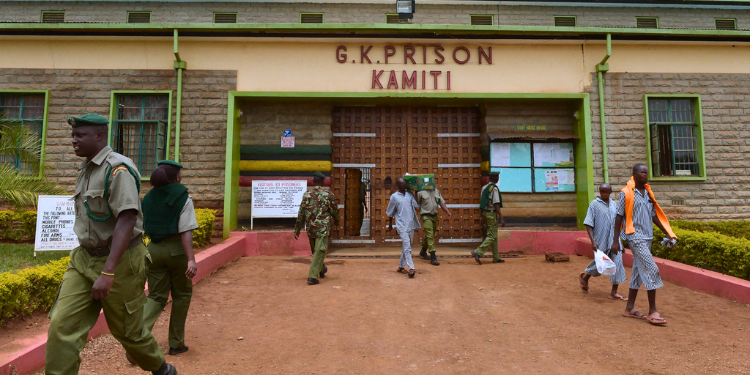
Kamiti Maximum Security Prison was established in the 1950s and remains one of Kenya’s long-standing correctional institutions, operated by the Kenya Prisons Service.
It is located in Kahawa West, Roysambu Sub-County, Nairobi County.
According to a National Assembly Select Committee that visited Kamiti Maximum Security Prison on November 7, 2008, the facility was established in 1952 and occupied 2,000 acres.
The prison’s then officer-in-charge, Assistant Commissioner of Prisons J.N. Mutevesi, and acting deputy S.C. Mbaji told the committee the facility was designed to accommodate 1,500 prisoners and between 700 and 800 prison officers.
At the time of the visit, the officials reported that Kamiti held 3,568 inmates, attributing the congestion partly to the number of petty offenders serving custodial sentences.
Visiting Hours And Identification Requirements
For members of the public planning to visit an inmate, the service has set daily visiting hours and identification requirements, as well as conditions governing visits, searches, and the treatment of inmates.
The Kenya Prisons Service states that visiting hours are from 9 am to 4.30 pm every day, and all visitors must carry a national identity card or passport for identification.
“The KPS official visitation time for inmates every day is from 9 am to 430 pm. Please come with your identification document (National Identification Card or Passport),” KPS directs.
Under Rule 57 of the Kenya Prisons Rules, visits the limited to three visitors at a time and must take place during normal prison working hours and within the hours directed by the officer in charge.
Additionally, visitors must provide their names and addresses to the officer supervising the visit.
A prison officer may search a visitor on grounds of suspicion; however, the search must not take place in the presence of an inmate or another visitor.
If the visitor is a former prisoner, they must obtain written permission from the officer in charge before visiting an inmate.
“No ex-prisoner shall be allowed to visit a prisoner, except with the written permission of the officer in charge,” the rules state.
Also Read: Samuel Mukusi: Police Chief Handed Command of Kenya’s New Tactical Unit
Admission procedures for inmates
The Kenya Prisons Rules, Legal Notice No. 60 of 1963, set out procedures followed when a prisoner is admitted to a prison.
During admission, prison staff must record a prisoner’s personal information, take fingerprints, and take photographs for a prisoner serving a long sentence.
A medical officer must examine each newly admitted prisoner on the day of admission or as soon as possible afterward.
Where an examination cannot be conducted on the same day, it must take place as soon as possible the following day and within 24 hours of admission.
The rules further provide for the prisoner to take a bath or shower, unless exempted by the officer in charge or medical officer.
Additionally, the prison must also provide information on disciplinary requirements, earnings, privileges, and how to submit petitions or complaints.
The officer in charge must also ensure that the inmate understands all the required information within 24 hours of admission, including explaining it to prisoners who cannot read or have difficulty understanding it.
Offences for Which Prisoners Are Held at Kamiti Maximum Security Prison
- Murder
- Robbery with violence
- Manslaughter
- Sexual offenses
- Drug trafficking
- Arson
Also Read: Inside Jogoo Road Police Station Serving 8 Estates in Nairobi’s Eastlands
Rules Governing the Treatment and Discipline of Inmates
The Kenya Prisons Rules provide for different prisoner classifications, including the Young Prisoner Class, Star Class, Ordinary Class and Unconvicted Class, and require the different categories to be kept separate.
The rules state that prison discipline should be maintained with fairness and firmness to promote self-respect, personal responsibility and preparation for release.
An inmate facing a prison disciplinary charge must be informed of the allegation and allowed to respond.
Additionally, the regulations also restrict the use of force by prison officers unless authorised under the law or the rules.
If an officer strikes or uses force against a prisoner, a medical officer must examine the inmate, and the incident must be reported immediately to the officer in charge.
Follow our WhatsApp Channel and X Account for real-time news updates and subscribe to our YouTube Channel for in-depth interviews.