Tuesday, July 14, 2026
  • News
    • Latest News
    • Breaking News
    • Fact Check
    • Investigations
    • Explainers
  • Politics
    • Global Politics
    • Elections
    • Government & Policy
    • Diplomacy
    • Conflicts & Security
    • Political Analysis
  • Business
    • Global Economy
    • Markets
    • Technology
    • Startups
    • Energy
    • Finance
  • World News
    • Americas
    • Asia
    • Asia Pacific
    • Africa
    • Europe
    • Middle East
  • Africa
    • Central Africa
    • East Africa
    • West Africa
    • Southern Africa
  • Health
    • Global Health
    • Public Health
    • Health Policy
    • Medical Research
    • Diseases & Conditions
    • Mental Health
    • Nutrition
    • Climate & Health
    • Health Explainers
  • Sports
    • World Cup 2026
    • Athletics
    • Basketball
    • Boxing
    • Cricket
    • Football
    • Formula 1
    • Golf
    • Rugby
  • Weather
    • Climate Business
    • Climate Change
    • Climate Solutions
    • Living Green
  • Culture
    • Arts
    • Film & TV
    • Food
    • Music
    • Lifestyle
    • Travel
  • Opinion
    • Editorials
    • Letters
  • Behind The Brand
REGISTER
LOGIN
No Result
View All Result
The Kenya Times
  • News
    • Latest News
    • Breaking News
    • Fact Check
    • Investigations
    • Explainers
  • Politics
    • Global Politics
    • Elections
    • Government & Policy
    • Diplomacy
    • Conflicts & Security
    • Political Analysis
  • Business
    • Global Economy
    • Markets
    • Technology
    • Startups
    • Energy
    • Finance
  • World News
    • Americas
    • Asia
    • Asia Pacific
    • Africa
    • Europe
    • Middle East
  • Africa
    • Central Africa
    • East Africa
    • West Africa
    • Southern Africa
  • Health
    • Global Health
    • Public Health
    • Health Policy
    • Medical Research
    • Diseases & Conditions
    • Mental Health
    • Nutrition
    • Climate & Health
    • Health Explainers
  • Sports
    • World Cup 2026
    • Athletics
    • Basketball
    • Boxing
    • Cricket
    • Football
    • Formula 1
    • Golf
    • Rugby
  • Weather
    • Climate Business
    • Climate Change
    • Climate Solutions
    • Living Green
  • Culture
    • Arts
    • Film & TV
    • Food
    • Music
    • Lifestyle
    • Travel
  • Opinion
    • Editorials
    • Letters
  • Behind The Brand
  • News
    • Latest News
    • Breaking News
    • Fact Check
    • Investigations
    • Explainers
  • Politics
    • Global Politics
    • Elections
    • Government & Policy
    • Diplomacy
    • Conflicts & Security
    • Political Analysis
  • Business
    • Global Economy
    • Markets
    • Technology
    • Startups
    • Energy
    • Finance
  • World News
    • Americas
    • Asia
    • Asia Pacific
    • Africa
    • Europe
    • Middle East
  • Africa
    • Central Africa
    • East Africa
    • West Africa
    • Southern Africa
  • Health
    • Global Health
    • Public Health
    • Health Policy
    • Medical Research
    • Diseases & Conditions
    • Mental Health
    • Nutrition
    • Climate & Health
    • Health Explainers
  • Sports
    • World Cup 2026
    • Athletics
    • Basketball
    • Boxing
    • Cricket
    • Football
    • Formula 1
    • Golf
    • Rugby
  • Weather
    • Climate Business
    • Climate Change
    • Climate Solutions
    • Living Green
  • Culture
    • Arts
    • Film & TV
    • Food
    • Music
    • Lifestyle
    • Travel
  • Opinion
    • Editorials
    • Letters
  • Behind The Brand
No Result
View All Result
The Kenya Times ~ Trending, Breaking News and Videos
No Result
View All Result
ADVERTISEMENT

Why Kenyans Set Up Identical Informal Businesses Side by Side

The ConversationbyThe Conversation
April 28, 2024
Reading Time: 7 mins read
Why Kenyans Set Up Identical Informal Businesses Side By Side

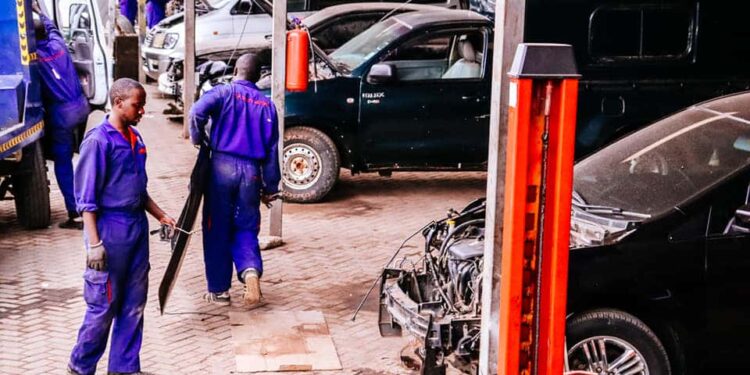
A vehicle repair shop. Photo/Courtesy

FacebookTwitterLinkedInRedditWhatsApp
Advertisement

The population on the African continent will have nearly doubled by 2050, according to UN projections. About 800 million more young Africans will enter the job market by then.

Combine this forecast with the high youth unemployment rate in many African countries today, then the pressing question is: who will create stable jobs at mass scale?

Many policies to create new employment at scale focus on solution templates that have worked elsewhere, often outside Africa. These include enabling entrepreneurship to create high-growth start-up ventures, bringing in technological advances to potentially unlock new industries, or the establishment of outsourcing hubs for low-cost labour.

Few policies directly support homegrown solutions that already have a track record of creating large-scale stable employment.

Together with my coauthors, I looked for answers in a seemingly unlikely place. We studied how car repair businesses were organized. Specifically, we studied the neighborhood of Dagoretti Corner in Nairobi, Kenya.

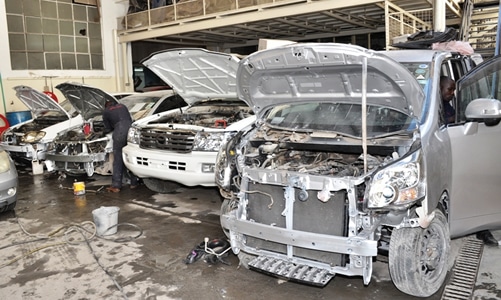
Here, 105 largely identical car repair businesses set up shop close to one another. Imagine corrugated iron sheets as fences to demarcate businesses which offer exactly the same service in the same location.
ADVERTISEMENT
Why Kenyans Set Up Identical Informal Businesses Side By Side
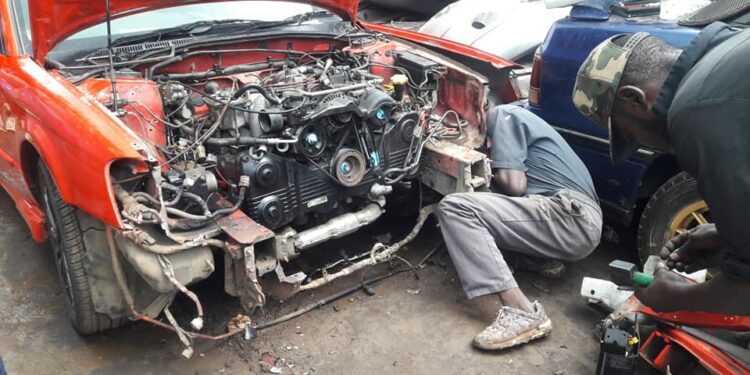
A mechanic fixing a car. Photo/Courtesy

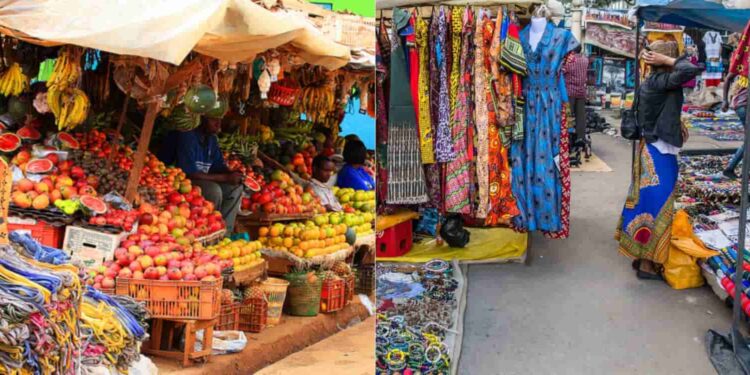
This phenomenon is common in major African cities. Thousands of different traders – from fruit sellers to furniture makers – set up next door to each other and co-locate. This doesn’t make sense as a competitive strategy, so why do it?


Also Read: Kenya’s Shilling Is Gaining Value, but Don’t Expect It to Last & Expert


We found that these businesses do this in part because it generates an informal welfare system. In our study, the car repair businesses mutually supported each other in a variety of ways to ensure they survived and thrived.

Our findings make a case that policymakers should focus on supporting these informal welfare systems. They abound in urban areas and create employment at scale.

Yet, policies tend to support individuals, as opposed to groups, in informal economies. This could risk eroding these welfare systems, putting livelihoods at risk.

Informal Welfare System

Over the past two decades, car repair businesses in Dagoretti Corner grew from 11 to 105 identical businesses. As the satellite images in the video below show (car repair businesses shaded in yellow), they have massively expanded and are now fully integrated into the urban infrastructure.

ADVERTISEMENT

The agglomeration of businesses in this way is often seen as a sign of failed economic and urban development policy by industry analysts, development practitioners and policy makers.

They tend to believe that agglomerated businesses should reach higher levels of efficiency, competitiveness, specialization and innovation.

Yet, many businesses continue to operate the same way they did a decade ago with little change or upgrading. What benefit are these businesses reaping?

Through our fieldwork in Dagoretti Corner, visiting car repair businesses and conducting interviews with 45 owners, we identified five ways in which business owners create their own welfare system:

First, they save and invest money together. This is often done in small scale, informal rotating savings and investment associations. In Kenya these are known as chamas and Savings and Credit Cooperative Organizations (Saccos) and are akin to credit unions and cooperatives.

Saving money together enables owners to get a loan and enables business owners to make investments together. Rather than being competitors, businesses are interdependent and trust each other to grow together.

Second, businesses offer apprenticeship opportunities, enabling the youth from rural Kenya to get trained and equipping them with the knowledge and resources to start their own car repair businesses. Through apprenticeships, mechanics become familiar with the welfare system and continue its upkeep into the future.

Third, trust is fragile and business owners come up with ways to self-police against free riding and theft. They address competitive behavior through self-organized committees. Poaching customers from a peer business is seen as theft and is policed.

Repeated shoddy repair work and alcohol abuse among mechanics is also policed. Particularly exploitative customers are blacklisted. After all, the owners want to make sure that customers perceive Dagoretti Corner as a safe place for customers to entrust their valuable cars.

Fourth, businesses support each other in times of crisis when nearing bankruptcy to ensure survival. Chamas and Saccos make emergency money available to smooth over gaps.
Why Kenyans Set Up Identical Informal Businesses Side By Side
Side to side photo of fruit vendors and second-hand clothes businesses side by side.

Businesses temporarily loan out their employees to other businesses to ease the financial burden of paying a wage. And businesses sub-contract repair work to distressed businesses, ensuring at least some cash flow until business picks up again.

Fifth, in times of personal crises when livelihoods are at stake, due to high medical bills or funeral costs, peer businesses step in and provide a type of insurance policy. Owners, employees and apprentices collectively contribute funds to support those in dire need and prevent them from slipping into destitution. This informal insurance scheme even extends to family members.

This informal social welfare system is critical because it provides stable employment, saving and investment opportunities and insurance at considerable scale.

Policies that support the growth of individual entrepreneurs in these areas – such as through training and cash infusions geared towards business differentiation – are likely to introduce competitive behaviors among identical businesses. This risks the collapse of welfare systems and thus also employment at scale.

Policies must strengthen informal welfare systems

We concluded from our research that policies need to further enable, strengthen and then leverage the existing welfare systems of co-locating businesses to engender firm and employment growth. These are strongholds of cooperative behavior that need to be protected rather than transformed or displaced.

One way this can be done is through the creation of transparent cooperative structures and exit pathways for individual businesses to grow. This would strengthen the welfare system and needs to be the starting point of policy discussions.

For example, targeted governance interventions could make chamas and Saccos more robust to safeguard them against fraud and enhance their self-organizing capacity. Digital technologies can play a role here to bring these saving and investment schemes into the modern age. Once made robust, cash infusions by the government to support firms in the informal economy can then happen through these rather than through separate, government-run entities.

We do not rule out the potential for policy interventions seeking to support individual firms. Yet, these need to be context-sensitive so that they can enable businesses to scale without eroding the social order.

This is just a starting point. In light of the pressing challenge to bring about labor-intensive growth in African societies, it is paramount to not only focus on importing solutions from elsewhere but to be intentional about enabling and supporting homegrown solutions that already work.The Conversation

Businesses In Kenya
A Car repair shop in Nairobi. Photo/Courtesy

Tim Weiss, Assistant Professor, Department of Management and Entrepreneurship, Imperial College London

This article is republished from The Conversation under a Creative Commons license. Read the original article.


Tags: Agglomerated businessesInformal Businesses
The Conversation

The Conversation

The Conversation is an independent news organization that publishes evidence-based articles written by experts to help readers understand diverse topics. We cover a wide range of areas including arts, culture, education, health, politics, science, and more¹. Their content is characterized by in-depth analysis, research, news, and ideas from leading academics and researchers. The Conversation aims to provide academic rigor with journalistic flair.

Related Posts

Kenya Bankers Chair Paul Russo Calls For End To Overreliance On Collateral In Loan Approvals

Kenya Bankers Chair Proposes Shift in How Banks Approve Loans

July 14, 2026
Kenya Beats Uk, South Africa In Knight Frank Ranking Of Top Home Investment Destinations

Kenya Beats UK and Other Foreign Markets in Luxury Home Investments

July 14, 2026
List Of Top 5 Sectors Wealthy Kenyans Are Eyeing For Investment

List of Top 5 Sectors Wealthy Kenyans Are Eyeing for Investment

July 14, 2026
Banks Make Money From Forex Because They Sit At The Centre Of Currency Demand.

CBK Invites Kenyans with as Little as KSh50,000 to Invest in Treasury Bonds: How to Bid

July 14, 2026
ADVERTISEMENT

The Kenya Times Facebook

LATEST NEWS

  • Gachagua Lists 4 CSs, 6 PSs Involved in Olkalou By-Election Campaigns
  • Most Americans Prefer to Die at Home, But the US Healthcare System Often Prevents It
  • IEBC Hits Nakuru MP David Gikaria With KSh2.5M Fine Over Ol Kalou Campaign Remarks
  • Kenya Bankers Chair Proposes Shift in How Banks Approve Loans
  • KeNHA Announces 30-Day Traffic Disruption at Coptic Roundabout
  • Why Sifuna should focus on building his own political block – Nerima Wako
  • Prof. Philip Kaloki’s Legacy of 51 Schools and KMTC’s Massive Expansion
  • Kenya Beats UK and Other Foreign Markets in Luxury Home Investments
  • Why Nairobi Landlords Are Upgrading Old Commercial Buildings Instead of Building New Ones
  • PCEA Mai a Ihii Booth High School Closed Indefinitely
  • Samuel Muchina: The UDA Flagbearer Eyeing Ol Kalou’s Top Seat
  • IEBC Sets Tough Conditions for Agents and Voters Ahead of Ol Kalou By-Elections
  • List of Top 5 Sectors Wealthy Kenyans Are Eyeing for Investment
  • Govt Extends 8.0% VAT Rate on Fuel Ahead of EPRA Review
  • KRA Loses Landmark VAT Battle Over JKIA Export Services
ADVERTISEMENT

Company

About Us

Our Authors

Our Experts

Social Media

Policies

Privacy Policy

House Rules

Standards and Policies

Terms and Conditions

Subscription

My Account

Contact Us

Contact Us

Join Our Team

Advertise With Us

© Copyright 2026 | The Kenya Times | All Rights Reserved

Welcome Back!

Sign In with Facebook
Sign In with Google
Sign In with Linked In
OR

Login to your account below

Forgotten Password? Sign Up

Create New Account!

Sign Up with Facebook
Sign Up with Google
Sign Up with Linked In
OR

Fill the forms below to register

All fields are required. Log In

Retrieve your password

Please enter your username or email address to reset your password.

Log In
Your Privacy and Cookies
We use cookies on our website to give you the most relevant experience by remembering your preferences and repeat visits. By clicking “Accept”, you consent to the use of ALL the cookies.
Do not sell my personal information.
Cookie settingsACCEPT
Privacy & Cookies Policy

Privacy Overview

This website uses cookies to improve your experience while you navigate through the website. Out of these cookies, the cookies that are categorized as necessary are stored on your browser as they are essential for the working of basic functionalities of the website. We also use third-party cookies that help us analyze and understand how you use this website. These cookies will be stored in your browser only with your consent. You also have the option to opt-out of these cookies. But opting out of some of these cookies may have an effect on your browsing experience.
Necessary
Always Enabled
Necessary cookies are absolutely essential for the website to function properly. This category only includes cookies that ensures basic functionalities and security features of the website. These cookies do not store any personal information.
Functional
Functional cookies help to perform certain functionalities like sharing the content of the website on social media platforms, collect feedbacks, and other third-party features.
Performance
Performance cookies are used to understand and analyze the key performance indexes of the website which helps in delivering a better user experience for the visitors.
Analytics
Analytical cookies are used to understand how visitors interact with the website. These cookies help provide information on metrics the number of visitors, bounce rate, traffic source, etc.
Advertisement
Advertisement cookies are used to provide visitors with relevant ads and marketing campaigns. These cookies track visitors across websites and collect information to provide customized ads.
Others
Other uncategorized cookies are those that are being analyzed and have not been classified into a category as yet.
SAVE & ACCEPT
LOGIN | REGISTER
  • Login
  • Sign Up
  • Cart
No Result
View All Result
  • News
    • Latest News
    • Breaking News
    • Investigations
    • Explainers
    • Fact Check
  • Politics
    • Global Politics
    • Conflicts & Security
    • Elections
    • Diplomacy
    • Government & Policy
    • Political Analysis
  • Business
    • Global Economy
    • Markets
    • Technology
    • Startups
    • Energy
    • Finance
  • World News
    • Americas
    • Asia
    • Asia Pacific
    • Africa
    • Europe
    • Middle East
  • Africa
    • East Africa
    • West Africa
    • Southern Africa
    • Central Africa
  • Health
    • Global Health
    • Public Health
    • Health Policy
    • Medical Research
    • Diseases & Conditions
    • Mental Health
    • Nutrition
    • Climate & Health
    • Health Explainers
  • Sports
    • World Cup 2026
    • Athletics
    • Basketball
    • Boxing
    • Cricket
    • Football
    • Formula 1
    • Golf
    • Rugby
  • Weather
    • Climate Business
    • Climate Change
    • Climate Solutions
    • Living Green
  • Culture
    • Arts
    • Film & TV
    • Food
    • Lifestyle
    • Music
    • Travel
  • Opinion
    • Editorials
    • Letters
  • Behind The Brand
  • Contact Us

Not enough quota to unlock this post
Unlock left : 0
Are you sure want to cancel subscription?