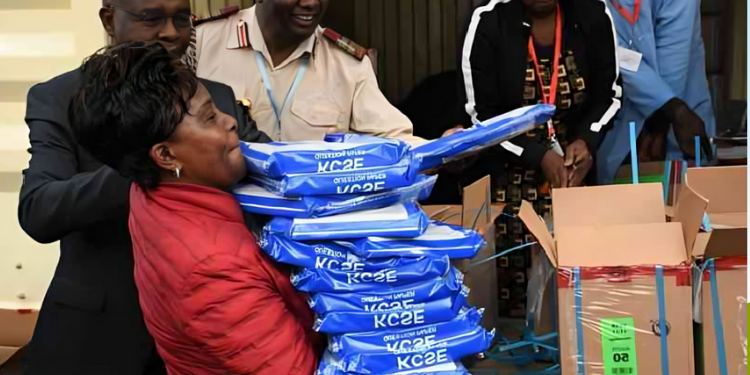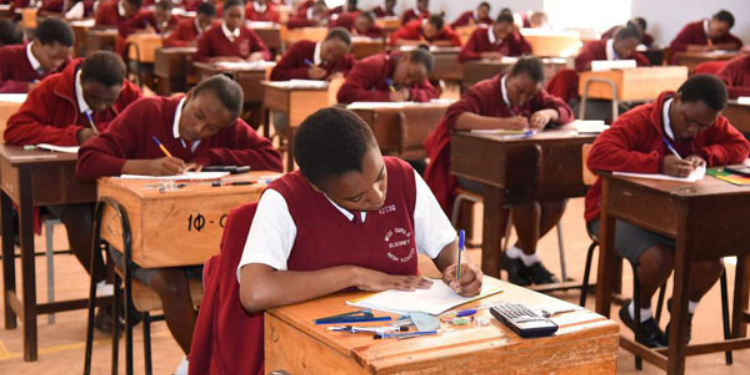

The 2026 Kenya Certificate of Secondary Education (KCSE) examination period began with a rehearsal on Friday, October 16, ahead of the written and practical papers.
According to the Kenya National Examinations Council (KNEC), the examinations are expected to conclude on Friday, November 20, with the final Physics Practical paper scheduled from 8 am to 10.30 am.
The examination papers will be administered in two daily sessions, with the first session starting at 8 am and the second at 2 pm, as indicated on the official timetable.
“All first session examination papers will start at 8.00 a.m. and second session examination papers will start at 2.00 pm as indicated on the timetable,” reads part of the guidelines.
KNEC Lists Items Banned in 2026 KCSE Examination Rooms
As candidates prepare for the examinations, KNEC has warned candidates sitting for the 2026 KCSE examinations against bringing unauthorized materials and electronic devices into examination rooms.
Under the examination rules, candidates may not possess or keep near them any books, notes, papers, or other materials, except the question papers and items expressly authorized by KNEC.
Mobile phones and other electronic communication devices are also banned in examination centres. Candidates found in possession of such devices risk having their examination results cancelled, whether the phones are switched on or off.
The restrictions also cover smartwatches, wristwatches, earphones, tablets and other Bluetooth-enabled gadgets. KNEC expressly authorizes programmable calculators and devices capable of storing text.
Candidates are further barred from carrying recording equipment, including body cameras and camera pens, into examination rooms.
Other prohibited materials include textbooks, notebooks, loose papers and written notes. Candidates are not allowed to conceal notes on their hands, rulers, geometry set containers or calculator covers.
Also Read: KCSE 2026 Timetable: Date and Time Each Paper Will Be Examined
Clothing, shoes, and other apparel bearing printed or handwritten text are also among the prohibited items, as is unauthorized writing on the body.
“Cell phones or any other electronic communication device are prohibited in examination centres. Any candidate found in possession of a cell phone or any other electronic communication device will have his or her results cancelled,” reads part of the guidelines.
KNEC has directed candidates to adhere to examination regulations and only bring materials specifically permitted for their papers.
Also Read: KCSE, KJSEA and KPSEA 2026: What Candidates Should Carry to the Examination Centre
What Not To Do In Exam Room
KNEC has directed candidates to remain in the examination room until the end of the allocated time unless they receive special permission from the supervisor. Candidates allowed to leave early must not take their question papers or answer booklets with them.
Candidates have also been warned against exposing their answers to others or engaging in any form of cheating. Communication between candidates or with outsiders is strictly prohibited throughout the examination.
The examination council further prohibits candidates from possessing or keeping near them any books, notes, loose papers or unauthorized materials, except those expressly permitted for the examination.
Candidates using mathematical tables must ensure they are printed by KNEC and contain no additional notes beyond the original printed information.
Those permitted to use calculators must use the specified non-programmable models without covers and seek guidance from the supervisor if uncertain about whether their equipment is allowed.
KNEC has also instructed candidates to immediately return any question paper with smudges, printing errors or other defects to the supervisor.
Follow our WhatsApp Channel and X Account for real-time news updates.