
Education Cabinet Secretary Julius Ogamba has outlined the process that school principals must follow before increasing fees, stating that they cannot raise fees unilaterally without obtaining the required approvals.
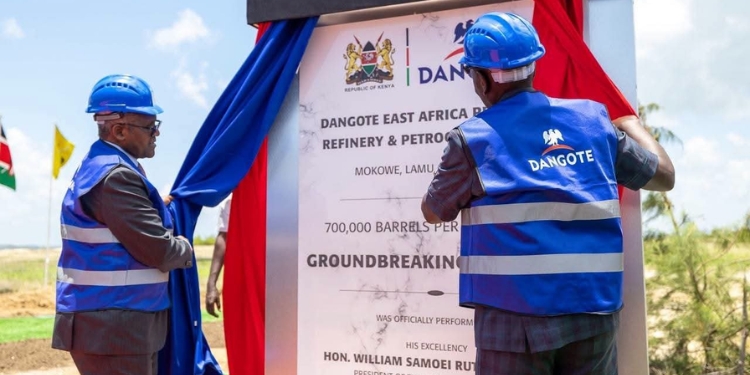
Speaking during a groundbreaking ceremony for school projects at Kihate Comprehensive School in Mukurwe-ini on July 9, Ogamba said schools seeking to charge fees above the government-approved amount must first consult parents before submitting their proposals to the Ministry of Education for approval.
He noted that although principals may have valid reasons for seeking higher fees, existing regulations require consultations and approval from key stakeholders before any changes can be implemented.
Schools seeking to increase fees beyond the approved Ksh53,000 annual charge for boarding schools, he emphasized, must first engage parents before submitting their proposals to the Ministry of Education for consideration.
“When a school wants to have a discussion about moving the fees from Ksh53,000 that is allowed, and these are basically boarding schools, they normally have a discussion. There is a procedure that is applied under the Basic Education Act,” he said.
“They (Principals)have to call the parents, and they have to discuss. Once they agree, there is a lengthy approval process that must go all the way to the Ministry of Education for approval. So, the principals are not allowed to just increase fees at their own volition.”
Also Read: Principals Take Stand on Push to Introduce Same Uniforms for All Kenyan Schools
His remarks come amid calls by some school principals seeking a review of the current school fee structure, citing rising operational costs and the need to improve learning facilities.
The CS acknowledged concerns raised by school administrators but noted that fee adjustments must comply with the law.
He maintained that Principals must manage with the current capitation until a new circular on fee review is in place.
School heads have argued that the existing funding model no longer reflects the economic realities schools face and the rising costs of implementing the Competency-Based Education (CBE) curriculum.
The Kenya Secondary Schools Heads Association (KESSHA) has proposed a new unit-cost formula that would determine fees based on the actual cost of providing tuition, meals, accommodation and other operational services per learner per day.
Under the current funding framework, the government provides Ksh22,244 per learner annually as capitation for secondary school tuition costs. Parents cater for accommodation and other operational expenses depending on the category of the school.
For Cluster One (C1) schools, parents currently pay Ksh53,554, bringing the total annual cost per learner to Ksh75,798 when government funding is included.
Also Read: New School Fees Revealed: What Every Parent in Kenya Will Pay Under Proposed Structure
However, proposals submitted by KeSSHA to Basic Education Principal Secretary John Ololtuaa indicate that the actual cost of educating a learner in a C1 school has risen to Ksh110,025 annually.
The association is seeking an increase in parental contribution to Ksh87,781 per year, representing an additional Ksh34,227.
For Cluster Two and Cluster Three schools, the current annual fee stands at Ksh62,779, including a parental contribution of Ksh40,535.
Kessha estimates that the actual cost of maintaining a learner in these institutions is Ksh105,866 annually, requiring parents to contribute an additional Ksh43,087.
School heads have also cited the rising cost of feeding learners, saying providing three meals a day now costs about Ksh242 per student, covering breakfast, lunch and supper.
The figure does not include expenses such as kitchen equipment, firewood, cooking gas, cleaning supplies, boarding facilities and salaries for support staff.
Follow our WhatsApp Channel and X Account for real-time news updates.