The Donald Trump administration has announced a $20 billion maritime reinsurance program by the United States aimed at protecting commercial shipping in the Gulf region and reassuring global markets amid intensifying tensions around the Strait of Hormuz.
The initiative was unveiled on Friday, March 6, by the U.S. International Development Finance Corporation (DFC) and the United States Department of the Treasury, following President Trump’s approval.
DFC officials said the financial safety net will cover up to $20 billion in potential losses linked to maritime risks, including war-related damage, as the conflict involving Iran threatens shipping routes that carry a significant share of the world’s energy supplies.
Trump’s $20 billion insurance plan
The plan, coordinated with the United States Central Command (CENTCOM), is intended to restore confidence among shipping companies and insurers operating in the Middle East.
According to the DFC, the reinsurance facility will operate on a rolling basis, providing coverage for vessels that meet specific eligibility requirements.
Initially, the insurance will focus on Hull & Machinery and Cargo, protecting ships and the goods they carry as they navigate high-risk areas of the Gulf.
DFC CEO Ben Black said the initiative is meant to ensure that critical commodities continue moving through one of the world’s most important energy corridors.
“Working alongside CENTCOM, DFC coverage will offer a level of security no other policy can provide. We are confident that our reinsurance plan will get oil, gasoline, LNG, jet fuel, and fertilizer through the Strait of Hormuz and flowing again to the world,” said DFC CEO Ben Black.”
The agency said it has already identified preferred American insurance partners that will participate in the program.
Also Read: EPRA Signals Potential Shift in Oil Loading Ports Amid Worsening Strait of Hormuz Tensions
The announcement follows earlier directives from Trump ordering preparations to safeguard maritime trade in the region.
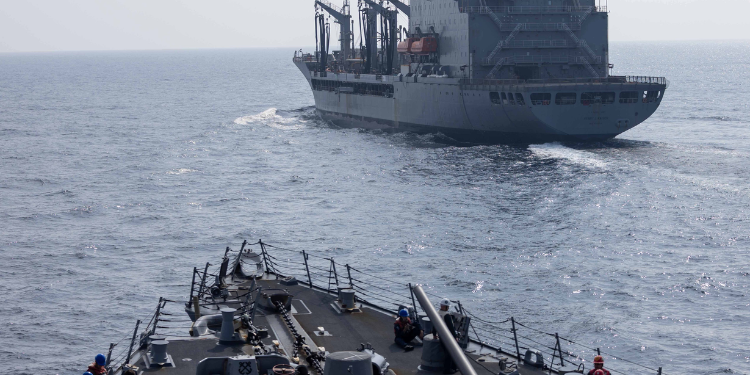
Earlier this week, the president said the United States could deploy naval escorts for oil tankers if the situation deteriorates.
“No matter what, the United States will ensure the free flow of energy to the world,” Trump said in a statement posted on social media.
The Strait of Hormuz is one of the most strategically important maritime chokepoints in the world, linking the Persian Gulf to the Gulf of Oman and the Arabian Sea.
A significant portion of global oil shipments transits the narrow waterway.
Conflicting claims over Strait of Hormuz closure
Tensions intensified after Iranian officials warned that the route could be targeted during the ongoing conflict with the United States and Israel.
An Iranian Revolutionary Guard official previously warned that vessels attempting to pass through the strait could face attack.
“We will burn any ship that tries to pass through the Strait of Hormuz,” the official said in remarks circulated by Iranian media.
However, Iran’s diplomatic mission to the United Nations on Thursday denied reports that Tehran has formally closed the passage.
Also Read: Trump Hands Putin Billions Through New Oil Deal
“The claim that Iran has closed the Strait of Hormuz is completely unfounded and absurd,” the mission said in a statement.
It added that Iran “remains committed to international law and freedom of navigation,” while accusing the United States of threatening maritime security in the region.
Iranian Deputy Foreign Minister Saeed Khatibzadeh also dismissed reports that the Strait of Hormuz had been shut.
“We have not yet closed the Strait of Hormuz. If we are going to close it, we are going to announce it,” he said. “It has not been closed by us. We have no intention to do it until further notice.”
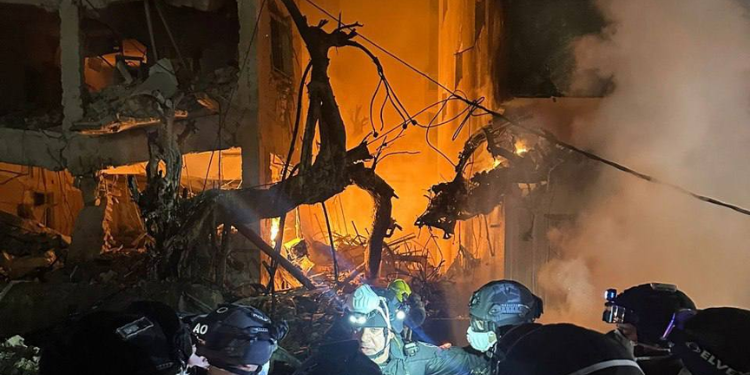
The tensions come amid a rapidly escalating conflict in West Asia following attacks launched by the United States and Israel against Iranian targets in late February.
Iran has since carried out retaliatory strikes as part of what it calls Operation True Promise 4, targeting Israeli positions and U.S. bases in the region.
Follow our WhatsApp Channel and X Account for real-time news updates.