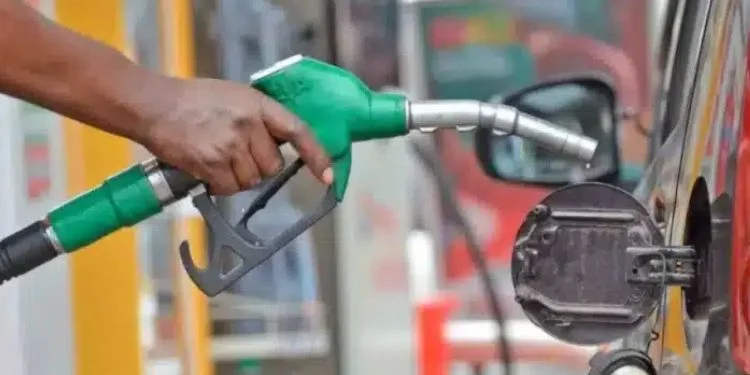

The Energy and Petroleum Regulatory Authority (EPRA) has assured Kenyans that the country’s fuel supply remains stable, citing the government-to-government fuel import agreement between Kenya and Saudi Arabia as a safeguard.
Addressing the media on March 5, EPRA Director General Daniel Kiptoo said that the government is closely monitoring developments in the global oil market, particularly concerns surrounding the possible disruption of shipments through the Strait of Hormuz, a strategic waterway that handles nearly 20 percent of the world’s oil supply.
However, he noted that EPRa and other stakeholders working with suppliers to explore alternative loading points and different ports should disruptions occur at specific locations, meaning any closure or operational challenges along the Strait may not directly affect Kenya’s fuel imports.
“We are following it daily with the suppliers of the country and as you may be aware these are traders in terms of the load ports that could change in the event there is a challenge at one port so then the closure or the challenge of the Strait may not necessarily apply to ourselves…working together with the suppliers we’re looking at different loading ports,” he said.
EPRA indicated that it has not yet begun calculating fuel prices for the next review period, as the current pricing cycle is expected to end on the 9th of this month. The regulator will determine new pump prices once the ongoing cycle concludes.
The surety comes after Cabinet Secretary for Energy and Petroleum, Opiyo Wandayi, also assured Kenyans that the country has sufficient petroleum supplies amid escalating tensions in the Middle East.
In a statement on March 3, CS Opiyo Wandayi said that current petroleum stocks are sufficient to meet both domestic and regional demand.
Further, the CS stated that scheduled imports are planned through the end of April 2026.
EPRA Assures Kenya of Stable Fuel Supply Despite Strait of Hormuz Concerns
The regulator explained that Kenya currently holds adequate fuel stocks, which are expected to be supplemented by additional cargo shipments scheduled to arrive later this month and into early April.
He further noted that Kenya’s fuel pricing system is based on the M-1 formula, in which prices are determined by the cost of products that arrived in the country during the previous month.
Also Read: Kenya Addresses Looming Fuel Shortage and Price Hike Amid Middle East Crisis
As a result, the current cycle reflects fuel that was delivered between the 9th and 10th of the preceding month, meaning the ongoing developments in the Middle East are unlikely to immediately influence pump prices.
EPRA added that it will continue monitoring global market developments and adjust prices where necessary in future reviews, while seeking to strike a balance between consumer protection and the government’s broader economic priorities.
Also Read: Kenyans Brace for Tough Times as Global Oil Prices Rise Ahead of EPRA Review
Global Oil Prices
On March 2, Iran’s Revolutionary Guard Corps (IRGC) Senior Adviser Ebrahim Jabari said the Strait of Hormuz is closed, warning that any vessel attempting to pass through will be attacked.
Since then, global oil prices have continued to climb.
Crude oil fell slightly to about $79.6 per barrel after the US President Donald Trump administration said it is looking at ways to ease rising oil and gas prices amid the conflict in Iran.
Possible actions include using US emergency oil reserves and easing fuel rules. This came after oil prices rose nearly 20% this week due to disruptions in the Strait of Hormuz.
Follow our WhatsApp Channel and X Account for real-time news updates.