President William Ruto has signed two tax bills into law, extending reduced VAT on petroleum products, changing the taxation of construction materials, and reforming the governance of the Kenya Revenue Authority (KRA).
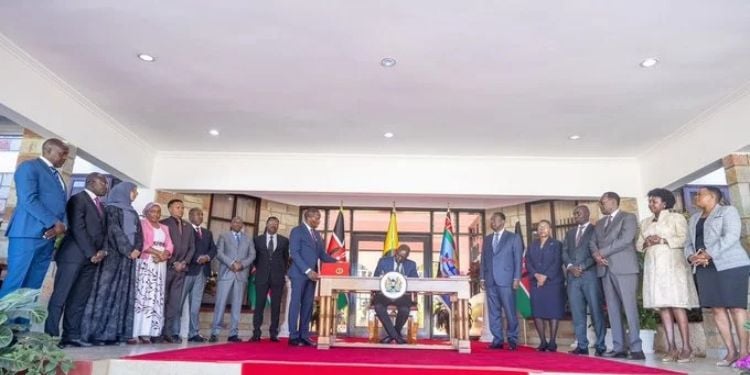
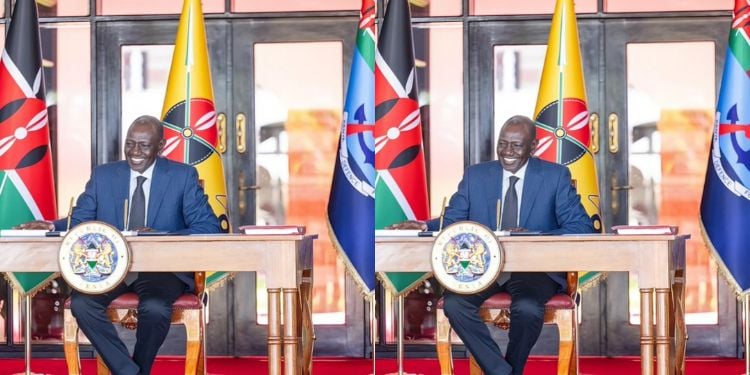
The President assented to the Tax Laws (Amendment) Bill, 2026, and the Kenya Revenue Authority (Amendment) Bill, 2026, at Eldoret State Lodge on Friday, October 16, 2026.
“Assented to the Tax Laws (Amendment) Bill, 2026, and the Kenya Revenue Authority (Amendment) Bill, 2026, at Eldoret State Lodge, Uasin Gishu County,” President Ruto stated.
Both bills assented to by Ruto were sponsored by National Assembly Majority Leader Kimani Ichung’wah.
Changes under KRA Amendment Bill 2026
The Kenya Revenue Authority (Amendment) Act, 2026, assented to by the President, introduces changes to the composition of the KRA Board.
Originally, the KRA bill was published as National Assembly Bill No. 28 of 2026 on May 19, 2026.
The KRA Bill contained clauses addressing sections 7 and 8 of the Kenya Revenue Authority Act and the First Schedule.
Under the new law, the Managing Director of the Kenya Ports Authority (KPA) will serve as a member of the KRA Board.
The change recognizes the close operational relationship between the two institutions, particularly in port operations, customs administration and the collection of government revenue.
“The Bill was amended to include the Managing Director of the Kenya Ports Authority as a member of the Board. This is an efficiency measure due to the co-dependent nature of the operation of both the Kenya Revenue Authority and the Kenya Ports Authority,” the National Assembly noted.
In addition, the legislation also provides for substantive membership of KRA Board members, removing the ex officio designation from the relevant provisions.
Officials identified are the Attorney-General, the Principal Secretary for the National Treasury, and the KRA Commissioner-General.
Parliamentary committee-stage amendments also proposed allowing the board chairperson to resign by written notice to the President.
In addition, the bill proposed terminating a member for absence from three board meetings in a financial year, without reasonable cause, replacing the previous threshold of six meetings.
The Bill also replaces the reference to the Standards Levy Order, 1990, with the Standards (Standards Levy) Order, 2025 and adds the Retirement Benefits Authority Act to the schedule.
Following Ruto’s assent, KRA will receive funding equivalent to at least 2 percent of its estimated annual revenue collections and 3 percent of revenue collected above the quarterly target.
Also Read: Ruto-Trump Health Deal Takes New Turn After Court of Appeal Ruling
Ruto Extends Fuel VAT Relief
The Tax Laws (Amendment) Act maintains the reduced Value Added Tax (VAT) rate of eight per cent on petrol, diesel and paraffin for an initial period of 90 days after the expiration of the first relief, which ended on October 14.
However, the measure can be extended for a further 90 days if the situation in the Middle East does not improve, according to the parliamentary briefing on the legislation.
The reduced rate is intended to cushion households and businesses against the effects of international oil market disruptions and limit additional pressure on fuel prices.
“This amendment Act extends the reduction of VAT on petroleum products from 1 percent to percent for another 90 days to cushion Kenyans against high fuel prices. Ruto explained.
According to the briefing presented to the President, the reduced VAT rate had been factored into fuel pricing to prevent consumers from facing a higher tax burden.
Also Read: Sifuna Counters Ruto, Vows to Scrap Payslip Deductions If Elected President
Changes to Construction Material Taxes
The new law also introduces changes to the taxation of selected construction materials, including ceramic tiles and sanitary ware.
Excise duty on tiles will be calculated at KSh400 per square meter instead of using a weight-based measure.
The legislation also reduces excise duty on selected imported ceramic sanitary fittings, including sinks and washbasins, from KSh50 to KSh30 per kilogram.
In addition, the law reduces the specified duty rate by KSh20 per kilogram, equivalent to 40 percent of the previous KSh50 rate.
After Ruto signed the bills, the law exempts float glass and certain other glass products imported from East African Community (EAC) Partner States that meet EAC Rules of Origin from excise duty, aligning with the EAC Customs Protocol.
Follow our WhatsApp Channel and X Account for real-time news updates.