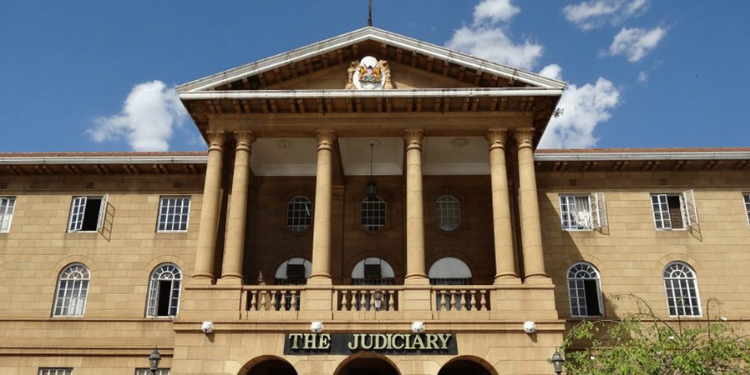

The Court of Appeal has issued a new ruling in the legal dispute over the Kenya-US Health Co-operation Framework signed by President William Ruto’s government and the United States on December 4, 2025, introducing a fresh turn in the case that had drawn High Court intervention.
In a ruling delivered on October 9, 2026, Justices L. Kimaru, Munyao Sila and Dr J.O. Okello allowed the Attorney General and the Cabinet Secretary for Health to set aside the High Court’s conservatory orders issued on December 19, 2025.
The decision allows the government to implement the framework pending the hearing and determination of its intended appeal against the High Court ruling.
Why the Court of Appeal Overturned the High Court Orders
The judges found that the government raised arguable grounds to challenge the High Court’s decision. One issue concerned the procedure used when the Court heard the original application, while another involved a possible breach of the sub judice rule.
The government argued that the High Court proceeded with the hearing on a date scheduled for directions rather than a formal hearing. It also pointed to related conservatory orders issued in another petition, arguing that the subsequent proceedings raised concerns about the sub judice rule.
In addressing these arguments, the Court of Appeal ruled that the substantive appeal required consideration of the procedural issues.
“The case was indeed heard on a day that was fixed for directions, and whether the Court was correct in proceeding to hear the application before giving a formal hearing date, is an arguable point. The court also appears to have violated the sub judice rule, which cannot be ignored, as it appears to have issued conservatory orders in Nairobi Petition No. E806 of 2025.”
Judges clarified that their decision did not determine whether the health framework was constitutional. The court said it would consider that question in the intended appeal or the substantive petition pending before the High Court.
Court Cites 1.4 Million Kenyans Relying on Health Services
In considering public interest, judges examined the potential impact of continued suspension of the framework on patients receiving treatment for HIV, tuberculosis (TB), malaria and other infectious diseases.
Government representatives argued that the agreement would support essential healthcare interventions, including treatment, immunisation programmes, healthcare personnel, service delivery systems and medical supply chains.
Also Read: Govt Receives KSh260 Million Grant From China for Drought, Ebola Preparedness
They also warned that interrupting treatment for HIV and tuberculosis could lead to drug resistance, while disruption of essential health services could increase disease transmission and the risk of death.
After weighing the competing arguments, the judges ruled that public interest favoured allowing the framework to proceed while the appeal was pending.
“If you balance the arguments of the 1st and 4th respondents, and balance that with the health concerns of the citizens who will benefit under the Framework and whose health will be adversely and negatively affected, we are of the considered view that public interest favours the implementation of the programme pending hearing of the appeal.”
The judges further warned that patients relying on treatment under the Framework face potentially irreversible consequences if the programme remains suspended.
“The lives of citizens who depend on treatment for HIV, TB, and malaria, provided under the Framework risk being negatively and irredeemably impacted. Some even risk losing their lives, which is an irreversible consequence.”
According to the government’s application, more than 1.4 million Kenyans depended on critical treatment and healthcare support associated with the framework.
Possible Loss of Framework Resources
The Court of Appeal also considered whether maintaining the High Court’s orders could render the government’s intended appeal nugatory.
Also Read: CS Duale Gazettes Strict New Ebola Rules and Penalties
Government representatives argued that continuing the suspension could cause the framework to collapse and force the government to redirect resources elsewhere. They maintained that even if the government eventually won the appeal, the programme might no longer have resources available for implementation.
Accepting that argument, the judges found that continuing the suspension risked undermining the appeal’s outcome.
“The applicants have appealed that order and pending hearing of that appeal, there is risk that if not implemented, the Framework may collapse and resources sent elsewhere, such that if the applicants succeed on appeal, there will be no Framework to implement which will render the appeal nugatory.”
The ruling did not determine whether the respondents’ constitutional objections were valid. Instead, the court considered whether the government had met the requirements for interim relief pending appeal.
Follow our WhatsApp Channel and X Account for real-time news updates.