
Metropolitan Hospital Nairobi, in partnership with Marengo Asia Hospitals of India, has performed the first robotic-assisted knee replacement surgeries in East and Central Africa, marking a significant milestone in the region’s orthopaedic care.
Inaugural procedures were performed on December 10, 2025, at Metropolitan Hospital’s Buruburu facility, under a structured clinical collaboration focused on skills transfer and governance.
The partnership aims to strengthen local capacity for precision-based orthopaedic surgery and reduce the need for patients to seek advanced treatment abroad.
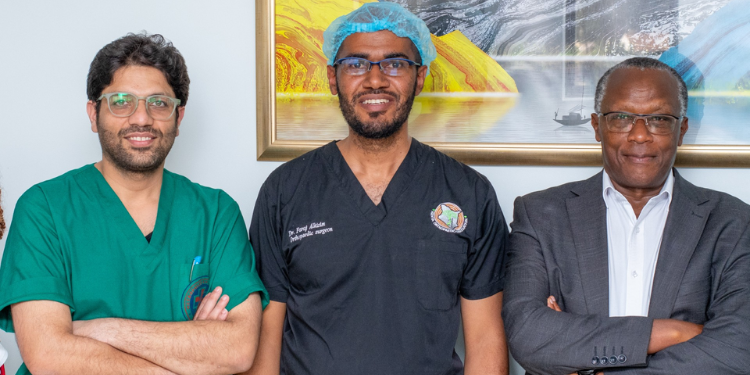
The surgeries were conducted by joint teams from both institutions. The first procedure was led by Metropolitan Hospital orthopaedic surgeon Dr. Faraj Alkizim, working alongside Marengo Asia Hospitals specialists Dr. Anurag Aggarwal and Dr. Rohit Thakkar.
Metropolitan Hospital partners with Marengo Asia Hospitals of India
A second operation was performed by Dr. Nathan Khamala of Metropolitan Hospital, supported by the same specialist team. According to the hospital, all procedures followed established clinical protocols, regulatory requirements, and documented patient consent processes.
“The introduction of robotic-assisted surgery at Metropolitan Hospital expands access to high-precision orthopaedic care in Kenya and the wider East and Central African region,” Metropolitan Hospital Founder and CEO Dr. Kanyenje Gakombe said.
“It is the result of more than 30 years of investment in clinical training, infrastructure, and medical technology to ensure complex procedures can be delivered safely and consistently. We believe strong partnerships and continuous innovation are essential to building local capacity in specialised care. This programme reflects that approach.”
Also Read: KNH Recognizes Doctor Who Ran Marathons to Help Injured Boy After Historic Surgery
Knee replacement surgery is typically recommended when the knee joint is severely damaged, making daily activities such as walking, climbing stairs, or standing difficult and painful. Such damage may result from long-term wear and tear, traumatic injuries, fractures, or inflammatory joint conditions such as rheumatoid arthritis. Osteoarthritis remains the most common cause.
Demand for joint replacement procedures continues to rise globally due to ageing populations and the growing burden of musculoskeletal conditions.
In Kenya, a 2024 peer-reviewed community study published in the Pan African Medical Journal reported an arthritis prevalence of 44.6 per cent among adults aged 40 years and above in rural Nyamira County, highlighting the scale of the challenge.
“Osteoarthritis is a significant contributor to disability globally and demand for joint replacement is rising as populations age. Robotic-assisted knee replacement is designed to support surgeons with patient-specific planning and precise bone preparation, improving the accuracy of alignment and component positioning, helping patients access advanced orthopaedic care closer to home,” added Dr Alkizim.
Arthroplasty service introduced
The Ministry of Health has previously noted that large numbers of Kenyans continue to travel abroad for specialised medical treatment, underscoring the need to strengthen local centres of excellence and regional referral capacity.
Also Read: MTRH Makes History with One-of-a-Kind Surgery on 4-Year-Old
Before introducing robotic-assisted surgery, Metropolitan Hospital had already established an arthroplasty service. A 2025 peer-reviewed study published in the Journal of Health, Medicine, and Nursing followed 75 patients undergoing total knee replacement and documented that the hospital performed more than 140 procedures between January and May 2023.
Marengo Asia Hospitals Group Managing Director and CEO Dr. Raajiv Singhal described the collaboration as part of a broader capacity-building approach.
“This collaboration reflects our approach of ‘Teach, Train, and Treat’, working closely with local surgical teams to embed global standards of planning, execution, and governance into practice. Our objective is to help reduce the need for patients to travel across borders for advanced treatment,” he said.
The robotic system used in the procedures was supplied by Meril Life Sciences, with additional programme support from Wessex Pharmaceuticals and KCB.
Metropolitan Hospital and Marengo Asia Hospitals have indicated that the partnership will continue, with plans to expand training, strengthen clinical governance, and scale access to advanced orthopaedic procedures across the region.
Follow our WhatsApp Channel and X Account for real-time news updates