
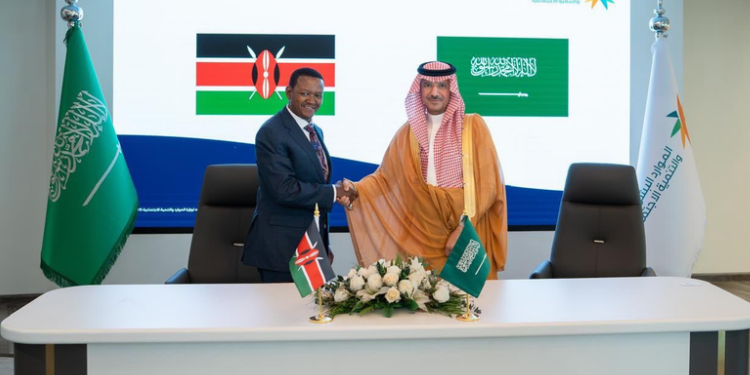
Labour Cabinet Secretary Alfred Mutua has announced that Kenya has secured commitments for 293,600 job opportunities in Saudi Arabia following bilateral labour talks with Saudi officials in Riyadh.
In a statement on Thursday, November 12, Mutua said the opportunities span several sectors, including transport, with positions for female and male drivers; education, covering teachers and tutors; and healthcare, including nurses, doctors and laboratory technicians.
“Following the meeting, I held an extensive engagement with employment agencies operating in Saudi Arabia. These companies signed commitments providing 293,600 job opportunities for Kenyans across various sectors,” read part of the statement.
Other vacancies are available in construction, hospitality, finance, manufacturing and the oil and gas industry. The roles also include heavy machinery operators, chefs, waiters, housekeepers, cleaners, baristas, fast-food workers, house helps and homestead cooks.
The announcement followed a meeting with Saudi Arabia’s Vice Minister for Labour, Abdullah bin Nasser Abuthnain, at the Ministry of Labour offices in Riyadh.
Alfred Mutua Details 293,600 Saudi Jobs for Kenyan Workers
On recruitment costs, Kenya and Saudi Arabia signed a letter of intent establishing a three-month pilot programme on voluntary recruitment fees for domestic workers.
The arrangement will be guided by market competitiveness and is intended to help Kenya compete with neighbouring and other labour-sending countries.
Mutua also called on Kenyan recruitment agencies to join the pilot programme, saying it would let them benefit from economies of scale, improve their competitiveness, and secure a larger share of the Saudi employment market.
The discussions further explored ways to expand employment opportunities for Kenyans across different sectors through improved remuneration packages and higher recruitment standards.
“I particularly call upon willing and interested Kenyan recruitment agencies to take advantage of the renewed spirit of cooperation and participate in the three-month pilot on voluntary recruitment fees. This presents an opportunity for our agencies to benefit from economies of scale, improve their competitiveness and secure a greater share of the Saudi employment market,” he said.
Also Read: TSC Announces Fresh Recruitment of 7,720 Teachers on Permanent Terms
Welfare of Workers
During the meeting, Kenya and Saudi Arabia also discussed improving the welfare, remuneration and working conditions of Kenyans employed in the Kingdom.
The two countries agreed that their technical teams would finalize a skilled workers recruitment agreement within one month to create additional opportunities for Kenyan professionals.
They also discussed strengthening pre-departure training and qualifications to prepare workers for their assignments, workplace expectations and cultural environment.
Another outcome was the signing of a technical annex to the bilateral agreement on the recruitment of domestic workers, originally signed on July 5, 2026.
Also Read: 12 Courses That Get Kenyans Jobs Without a Degree
The annex provides for streamlined recruitment procedures, reduced recruitment costs and integrated technical processes aimed at improving recruitment standards and protecting the rights of workers and employers.
According to CS, Saudi Arabia recruits an average of 2.5 million new workers annually, and Kenya intends to increase its share of the employment market while ensuring workers access legitimate opportunities under fair conditions.
The two countries also discussed the reopening of Saudi Arabia’s borders to Kenyan workers following restrictions imposed after reports of Ebola cases in Kenya.
Mutua said the affected traveller had been promptly identified and isolated, adding that Kenya had no active Ebola cases and had not recorded any community transmission. He said Kenya was seeking the full restoration of access for its workers.
Follow our WhatsApp Channel and X Account for real-time news updates and subscribe to our YouTube Channel for in-depth interviews.