President William Ruto has announced plans to merge primary and junior school capitation into a single funding model for comprehensive schools as part of the government’s restructuring of basic education funding.
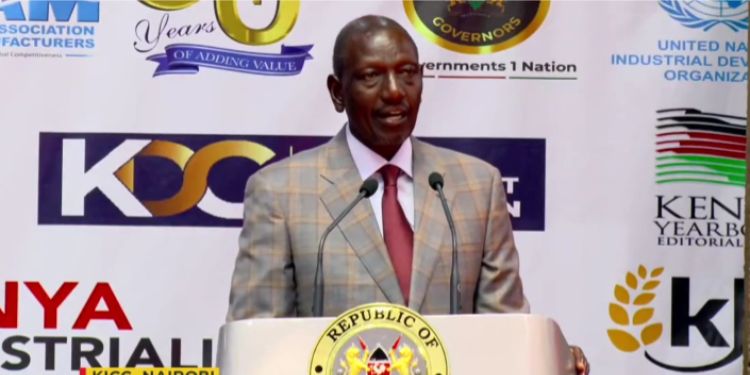
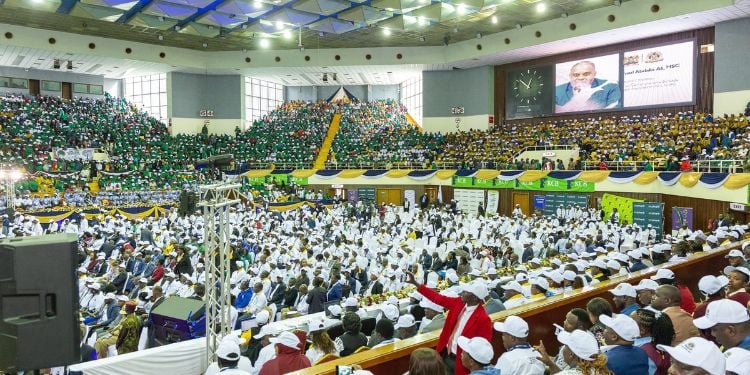
Speaking at the Kenya Comprehensive School Heads Association (KESSHA) National Annual General Meeting in Mombasa on Thursday, November 12, 2026, Ruto said the proposed arrangement would bring funding for primary and junior school learners under one framework, changing how comprehensive schools receive government support.
Ruto directed the Ministry of Education, the Teachers Service Commission (TSC) and teachers’ unions to review the amount allocated per learner, citing inflation and rising operational costs facing schools.
“I have instructed the Ministry and our unions to sit down and work out the numbers again because I understand that, due to inflation and other economic pressures, there is a need for us to review capitation for our learners so that we can better support teaching and learning.
In basic education, we are bringing primary and junior school capitation together into a single funding model for comprehensive schools. I want every head teacher in this hall to plan with confidence. This year, we changed how schools are funded,” Ruto said.
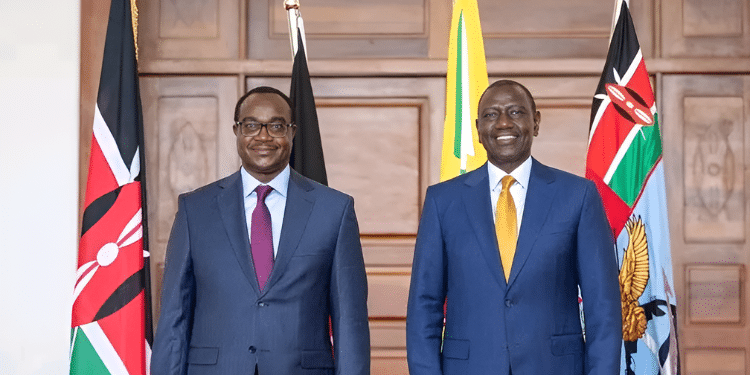
He revealed that he had instructed Education Cabinet Secretary Julius Ogamba and the TSC to review the capitation figures and submit a report by January 2027 to inform a decision on increasing allocations.
Ruto Orders Review of Ksh2,300 School Capitation Per Learner
Ruto noted that the last major review of school capitation was conducted in 2015, although adjustments since then had raised the allocation from Ksh1,400 to Ksh2,300 per learner.
He added that the government would assess the funding requirements to ensure schools receive adequate resources to support teaching and learning.
The President also said the government had released more than Ksh86 billion in capitation ahead of the 2026 school calendar, marking a change in the timing of disbursements.
According to Ruto, the government released Ksh44 billion in January, Ksh23.4 billion in April and Ksh18.5 billion in August.
Also Read: Breakdown of TSC Teaching Vacancies in Primary, Junior and Secondary Schools Across 47 Counties
He promised that the advance disbursement arrangement would continue from 2027, with schools receiving funds before the reopening of each term.
“I promise you that this is not a one-year gesture. It is now the rule and the modus operandi. From 2027 onwards, capitation funds will be released before schools reopen,” he stated.
Ruto said the arrangement would let head teachers focus on teaching and learning instead of spending the opening days of each term following up on government funding.
Also Read: TSC Announces Fresh Recruitment of 7,720 Teachers on Permanent Terms
Audit of School Registers
Ruto also said a recent government audit identified about 800,000 non-existent pupils in primary school registers and nearly 200 schools that existed only on paper.
He said the government was digitizing learner records to ensure capitation allocations corresponded to the actual number of pupils enrolled in schools.
“Every shilling must follow a real learner. Money must reach classrooms with children, not registers with ghost learners,” he said.
Ruto also directed the Ministry of Education to work with the Kenya Comprehensive School Heads Association and submit proposals within 90 days to amend the Basic Education Act.
The proposed amendments will address the governance, staffing and financing of comprehensive schools, providing a legal framework for their operations.
He said the changes were necessary to ensure comprehensive schools were anchored in law rather than relying on existing administrative practices.
Follow our WhatsApp Channel and X Account for real-time news updates and subscribe to our YouTube Channel for in-depth interviews.