Friday, July 10, 2026
  • News
    • Latest News
    • Breaking News
    • Fact Check
    • Investigations
    • Explainers
  • Politics
    • Global Politics
    • Elections
    • Government & Policy
    • Diplomacy
    • Conflicts & Security
    • Political Analysis
  • Business
    • Global Economy
    • Markets
    • Technology
    • Startups
    • Energy
    • Finance
  • World News
    • Americas
    • Asia
    • Asia Pacific
    • Africa
    • Europe
    • Middle East
  • Africa
    • Central Africa
    • East Africa
    • West Africa
    • Southern Africa
  • Health
    • Global Health
    • Public Health
    • Health Policy
    • Medical Research
    • Diseases & Conditions
    • Mental Health
    • Nutrition
    • Climate & Health
    • Health Explainers
  • Sports
    • World Cup 2026
    • Athletics
    • Basketball
    • Boxing
    • Cricket
    • Football
    • Formula 1
    • Golf
    • Rugby
  • Weather
    • Climate Business
    • Climate Change
    • Climate Solutions
    • Living Green
  • Culture
    • Arts
    • Film & TV
    • Food
    • Music
    • Lifestyle
    • Travel
  • Opinion
    • Editorials
    • Letters
  • Behind The Brand
REGISTER
LOGIN
No Result
View All Result
The Kenya Times
  • News
    • Latest News
    • Breaking News
    • Fact Check
    • Investigations
    • Explainers
  • Politics
    • Global Politics
    • Elections
    • Government & Policy
    • Diplomacy
    • Conflicts & Security
    • Political Analysis
  • Business
    • Global Economy
    • Markets
    • Technology
    • Startups
    • Energy
    • Finance
  • World News
    • Americas
    • Asia
    • Asia Pacific
    • Africa
    • Europe
    • Middle East
  • Africa
    • Central Africa
    • East Africa
    • West Africa
    • Southern Africa
  • Health
    • Global Health
    • Public Health
    • Health Policy
    • Medical Research
    • Diseases & Conditions
    • Mental Health
    • Nutrition
    • Climate & Health
    • Health Explainers
  • Sports
    • World Cup 2026
    • Athletics
    • Basketball
    • Boxing
    • Cricket
    • Football
    • Formula 1
    • Golf
    • Rugby
  • Weather
    • Climate Business
    • Climate Change
    • Climate Solutions
    • Living Green
  • Culture
    • Arts
    • Film & TV
    • Food
    • Music
    • Lifestyle
    • Travel
  • Opinion
    • Editorials
    • Letters
  • Behind The Brand
  • News
    • Latest News
    • Breaking News
    • Fact Check
    • Investigations
    • Explainers
  • Politics
    • Global Politics
    • Elections
    • Government & Policy
    • Diplomacy
    • Conflicts & Security
    • Political Analysis
  • Business
    • Global Economy
    • Markets
    • Technology
    • Startups
    • Energy
    • Finance
  • World News
    • Americas
    • Asia
    • Asia Pacific
    • Africa
    • Europe
    • Middle East
  • Africa
    • Central Africa
    • East Africa
    • West Africa
    • Southern Africa
  • Health
    • Global Health
    • Public Health
    • Health Policy
    • Medical Research
    • Diseases & Conditions
    • Mental Health
    • Nutrition
    • Climate & Health
    • Health Explainers
  • Sports
    • World Cup 2026
    • Athletics
    • Basketball
    • Boxing
    • Cricket
    • Football
    • Formula 1
    • Golf
    • Rugby
  • Weather
    • Climate Business
    • Climate Change
    • Climate Solutions
    • Living Green
  • Culture
    • Arts
    • Film & TV
    • Food
    • Music
    • Lifestyle
    • Travel
  • Opinion
    • Editorials
    • Letters
  • Behind The Brand
No Result
View All Result
The Kenya Times ~ Trending, Breaking News and Videos
No Result
View All Result
ADVERTISEMENT

6 Tips on How to Run a Company in Turbulent Times – Lessons from Emerging Markets

The ConversationbyThe Conversation
February 20, 2025
Reading Time: 8 mins read
6 Tips On How To Run Companies In Turbulent Times

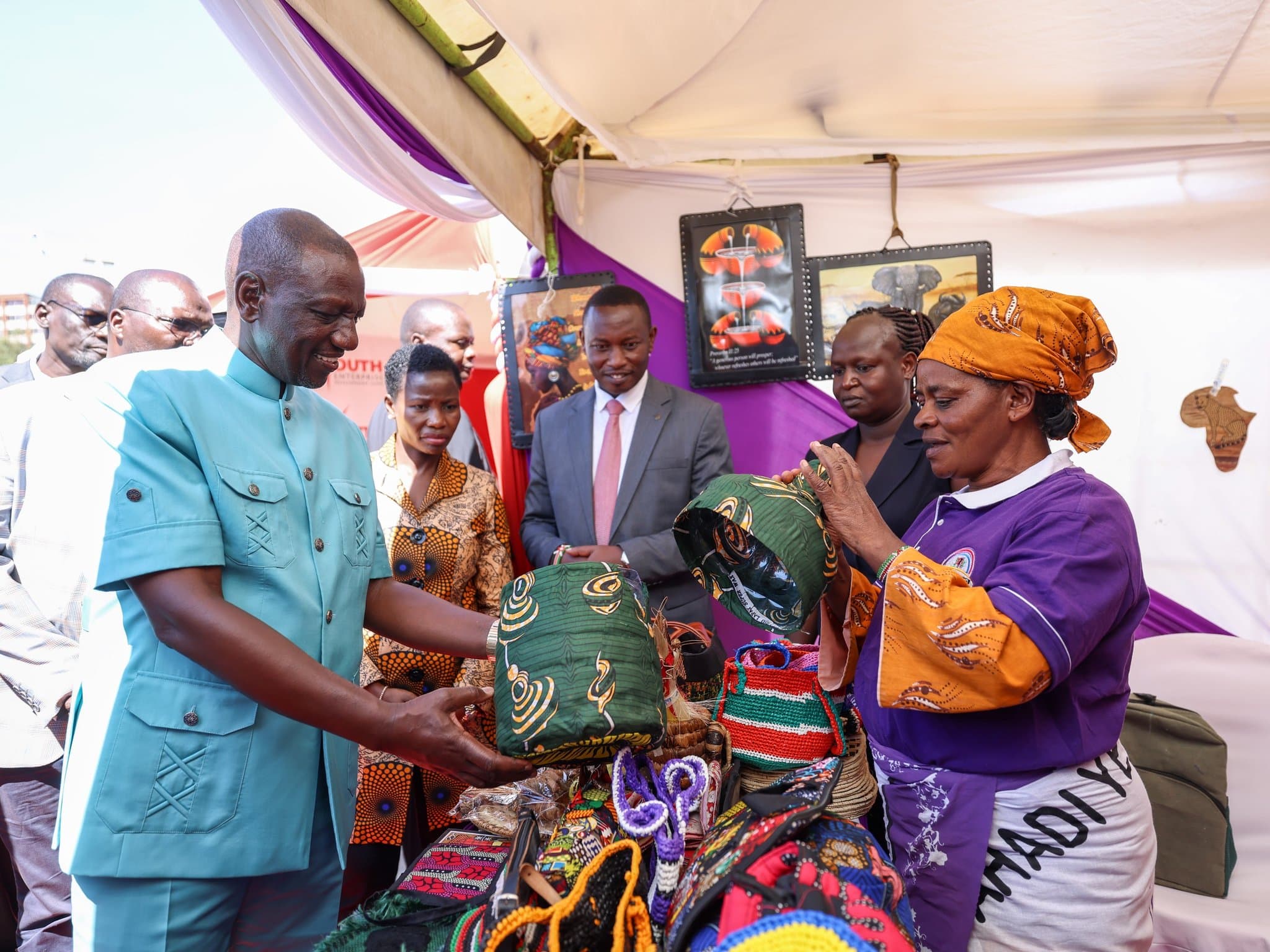
President William Ruto (left) interacts with traders during the anniversary of Hustler Fund in Nairobi.

FacebookTwitterLinkedInRedditWhatsApp
Advertisement

Global risks are rising, and many companies are struggling with how to adapt. The World Economic Forum’s 2025 Global Risks Report makes it clear that challenges like escalating global tensions and conflicts, climate change, economic instability and supply chain disruptions are interconnected and build on one another. And they’re here to stay.

Meanwhile, US President Donald Trump’s tariff threats are creating more unpredictability in global trade.

Companies – mostly medium-sized and large companies – have no choice but to constantly adjust their strategies. For several companies in emerging markets, this way of thinking is second nature.

Firms often operate in environments with fragile institutions, volatile currencies, unreliable infrastructure and political instability. They have become used to designing strategies with turbulence in mind.

Kenyans Going About Their Daily Business In Nairobi Cbd.
Residents go about their normal activities along Luthuli Street in Nairobi. Photo/ UN Habitat

Instead of assuming every piece of global supply chains will fall into place as planned, and just-in-time strategies will always deliver, these companies have diversified and distributed their operations across multiple regions.

They have been quick to build flexible, global supply chains, ensuring that if one part of the supply chain is disrupted, other regions can pick up the slack.

While this may seem like common sense, many companies are still finding it difficult to reorganise and adapt to a less predictable and reliable world.

So, how can companies look to build resilience and operate in uncertainty? By taking inspiration from those that have long navigated instability.

Over the past 17 years of teaching global strategic management, I’ve developed and taught case studies on numerous companies in developing countries that have successfully adapted and reworked their strategies in times of uncertainty.

Many of these examples – from Embraer in Brazil, to Haier in China – are featured in my book, Global Strategic Management (Fifth Edition), with more to come in the upcoming sixth edition.

Based on these insights, I explore six key lessons companies can learn from firms in emerging markets.

Six ways resilient firms adapt to disruption

1. Learn, humbly, and adapt at lightning speed.

Companies in emerging markets have always had to be more adaptable. They are fast learners and quick to pivot, starting from the understanding that things may not always go as planned. As a result, they design their operations to be resilient from the start. They anticipate disruptions rather than wait for them to happen.

A classic example of this is M-Pesa. The mobile payments platform was first launched in Kenya in 2007. Initially it aimed to provide microloans to people without bank accounts. However, when users began using it for money transfers and bill payments, the company quickly adapted to meet this new demand. This ability to learn fast and change direction helped M-Pesa become a leader in mobile payments. It now serves as a global benchmark for success in the industry.

Humility is essential for this kind of swift and effective adaptation. Companies that often face tough, unpredictable conditions tend to approach challenges with a humble mindset. Instead of assuming they have all the answers, they remain open to learning and adjusting.

2. Lean on local partnerships.

When entering unfamiliar or unpredictable markets, firms often approach operations with a transactional mindset – focusing on short-term, one-off exchanges – rather than forming deep partnerships with local stakeholders. This limits their ability to understand and deal with political or social disruptions.

Natura & Co, the Brazilian cosmetics giant, offers helpful lessons. It has long focused on localising production and sourcing materials from nearby suppliers. Its focus is in the Amazon region, where it works with local communities to sustainably harvest raw materials like açaí (purple berries from South American palm trees) and Brazil nut oil. This approach:

  • reduces reliance on distant sources
  • increases flexibility, allowing the company to quickly adapt to regional challenges
  • builds trust which in turn stabilises supply chains and helps firms gain on-the-ground intelligence.

3. Make room for redundant infrastructure.

Firms often delay investments in redundant infrastructure until after a crisis exposes vulnerabilities. For instance, firms may rely on a single data centre or power grid, assuming infrastructure reliability.

For companies like MTN Group, a telecommunications giant based in South Africa, redundancy is a necessity, not a luxury. Investing in backup power solutions and alternative communication links is essential to ensure MTN can maintain services during frequent power outages.

In critical sectors like telecommunications and technology, parallel networks, alternative energy sources and backup systems ensure uninterrupted operations in the face of infrastructure failures, climate risks or other unforeseen disturbances.

4. In unstable environments, build your own stability.

In unpredictable markets, companies have to take matters into their own hands to ensure their operations run smoothly. They fill “institutional voids” common in such markets by forming diversified business groups. These provide critical support, such as internal financing, talent development and logistical infrastructure, to work around the challenges of their operating environments.

The Tata Group, which operates across multiple industries from steel to software, is perhaps the most prominent example of this.

Another great example is MercadoLibre, Latin America’s leading e-commerce platform, which faced the challenge of fragmented transport networks that made 24- or 48-hour deliveries near impossible. The only way to improve delivery speed was for the company to build its own logistics network. By doing so, it gained greater control over its supply chain, improved its ability to scale and greatly improved delivery reliability.

5. Localise production, sustainably.

Localised production reduces reliance on complex, long-distance global supply chains and helps minimise the environmental impact of transportation. When production and sourcing are local, companies are able to cut emissions and are less vulnerable to external shocks, as they are not reliant on the smooth functioning of distant suppliers or transport routes.

Dilmah Tea took this hands-on approach by owning tea gardens, factories and packaging facilities in Sri Lanka. The company controls every step of the process, ensuring high-quality, single-origin Ceylon tea while cutting costs and emissions.

This localised approach minimises dependence on external suppliers, protecting them from problems that can arise in global supply chains, like delays or shortages.

6. Empower employees to be agile and responsive to change.

Giving employees greater responsibility can make a big difference in how well a company handles unexpected changes. Chinese home appliances and electronics company Haier took this to the next level by famously transforming into an organisation of thousands of micro-enterprises, each responsible for decision-making, resource management and profit generation.

This decentralised approach allows teams to swiftly adapt their strategies when disruptions arise. For instance, during the COVID pandemic, Haier maintained operational efficiency by enabling employees at local and product levels to make rapid, informed decisions.

By staying close to users and gathering constant feedback, Haier’s micro-enterprises are able to anticipate potential disruptions before they become major threats and develop products and services that satisfy evolving needs.

While it might not always be possible to completely shift power to individual teams, when people have the freedom to make decisions and take ownership of their work, they can respond quickly to new challenges and come up with creative solutions.

Anticipation and adaptation

The challenges that seem new and overwhelming are simply part of the daily reality for those in emerging economies. For decades, companies in these regions have been anticipating and adapting. As risks grow and intertwine, companies can learn from the resilience built by businesses in emerging markets.

It all begins with a shift in mindset – recognising these challenges as the new reality and accelerating our own pace of learning and adaptation accordingly.The Conversation

Felipe Monteiro, the author of this article, is a Senior Affiliate Professor of Strategy, INSEAD

This article is republished from The Conversation under a Creative Commons license. Read the original article.
Tags: Emerging MarketsWorld Economic Forum World Economic Forum
The Conversation

The Conversation

The Conversation is an independent news organization that publishes evidence-based articles written by experts to help readers understand diverse topics. We cover a wide range of areas including arts, culture, education, health, politics, science, and more¹. Their content is characterized by in-depth analysis, research, news, and ideas from leading academics and researchers. The Conversation aims to provide academic rigor with journalistic flair.

Related Posts

Court Rules On Kadhi'S Court Power To Decide Inheritance Cases Involving Non-Muslims

Court Rules on Kadhi’s Court Power to Decide Inheritance Cases Involving Non-Muslims

July 10, 2026
Knec Opens Applications For 2026 Kcse And Kjsea Examiner Training: Requirements, Fee And How To Apply

KNEC Opens Applications for 2026 KCSE and KJSEA Examiner Training: How to Apply

July 10, 2026
Kenha Orders Traders To Vacate Road Reserve Along Ruiru-Githunguri Road

KeNHA Orders Traders to Vacate Road Reserve Along Ruiru-Githunguri Road

July 10, 2026
:Ogamba Explains Steps Principals Must Follow Before Raising School Fees

Ogamba Explains Steps Principals Must Follow Before Raising School Fees

July 10, 2026
ADVERTISEMENT

The Kenya Times Facebook

LATEST NEWS

  • Court Rules on Kadhi’s Court Power to Decide Inheritance Cases Involving Non-Muslims
  • KNEC Opens Applications for 2026 KCSE and KJSEA Examiner Training: How to Apply
  • Aliko Dangote’s Top 9 Investments in Africa and Where Lamu Refinery Will Rank
  • KeNHA Orders Traders to Vacate Road Reserve Along Ruiru-Githunguri Road
  • Ogamba Explains Steps Principals Must Follow Before Raising School Fees
  • What Kenya’s Financial Sector Needs in 2027 – Honest Perspectives by a Banking Economist
  • Who Was Carole Argwings-Kodhek? Daughter of Kenya’s First African Lawyer Dies at 72
  • Kenyan Executive Mucai Kunyiha Elected President of COMESA Business Council
  • SRC Gazettes New Rules to Govern Salaries of State and Public Officers
  • Salaried Kenyans Squeezed Hard as PAYE and VAT Push KRA Collections to KSh2.8 Trillion
  • M Oriental Bank Appoints New CEO
  • A Night of Champions: Mombasa United and Marine Queens Honored After Promotion
  • Alert for Kenyan Importers: Tanzania Sets New Minimum Fees for Clearing Agents
  • Relief for KIM Students as Court Delivers Verdict on College Accreditation
  • KRA to Roll Out New Online System for Filing Tax Returns
ADVERTISEMENT

Company

About Us

Our Authors

Our Experts

Social Media

Policies

Privacy Policy

House Rules

Standards and Policies

Terms and Conditions

Subscription

My Account

Contact Us

Contact Us

Join Our Team

Advertise With Us

© Copyright 2026 | The Kenya Times | All Rights Reserved

Welcome Back!

Sign In with Facebook
Sign In with Google
Sign In with Linked In
OR

Login to your account below

Forgotten Password? Sign Up

Create New Account!

Sign Up with Facebook
Sign Up with Google
Sign Up with Linked In
OR

Fill the forms below to register

All fields are required. Log In

Retrieve your password

Please enter your username or email address to reset your password.

Log In
Your Privacy and Cookies
We use cookies on our website to give you the most relevant experience by remembering your preferences and repeat visits. By clicking “Accept”, you consent to the use of ALL the cookies.
Do not sell my personal information.
Cookie settingsACCEPT
Privacy & Cookies Policy

Privacy Overview

This website uses cookies to improve your experience while you navigate through the website. Out of these cookies, the cookies that are categorized as necessary are stored on your browser as they are essential for the working of basic functionalities of the website. We also use third-party cookies that help us analyze and understand how you use this website. These cookies will be stored in your browser only with your consent. You also have the option to opt-out of these cookies. But opting out of some of these cookies may have an effect on your browsing experience.
Necessary
Always Enabled
Necessary cookies are absolutely essential for the website to function properly. This category only includes cookies that ensures basic functionalities and security features of the website. These cookies do not store any personal information.
Functional
Functional cookies help to perform certain functionalities like sharing the content of the website on social media platforms, collect feedbacks, and other third-party features.
Performance
Performance cookies are used to understand and analyze the key performance indexes of the website which helps in delivering a better user experience for the visitors.
Analytics
Analytical cookies are used to understand how visitors interact with the website. These cookies help provide information on metrics the number of visitors, bounce rate, traffic source, etc.
Advertisement
Advertisement cookies are used to provide visitors with relevant ads and marketing campaigns. These cookies track visitors across websites and collect information to provide customized ads.
Others
Other uncategorized cookies are those that are being analyzed and have not been classified into a category as yet.
SAVE & ACCEPT
LOGIN | REGISTER
  • Login
  • Sign Up
  • Cart
No Result
View All Result
  • News
    • Latest News
    • Breaking News
    • Investigations
    • Explainers
    • Fact Check
  • Politics
    • Global Politics
    • Conflicts & Security
    • Elections
    • Diplomacy
    • Government & Policy
    • Political Analysis
  • Business
    • Global Economy
    • Markets
    • Technology
    • Startups
    • Energy
    • Finance
  • World News
    • Americas
    • Asia
    • Asia Pacific
    • Africa
    • Europe
    • Middle East
  • Africa
    • East Africa
    • West Africa
    • Southern Africa
    • Central Africa
  • Health
    • Global Health
    • Public Health
    • Health Policy
    • Medical Research
    • Diseases & Conditions
    • Mental Health
    • Nutrition
    • Climate & Health
    • Health Explainers
  • Sports
    • World Cup 2026
    • Athletics
    • Basketball
    • Boxing
    • Cricket
    • Football
    • Formula 1
    • Golf
    • Rugby
  • Weather
    • Climate Business
    • Climate Change
    • Climate Solutions
    • Living Green
  • Culture
    • Arts
    • Film & TV
    • Food
    • Lifestyle
    • Music
    • Travel
  • Opinion
    • Editorials
    • Letters
  • Behind The Brand
  • Contact Us

Not enough quota to unlock this post
Unlock left : 0
Are you sure want to cancel subscription?