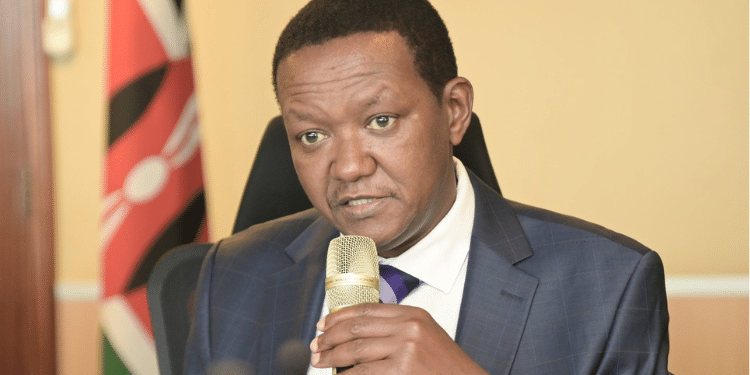
Labor and Social Protection Cabinet Secretary Alfred Mutua has clarified how the Inua Jamii program replaces a beneficiary after the death of the beneficiary.
Speaking during the Senate Plenary on July 22, CS Alfred Mutua explained that Inua Jamii officials regularly review beneficiary records to ensure the intended recipients receive payments.
Further verification and cross-checking of the program’s beneficiaries are conducted through chiefs, local leaders, and community structures.
“Regarding the allocation of funds to the Inua Jamii program, we gave orders to the chiefs and sub-chiefs to verify if the beneficiary is there and is eligible,” CS Alfred emphasized.
In addition, the CS added that through the local leaders, the government can verify whether the beneficiary in the program meets the Inua Jamii requirements set for beneficiaries and that the family members do not receive the funding after the death of the beneficiary in an ongoing effort by the government.
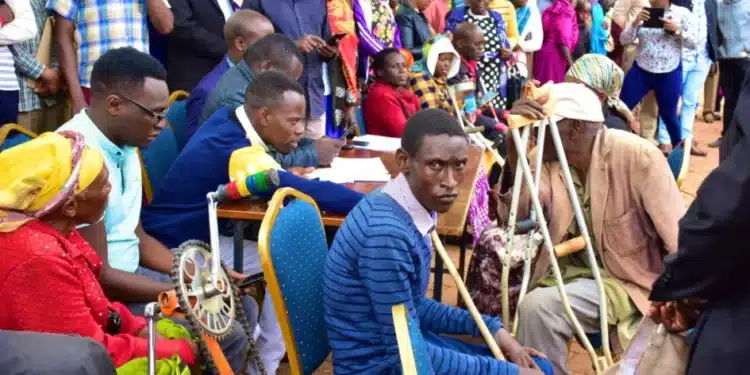
Once a beneficiary is confirmed dead and removed from the program, the vacancy is made available for another eligible person.
Replacement of Dead Beneficiaries
The replacement of the beneficiary begins when a beneficiary’s death is reported by family members, local administrators, Beneficiary Welfare Committees, or through records from the Civil Registration Services.
Upon reporting, the Ministry of Labor and Social Protection verifies the information before removing the deceased person from the Inua Jamii payroll.
Once the beneficiary is officially exited from the program, the government treats the vacancy as natural attrition, with the government conducting periodic enrolment to fill vacancies of the exited beneficiaries.
A replacement beneficiary is then identified through community-based targeting led by Sub-County Social Development Officers, chiefs, village elders and Beneficiary Welfare Committees.
However, the proposed replacement beneficiary must meet the eligibility requirements for the specific Inua Jamii cash transfer program upon the verification process by the Ministry.
In addition, the government also uses periodic Proof of Life biometric verification for Inua Jamii beneficiaries.
Also Read: Govt Announces Nationwide Inspections to Enforce Workers Pay Rise
CS Alfred Mutua on Qualification of Beneficiaries and Distribution
On the difference in the amount, the funds are based on population and longevity in a county, according to the CS.
Citing the example of Muranga County, CS Alfred Mutua argued that the high life expectancy in the county accounts for the high number of beneficiaries in the program.
The government further uses a strict test system to ensure that the program benefits the senior citizens who are in need.
However, Mutua further explained that senior citizens who are financially stable despite attaining the age of 70 are excluded, adding that qualification for enrolment into the program is based on an individual’s level of vulnerability and need.
Also Read: Govt Announces Crackdown on Buildings That Ignore Disability Access Laws
Delays and Payments
Addressing the concerns of the Senators on the delayed payment to the Inua Jamii program, CS Alfred Mutua stated that since he took office, beneficiaries have received timely payment for the past year on the fifth day of every month.
However, the CS noted that the delay in July was due to the budgetary cycle and the closure of books by the National Treasury.
“For the past year, beneficiaries have been paid on time by the fifth day of every month. Last month, however, we were unable to pay because of the budgetary cycle and the closure of books by the National Treasury. We are now consolidating last months and this month’s payments, and beneficiaries will receive a double payment next week by the fifth,” CS Mutua said.
Beneficiaries of the program are set to receive double payment in August to cover the July and August payments on August 5.
Follow our WhatsApp Channel and X Account for real-time news updates.