Wednesday, June 24, 2026
  • News
    • Latest News
    • Breaking News
    • Fact Check
    • Investigations
    • Explainers
  • Politics
    • Global Politics
    • Elections
    • Government & Policy
    • Diplomacy
    • Conflicts & Security
    • Political Analysis
  • Business
    • Global Economy
    • Markets
    • Technology
    • Startups
    • Energy
    • Finance
  • World News
    • Americas
    • Asia
    • Asia Pacific
    • Africa
    • Europe
    • Middle East
  • Africa
    • Central Africa
    • East Africa
    • West Africa
    • Southern Africa
  • Health
    • Global Health
    • Public Health
    • Health Policy
    • Medical Research
    • Diseases & Conditions
    • Mental Health
    • Nutrition
    • Climate & Health
    • Health Explainers
  • Sports
    • World Cup 2026
    • Athletics
    • Basketball
    • Boxing
    • Cricket
    • Football
    • Formula 1
    • Golf
    • Rugby
  • Weather
    • Climate Business
    • Climate Change
    • Climate Solutions
    • Living Green
  • Culture
    • Arts
    • Film & TV
    • Food
    • Music
    • Lifestyle
    • Travel
  • Opinion
    • Editorials
    • Letters
  • Behind The Brand
REGISTER
LOGIN
No Result
View All Result
The Kenya Times
  • News
    • Latest News
    • Breaking News
    • Fact Check
    • Investigations
    • Explainers
  • Politics
    • Global Politics
    • Elections
    • Government & Policy
    • Diplomacy
    • Conflicts & Security
    • Political Analysis
  • Business
    • Global Economy
    • Markets
    • Technology
    • Startups
    • Energy
    • Finance
  • World News
    • Americas
    • Asia
    • Asia Pacific
    • Africa
    • Europe
    • Middle East
  • Africa
    • Central Africa
    • East Africa
    • West Africa
    • Southern Africa
  • Health
    • Global Health
    • Public Health
    • Health Policy
    • Medical Research
    • Diseases & Conditions
    • Mental Health
    • Nutrition
    • Climate & Health
    • Health Explainers
  • Sports
    • World Cup 2026
    • Athletics
    • Basketball
    • Boxing
    • Cricket
    • Football
    • Formula 1
    • Golf
    • Rugby
  • Weather
    • Climate Business
    • Climate Change
    • Climate Solutions
    • Living Green
  • Culture
    • Arts
    • Film & TV
    • Food
    • Music
    • Lifestyle
    • Travel
  • Opinion
    • Editorials
    • Letters
  • Behind The Brand
  • News
    • Latest News
    • Breaking News
    • Fact Check
    • Investigations
    • Explainers
  • Politics
    • Global Politics
    • Elections
    • Government & Policy
    • Diplomacy
    • Conflicts & Security
    • Political Analysis
  • Business
    • Global Economy
    • Markets
    • Technology
    • Startups
    • Energy
    • Finance
  • World News
    • Americas
    • Asia
    • Asia Pacific
    • Africa
    • Europe
    • Middle East
  • Africa
    • Central Africa
    • East Africa
    • West Africa
    • Southern Africa
  • Health
    • Global Health
    • Public Health
    • Health Policy
    • Medical Research
    • Diseases & Conditions
    • Mental Health
    • Nutrition
    • Climate & Health
    • Health Explainers
  • Sports
    • World Cup 2026
    • Athletics
    • Basketball
    • Boxing
    • Cricket
    • Football
    • Formula 1
    • Golf
    • Rugby
  • Weather
    • Climate Business
    • Climate Change
    • Climate Solutions
    • Living Green
  • Culture
    • Arts
    • Film & TV
    • Food
    • Music
    • Lifestyle
    • Travel
  • Opinion
    • Editorials
    • Letters
  • Behind The Brand
No Result
View All Result
The Kenya Times ~ Trending, Breaking News and Videos
No Result
View All Result
ADVERTISEMENT

Did Kenya’s Gen Z Protests Achieve Anything? An Economist Weighs up What’s Changed and What’s Stayed The Same

The ConversationbyThe Conversation
June 24, 2026
Reading Time: 9 mins read
Us Issues Advisory To Its Citizens In Kenya Ahead Of June 25 Demonstrations

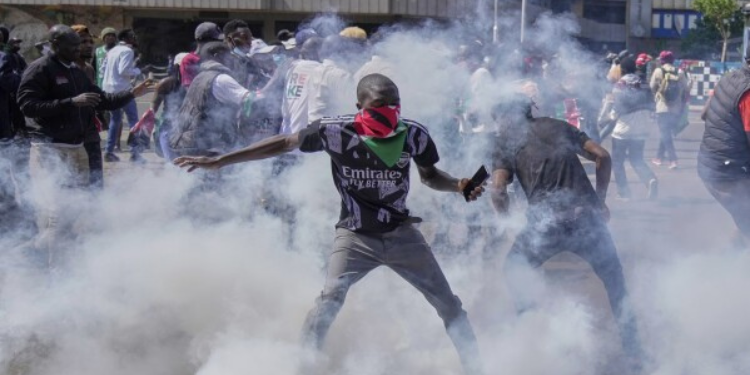
Protests in Nairobi CBD. Photo/ UGC

FacebookTwitterLinkedInRedditWhatsApp
Advertisement

Kenya’s Gen Z-led protests of 2024 drew global headlines. For weeks, young people mobilized against proposed tax increases, the rising cost of living, unemployment, corruption, and what they saw as an unresponsive political class.

But what began as opposition to the 2024 Finance Bill quickly evolved into a broader challenge to the way the country was being governed.

The protests were remarkable for their scale, decentralized nature, and ability to mobilize through social media. They were eventually subdued through political concessions and state repression. At least 63 people were killed.

The issues that drove the protests haven’t disappeared. Questions about taxation, unemployment, public spending, and inequality remain central to Kenya’s political debate. XN Iraki, an economist who has researched and taught in Kenya and beyond for more than two decades, explores the challenges.

What has changed in the government’s approach to taxation and spending?

Economic policymaking in Kenya has become more politically constrained. The government can no longer assume that tax measures will be accepted.


Also Read: Murkomen Gives Way Forward Ahead of Tomorrow’s Planned Protests


As a result, the government has become much more cautious when it comes to tax policy.

The government is far more careful about introducing new taxes or increasing existing ones. Several proposed tax measures have been dropped or watered down, reflecting a greater sensitivity to the political risks of being seen to increase the cost of living. These include a 16% rise in the price of electric bikes resulting from new taxation.

Instead, policymakers have pursued two alternative approaches.

The first has been to widen the tax base, particularly by targeting Kenya’s vast informal sector, which accounts for 8 in 10 jobs (over 18 million employees).

Government officials argue that the tax burden is currently carried by registered taxpayers (only 40% out of 22 million taxpayers), and that everyone should contribute.

But taxing the informal economy remains difficult because many businesses in this sector operate without formal records and survive on thin margins. Small traders are already struggling to make ends meet.

The second approach has been a gradual shift from direct taxes towards levies, fees and charges on services. These include digital payment charges. They are often less politically controversial, but they still raise the cost of doing business. In turn, higher costs can make Kenyan goods and services less competitive and place pressure on consumers.

The protests have also influenced spending priorities. The last two national budgets have included more programmes targeting young people, including internships, enterprise support and procurement opportunities reserved for youth. Yet youth unemployment remains high, at about 67% (ages 15-34). This suggests the scale of the challenge exceeds the resources being devoted to it.

The biggest fiscal consequence has been on borrowing. There are still budget deficits, so borrowing bridge the gap. Recent budgets have relied increasingly on domestic borrowing to finance spending. Domestic borrowing refers to money the government raises from Kenyan investors through the sale of treasury bills and bonds. Kenya also borrows from international lenders, which is often cheaper but carries exchange-rate risks as repayments are made in foreign currencies.

In the 2026-27 budget, 90% of a Sh1.2 trillion (US$9.3 billion) deficit will be borrowed locally. In the 2023-24 financial year, domestic borrowing was 70%.

Domestic borrowing may be politically easier than raising taxes. But it raises concerns about the “crowding out” effect. This happens when government borrowing absorbs funds from lenders, such as banks, that might otherwise have been available for private sector investments and job creation.

What have been the key implications for the economy?

A major concern is that government spending has remained high. Many Kenyans expected the protests to trigger a serious effort to reduce waste and lower spending. That is work in progress.

Two spending items stand out. The first is the public wage bill, which absorbs a significant share of tax revenues. In theory, technology and digitisation should make the government leaner and more efficient. In practice, reducing public sector employment carries political risks, particularly given Kenya’s high unemployment rate.

The second is debt servicing. Kenya spends a large portion of its revenue repaying loans. This leaves less money available for development projects and public services. It creates a vicious cycle. High spending leads to more borrowing, which in turn requires higher future taxes or further borrowing.

The government is caught between competing pressures.

Citizens want lower taxes and a lower cost of living. The state needs revenue to fund services and repay debt. And politicians are reluctant to cut spending ahead of the 2027 general election.

What are the policy hits and misses?

The biggest policy success has been the government’s recognition that young people need to be more deliberately included in economic policy. Recent budgets have expanded funding for youth empowerment programmes.

The misses, however, are more significant.

One is the attempt to expand taxation into parts of the digital and gig economy, where many young Kenyans have sought opportunities. Taxing these sectors risks discouraging innovation and entrepreneurship.

Another is the gap between expectations and delivery. The government’s promise to create overseas employment opportunities for young people has generated publicity, but the numbers remain small relative to the scale of youth unemployment.

Perhaps the most important policy failure is that young people are still viewed primarily as a political challenge rather than an economic opportunity or asset.


Also Read: Govt to Increase Salaries for Select Officers in Fresh Reforms


Around the world, countries are grappling with ageing populations and shrinking workforces. Kenya has the opposite advantage: a large, educated and technologically savvy young population. Yet corruption and limited economic opportunities mean many young people feel their talents are undervalued and underutilised. This can create frustration.

What economic issues might mobilise young people again?

The issues that brought young people onto the streets in 2024 have not disappeared.

Youth unemployment remains high. Slower economic growth intensifies these frustrations.

Corruption remains another powerful mobilising issue. Many young Kenyans believe public resources are still being mismanaged while essential services remain inadequate.

As Kenya approaches the 2027 elections, the greatest risk for policymakers is assuming that the protests were solely about the Finance Bill. The bill was merely the trigger. The deeper concerns – jobs, corruption, inequality, accountability and economic opportunity – remain largely unresolved. Those issues are likely to continue shaping political mobilisation, even beyond 2027.The Conversation

XN Iraki, Professor, Faculty of Business and Management Sciences, University of Nairobi

This article is republished from The Conversation under a Creative Commons license. Read the original article.


Shakira Wafula Profile: Fitness Coach And Gen Z Activist Who Stood Up In 2024 Protests
Shakira Wafula Gen Z Activist Who Faced Police During 2024 Finance Bill Protests. PHOTO/Bill-X


Tags: Gen Z Protests
The Conversation

The Conversation

The Conversation is an independent news organization that publishes evidence-based articles written by experts to help readers understand diverse topics. We cover a wide range of areas including arts, culture, education, health, politics, science, and more¹. Their content is characterized by in-depth analysis, research, news, and ideas from leading academics and researchers. The Conversation aims to provide academic rigor with journalistic flair.

Related Posts

Knec Opens Registration For Grade 10 Learners On Cba Portal

KNEC Opens Registration for Grade 10 Learners on CBA Portal

June 24, 2026
President Donald Trump Canceled A Planned Signing Ceremony For A Major Bipartisan Housing Bill On Wednesday, June 24, 2026, Stating He Will Not Sign It Until The Senate Passes The Safeguard American Voter Eligibility (Save) Act. Trump Announced The Decision Via Truth Social, Calling The Save Act A “National Emergency.” The Move Halts Momentum On The 21St Century Road To Housing Act, Which Passed Congress With Veto-Proof Majorities.

Trump Refuses to Sign Housing Bill Until Senate Passes SAVE Act

June 24, 2026
Equity Group Shareholders Approve Ksh21.7 Billion Dividend And Insurance Expansion

Equity Group Shareholders Approve KSh21.7 Billion Dividend and Insurance Expansion

June 24, 2026
How James Kerr Watson Built Donholm’s Famous Mushroom-Shaped Water Tower In Jogoo Road

Truth Behind Donholm’s Iconic Mushroom-Shaped Water Tower

June 24, 2026

Leave a Reply Cancel reply

Your email address will not be published. Required fields are marked *

ADVERTISEMENT

The Kenya Times Facebook

LATEST NEWS

  • Did Kenya’s Gen Z Protests Achieve Anything? An Economist Weighs up What’s Changed and What’s Stayed The Same
  • Revealed: The Ksh1.2 Billion Cake Causing Tensions Between President Ruto And Gideon Moi
  • KNEC Opens Registration for Grade 10 Learners on CBA Portal
  • Trump Refuses to Sign Housing Bill Until Senate Passes SAVE Act
  • 8 Utumishi Academy Students Sent to Nairobi Detention, One Freed
  • Equity Group Shareholders Approve KSh21.7 Billion Dividend and Insurance Expansion
  • Truth Behind Donholm’s Iconic Mushroom-Shaped Water Tower
  • Trump Celebrates Absence of Women in Crowd While Praising UFC Fighters
  • Why Some Third-Placed Teams Will Still Qualify for World Cup Knock-Outs
  • Murkomen Gives Way Forward Ahead of Tomorrow’s Planned Protests
  • St. Joseph’s Girls Senior School Responds to Reports of Student Arrested With a Gun
  • Delivery Riders to Be Recognized as Employees in New Rules
  • Principals Take Stand on Push to Introduce Same Uniforms for All Kenyan Schools
  • SHA Suspends M.P. Shah Hospital, Issues Advisory to Patients
  • Mvurya Reveals Talanta Stadium Completion Timeline Ahead of AFCON 2027
ADVERTISEMENT

Company

About Us

Our Authors

Our Experts

Social Media

Policies

Privacy Policy

House Rules

Standards and Policies

Terms and Conditions

Subscription

My Account

Contact Us

Contact Us

Join Our Team

Advertise With Us

© Copyright 2026 | The Kenya Times | All Rights Reserved

Welcome Back!

Sign In with Facebook
Sign In with Google
Sign In with Linked In
OR

Login to your account below

Forgotten Password? Sign Up

Create New Account!

Sign Up with Facebook
Sign Up with Google
Sign Up with Linked In
OR

Fill the forms below to register

All fields are required. Log In

Retrieve your password

Please enter your username or email address to reset your password.

Log In
Your Privacy and Cookies
We use cookies on our website to give you the most relevant experience by remembering your preferences and repeat visits. By clicking “Accept”, you consent to the use of ALL the cookies.
Do not sell my personal information.
Cookie settingsACCEPT
Privacy & Cookies Policy

Privacy Overview

This website uses cookies to improve your experience while you navigate through the website. Out of these cookies, the cookies that are categorized as necessary are stored on your browser as they are essential for the working of basic functionalities of the website. We also use third-party cookies that help us analyze and understand how you use this website. These cookies will be stored in your browser only with your consent. You also have the option to opt-out of these cookies. But opting out of some of these cookies may have an effect on your browsing experience.
Necessary
Always Enabled
Necessary cookies are absolutely essential for the website to function properly. This category only includes cookies that ensures basic functionalities and security features of the website. These cookies do not store any personal information.
Functional
Functional cookies help to perform certain functionalities like sharing the content of the website on social media platforms, collect feedbacks, and other third-party features.
Performance
Performance cookies are used to understand and analyze the key performance indexes of the website which helps in delivering a better user experience for the visitors.
Analytics
Analytical cookies are used to understand how visitors interact with the website. These cookies help provide information on metrics the number of visitors, bounce rate, traffic source, etc.
Advertisement
Advertisement cookies are used to provide visitors with relevant ads and marketing campaigns. These cookies track visitors across websites and collect information to provide customized ads.
Others
Other uncategorized cookies are those that are being analyzed and have not been classified into a category as yet.
SAVE & ACCEPT
LOGIN | REGISTER
  • Login
  • Sign Up
  • Cart
No Result
View All Result
  • News
    • Latest News
    • Breaking News
    • Investigations
    • Explainers
    • Fact Check
  • Politics
    • Global Politics
    • Conflicts & Security
    • Elections
    • Diplomacy
    • Government & Policy
    • Political Analysis
  • Business
    • Global Economy
    • Markets
    • Technology
    • Startups
    • Energy
    • Finance
  • World News
    • Americas
    • Asia
    • Asia Pacific
    • Africa
    • Europe
    • Middle East
  • Africa
    • East Africa
    • West Africa
    • Southern Africa
    • Central Africa
  • Health
    • Global Health
    • Public Health
    • Health Policy
    • Medical Research
    • Diseases & Conditions
    • Mental Health
    • Nutrition
    • Climate & Health
    • Health Explainers
  • Sports
    • World Cup 2026
    • Athletics
    • Basketball
    • Boxing
    • Cricket
    • Football
    • Formula 1
    • Golf
    • Rugby
  • Weather
    • Climate Business
    • Climate Change
    • Climate Solutions
    • Living Green
  • Culture
    • Arts
    • Film & TV
    • Food
    • Lifestyle
    • Music
    • Travel
  • Opinion
    • Editorials
    • Letters
  • Behind The Brand
  • Contact Us

Not enough quota to unlock this post
Unlock left : 0
Are you sure want to cancel subscription?