Friday, July 10, 2026
  • News
    • Latest News
    • Breaking News
    • Fact Check
    • Investigations
    • Explainers
  • Politics
    • Global Politics
    • Elections
    • Government & Policy
    • Diplomacy
    • Conflicts & Security
    • Political Analysis
  • Business
    • Global Economy
    • Markets
    • Technology
    • Startups
    • Energy
    • Finance
  • World News
    • Americas
    • Asia
    • Asia Pacific
    • Africa
    • Europe
    • Middle East
  • Africa
    • Central Africa
    • East Africa
    • West Africa
    • Southern Africa
  • Health
    • Global Health
    • Public Health
    • Health Policy
    • Medical Research
    • Diseases & Conditions
    • Mental Health
    • Nutrition
    • Climate & Health
    • Health Explainers
  • Sports
    • World Cup 2026
    • Athletics
    • Basketball
    • Boxing
    • Cricket
    • Football
    • Formula 1
    • Golf
    • Rugby
  • Weather
    • Climate Business
    • Climate Change
    • Climate Solutions
    • Living Green
  • Culture
    • Arts
    • Film & TV
    • Food
    • Music
    • Lifestyle
    • Travel
  • Opinion
    • Editorials
    • Letters
  • Behind The Brand
REGISTER
LOGIN
No Result
View All Result
The Kenya Times
  • News
    • Latest News
    • Breaking News
    • Fact Check
    • Investigations
    • Explainers
  • Politics
    • Global Politics
    • Elections
    • Government & Policy
    • Diplomacy
    • Conflicts & Security
    • Political Analysis
  • Business
    • Global Economy
    • Markets
    • Technology
    • Startups
    • Energy
    • Finance
  • World News
    • Americas
    • Asia
    • Asia Pacific
    • Africa
    • Europe
    • Middle East
  • Africa
    • Central Africa
    • East Africa
    • West Africa
    • Southern Africa
  • Health
    • Global Health
    • Public Health
    • Health Policy
    • Medical Research
    • Diseases & Conditions
    • Mental Health
    • Nutrition
    • Climate & Health
    • Health Explainers
  • Sports
    • World Cup 2026
    • Athletics
    • Basketball
    • Boxing
    • Cricket
    • Football
    • Formula 1
    • Golf
    • Rugby
  • Weather
    • Climate Business
    • Climate Change
    • Climate Solutions
    • Living Green
  • Culture
    • Arts
    • Film & TV
    • Food
    • Music
    • Lifestyle
    • Travel
  • Opinion
    • Editorials
    • Letters
  • Behind The Brand
  • News
    • Latest News
    • Breaking News
    • Fact Check
    • Investigations
    • Explainers
  • Politics
    • Global Politics
    • Elections
    • Government & Policy
    • Diplomacy
    • Conflicts & Security
    • Political Analysis
  • Business
    • Global Economy
    • Markets
    • Technology
    • Startups
    • Energy
    • Finance
  • World News
    • Americas
    • Asia
    • Asia Pacific
    • Africa
    • Europe
    • Middle East
  • Africa
    • Central Africa
    • East Africa
    • West Africa
    • Southern Africa
  • Health
    • Global Health
    • Public Health
    • Health Policy
    • Medical Research
    • Diseases & Conditions
    • Mental Health
    • Nutrition
    • Climate & Health
    • Health Explainers
  • Sports
    • World Cup 2026
    • Athletics
    • Basketball
    • Boxing
    • Cricket
    • Football
    • Formula 1
    • Golf
    • Rugby
  • Weather
    • Climate Business
    • Climate Change
    • Climate Solutions
    • Living Green
  • Culture
    • Arts
    • Film & TV
    • Food
    • Music
    • Lifestyle
    • Travel
  • Opinion
    • Editorials
    • Letters
  • Behind The Brand
No Result
View All Result
The Kenya Times ~ Trending, Breaking News and Videos
No Result
View All Result
ADVERTISEMENT

Iraq War’s Aftermath Was a Disaster for the US – The Iran War Is Headed in the Same Direction

The ConversationbyThe Conversation
March 10, 2026
Reading Time: 11 mins read
Iraq War’s Aftermath Was A Disaster For The Us – The Iran War Is Headed In The Same Direction

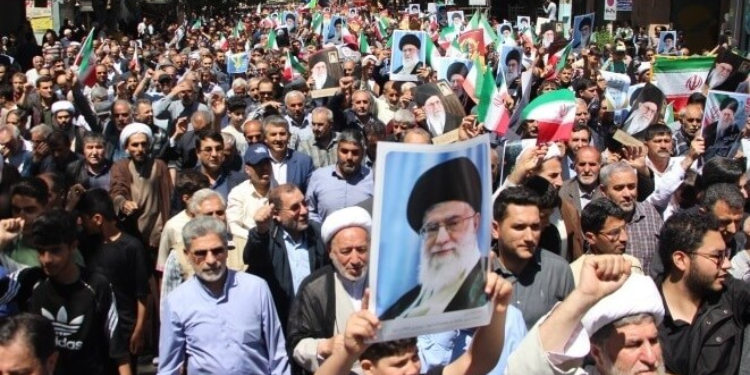
Protesters in Iran. PHOTO/Stimson

FacebookTwitterLinkedInRedditWhatsApp
Advertisement

The United States military achieved every objective it set when it went to war in Iraq in 2003. Decapitation: Saddam Hussein was captured, tried and hanged. Air dominance: total, within days. Regime collapse: The Iraqi government fell in 21 days.

Now, consider Iraq more than 20 years after the U.S.-Iraq war. Iraq is still an authoritarian state governed by political parties with deep institutional ties to Tehran. Iranian-backed militias operate openly on Iraqi soil – some holding official positions within the Iraqi state.

The country the U.S. spent US$2 trillion and 4,488 American lives to remake is, by any reasonable measure, within the sphere of Iran’s influence.

As an international security scholar specialising in nuclear security and alliance politics in the Middle East, I have tracked the pattern of U.S. military success across multiple cases.

But the military outcome and the political outcome are almost never the same thing, and the gap between them is where wars fail.

Two and a half millennia ago, Thucydides recorded the Athenian empire at its most confident in his “History of the Peloponnesian War”: “The strong do what they can and the weak suffer what they must.” Athens then destroyed Melos and launched the Sicily Expedition with overwhelming force and no coherent theory of governance for what came next.

The lesson, then and now, is not that empires cannot destroy. It’s that destruction and governance are entirely different enterprises. And confusing them is how empires exhaust themselves.

The U.S. military can destroy the Iranian regime. The question that the Iraq precedent answers – with brutal clarity – is what fills the power vacuum when it does?

The military and political ledger

In April 2003, American L. Paul Bremer arrived in Baghdad as the head of the Coalition Provisional Authority, which served as a transitional government, and issued two orders that would define the next two decades.

Order 1 dissolved the ruling Baath Party and removed all senior party members from their government positions, purging the administrative class that ran its ministries, hospitals and schools. Order 2 disbanded the Iraqi army but did not disarm it. Approximately 400,000 soldiers went home with their weapons and without their paychecks.

Washington had just handed the insurgency – the Sunni-led armed resistance that would turn into a decade-long war – its recruiting pool. The logic behind Bremer’s de-Baathification was intuitive: You cannot build a new Iraq with the people who built the old one. The logic was also catastrophic

Political scientists have long observed that countries are held together not by ideology but by organized coercion. That is, by the bureaucratic machinery, institutional memory and trained professionals who keep the lights on and the water running. Destroy that machinery, and you do not have a clean slate. You have a collapsed state, and collapsed states do not stay empty of leadership.

They fill, and they fill with whoever has the most organizational capacity on the ground. Iran had been building that capacity in Iraq since the 1980s, cultivating Shia political networks, exile parties and militia groups during and after the Iran-Iraq War and beyond with the explicit goal of ensuring a post-Saddam Iraq would never again threaten Iranian security.

Tehran did not need to build infrastructure in Iraq after the U.S. invasion, because it had spent the previous two decades building it. When the old order collapsed, Iran’s networks were ready.

The opposition the U.S. had cultivated in Iraq – Ahmed Chalabi and the Iraqi National Congress – had Washington’s ear but no Iraqi constituency. They had not governed the country, or built networks inside it.

The lesson is that military success created the precise conditions for political catastrophe, and that chasm is where American strategy has gone to die – in Iraq and in Libya, where the Obama administration helped bring about regime change in 2011, but where political instability has endured since. And perhaps now in Iran.

The vacuum is not neutral

The fundamental misunderstanding at the heart of American regime-change strategy is the assumption that destroying the existing order creates space for something better.

It does not.

It creates space for whoever is best organized, best armed and most willing to fill it. In Iraq, that was Iran.

The question now is who fills it in Iran itself.

In Iran, the group that meets all three criteria – organized, armed and willing – is the Islamic Revolutionary Guard Corps. The Revolutionary Guard is not simply a military institution. It controls an estimated 30% to 40% of the Iranian economy and runs construction conglomerates, telecommunications companies and petrochemical firms. And it has cultivated a parallel state infrastructure for decades.

Since Ayatollah Ali Khamenei’s death at the start of the U.S.-Israeli bombing campaign, the Revolutionary Guard has taken effective control of decision-making. As one Iran expert told NBC News: “Even if they replace the supreme leader, what is left of the regime is the IRGC.”

The succession confirmed it: Mojtaba Khamenei, with deep ties to the Revolutionary Guard, was named supreme leader on March 8, 2026. It’s a Revolutionary Guard-backed dynastic succession that represents maximum continuity with the old regime, not regime change.


Also Read: 939 Americans Dead, Republicans Cite Deaths Linked to U.S.-Iran Conflicts Since 1979


You cannot dismantle the Revolutionary Guard without collapsing the economy, and a collapsed economy does not produce a transition government; it produces a failed state. Washington has already run that experiment in Libya.

You cannot leave the Revolutionary Guard in place without leaving the regime’s coercive core intact. There is no clean surgical option of dropping bombs, killing certain people and declaring it a new day in Iran.

The Iranian opposition in exile, the Mujahedeen-e-Khalq; the monarchists who support the return of the late-shah’s son to lead the country; and the various democratic factions all present the same problem Chalabi did in 2003: Washington access, no domestic legitimacy.

The Mujahedeen-e-Khalq is listed as a terrorist organization by Iran and is widely despised inside the country. The monarchist movement has not governed Iran since 1979, and its corrupt, despotic leader was overthrown in the revolution. The democratic reform networks that had been building momentum inside Iran were not saved by the U.S. strikes. The regime had already crushed the movement in January, detaining and killing thousands.

Decades of research on rally-around-the-flag effects confirm what common sense suggests: External attack fuses regime and nation even when citizens despise their leaders. Iranians who were chanting against the supreme leader are now watching foreign bombs fall on their cities.

Iraq in 2003 had 25 million people, a military degraded by 12 years of sanctions, and no active nuclear program. Iran has 92 million people, proxy networks that would not disappear if Tehran fell – in fact, they would activate – and a stockpile of over 880 pounds of highly enriched uranium that the International Atomic Energy Agency has been unable to fully account for since the 2025 U.S. and Israeli strikes.

The question Washington hasn’t answered

Who governs 92 million Iranians?


Also Read: Blow to LGBTQ in Iraq as Same-Sex Couples Face Up to 15 Years Imprisonment


President Donald Trump has said whoever governs Iran must receive Washington’s approval. But a veto is not a vision.

Approving or rejecting candidates from Washington requires a functioning political process, a legitimate transitional authority and a population willing to accept an American imprimatur on their leadership — none of which exists.

Washington has a preference; it does not have a plan. If the objective is eliminating the nuclear program, then why does Iran still hold an unverified stockpile of weapon-usable uranium eight months after the 2025 strikes? The strikes have not resolved the proliferation question. They have made it more dangerous and less tractable.

If the objective is regional stability, why has every round of strikes produced a wider regional war?

Washington has no answer to any of these questions – only a theory of destruction.The Conversation

Farah N. Jan, Senior Lecturer in International Relations, University of Pennsylvania

This article is republished from The Conversation under a Creative Commons license. Read the original article.

Follow our WhatsApp Channel and X Account for real-time news updates. 
Iraq War’s Aftermath Was A Disaster For The Us – The Iran War Is Headed In The Same Direction
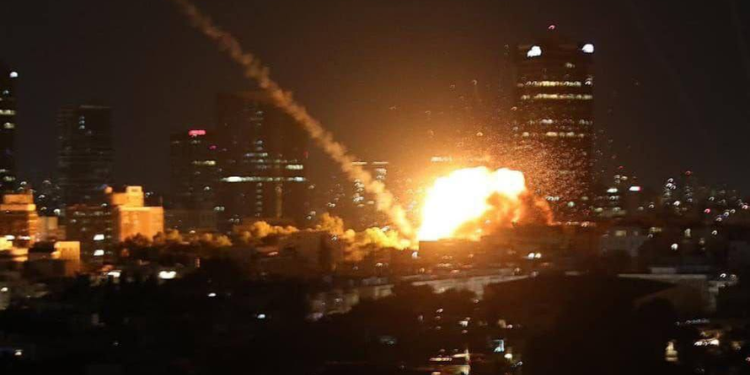
Iranian missile hits Tel Aviv. PHOTO/Clash Report
Tags: Iran-US WarIraq
The Conversation

The Conversation

The Conversation is an independent news organization that publishes evidence-based articles written by experts to help readers understand diverse topics. We cover a wide range of areas including arts, culture, education, health, politics, science, and more¹. Their content is characterized by in-depth analysis, research, news, and ideas from leading academics and researchers. The Conversation aims to provide academic rigor with journalistic flair.

Related Posts

It Would Be Difficult To Beat President William Ruto In 2027 - Ken Mijungu

It would be difficult to beat Ruto in 2027 – Ken Mijungu

July 10, 2026
‘We Are Waiting For The Americans To Save Us’ – In Crisis, Cubans Have Given Up On Reform From Within

‘We Are Waiting for the Americans to Save Us’ – In Crisis, Cubans Have Given Up on Reform From Within

July 9, 2026
David Ndii Explains Why Dangote’s 700,000 Bpd Refinery Could Not Be Built In Isiolo

Why Dangote Overlooked Isiolo When Choosing Location of His Giant 700,000 bpd Single Train Refinery

July 9, 2026
Iebc Reveals Plan To Delay Ol Kalou By-Election Until 2027

IEBC Reveals Plan to Delay Ol Kalou By-Election Until 2027

July 9, 2026
ADVERTISEMENT

The Kenya Times Facebook

LATEST NEWS

  • Americans Contribute Nearly $125 Million to Trump Accounts in First Five Days
  • Who Qualifies for Phoenix’s New $700 Assistance After SNAP Benefits End?
  • It would be difficult to beat Ruto in 2027 – Ken Mijungu
  • Americans Can Earn Up to $275,000 at Buc-ee’s Without a College Degree, Viral Sign Reveals
  • GOP Congressman Blasts Trump’s Greenland Push as ‘Foolish,’ Warns of Damage to NATO Allies
  • Karoline Leavitt Attacked Over Marriage to 61-Year-Old Husband After Calling Gen Z ‘Lazy’
  • Americans Born Under Birthright Citizenship Face New Court Battle as Trump Seeks Rehearing
  • Hunter Biden Launches Substack Series With Fresh Claims About Laptop Saga
  • A Guide to Mastering Blockchain Intelligence and Analytics Tools
  • Questions Arise as Postmortem Fails to Establish Cause of Death in KFS Legal Manager
  • Why Many Kenyans Prefer Android Over iPhone
  • ‘We Are Waiting for the Americans to Save Us’ – In Crisis, Cubans Have Given Up on Reform From Within
  • Why Dangote Overlooked Isiolo When Choosing Location of His Giant 700,000 bpd Single Train Refinery
  • IEBC Reveals Plan to Delay Ol Kalou By-Election Until 2027
  • Multi-Vehicle Collision Disrupts Traffic on Naivasha–Nakuru Highway
ADVERTISEMENT

Company

About Us

Our Authors

Our Experts

Social Media

Policies

Privacy Policy

House Rules

Standards and Policies

Terms and Conditions

Subscription

My Account

Contact Us

Contact Us

Join Our Team

Advertise With Us

© Copyright 2026 | The Kenya Times | All Rights Reserved

Welcome Back!

Sign In with Facebook
Sign In with Google
Sign In with Linked In
OR

Login to your account below

Forgotten Password? Sign Up

Create New Account!

Sign Up with Facebook
Sign Up with Google
Sign Up with Linked In
OR

Fill the forms below to register

All fields are required. Log In

Retrieve your password

Please enter your username or email address to reset your password.

Log In
Your Privacy and Cookies
We use cookies on our website to give you the most relevant experience by remembering your preferences and repeat visits. By clicking “Accept”, you consent to the use of ALL the cookies.
Do not sell my personal information.
Cookie settingsACCEPT
Privacy & Cookies Policy

Privacy Overview

This website uses cookies to improve your experience while you navigate through the website. Out of these cookies, the cookies that are categorized as necessary are stored on your browser as they are essential for the working of basic functionalities of the website. We also use third-party cookies that help us analyze and understand how you use this website. These cookies will be stored in your browser only with your consent. You also have the option to opt-out of these cookies. But opting out of some of these cookies may have an effect on your browsing experience.
Necessary
Always Enabled
Necessary cookies are absolutely essential for the website to function properly. This category only includes cookies that ensures basic functionalities and security features of the website. These cookies do not store any personal information.
Functional
Functional cookies help to perform certain functionalities like sharing the content of the website on social media platforms, collect feedbacks, and other third-party features.
Performance
Performance cookies are used to understand and analyze the key performance indexes of the website which helps in delivering a better user experience for the visitors.
Analytics
Analytical cookies are used to understand how visitors interact with the website. These cookies help provide information on metrics the number of visitors, bounce rate, traffic source, etc.
Advertisement
Advertisement cookies are used to provide visitors with relevant ads and marketing campaigns. These cookies track visitors across websites and collect information to provide customized ads.
Others
Other uncategorized cookies are those that are being analyzed and have not been classified into a category as yet.
SAVE & ACCEPT
LOGIN | REGISTER
  • Login
  • Sign Up
  • Cart
No Result
View All Result
  • News
    • Latest News
    • Breaking News
    • Investigations
    • Explainers
    • Fact Check
  • Politics
    • Global Politics
    • Conflicts & Security
    • Elections
    • Diplomacy
    • Government & Policy
    • Political Analysis
  • Business
    • Global Economy
    • Markets
    • Technology
    • Startups
    • Energy
    • Finance
  • World News
    • Americas
    • Asia
    • Asia Pacific
    • Africa
    • Europe
    • Middle East
  • Africa
    • East Africa
    • West Africa
    • Southern Africa
    • Central Africa
  • Health
    • Global Health
    • Public Health
    • Health Policy
    • Medical Research
    • Diseases & Conditions
    • Mental Health
    • Nutrition
    • Climate & Health
    • Health Explainers
  • Sports
    • World Cup 2026
    • Athletics
    • Basketball
    • Boxing
    • Cricket
    • Football
    • Formula 1
    • Golf
    • Rugby
  • Weather
    • Climate Business
    • Climate Change
    • Climate Solutions
    • Living Green
  • Culture
    • Arts
    • Film & TV
    • Food
    • Lifestyle
    • Music
    • Travel
  • Opinion
    • Editorials
    • Letters
  • Behind The Brand
  • Contact Us

Not enough quota to unlock this post
Unlock left : 0
Are you sure want to cancel subscription?