Friday, August 28, 2026
  • News
    • Latest News
    • Breaking News
    • Fact Check
    • Investigations
    • Explainers
  • Politics
    • Global Politics
    • Elections
    • Government & Policy
    • Diplomacy
    • Conflicts & Security
    • Political Analysis
  • Business
    • Global Economy
    • Markets
    • Technology
    • Startups
    • Energy
    • Finance
  • World News
    • Americas
    • Asia
    • Asia Pacific
    • Africa
    • Europe
    • Middle East
  • Africa
    • Central Africa
    • East Africa
    • West Africa
    • Southern Africa
  • Health
    • Global Health
    • Public Health
    • Health Policy
    • Medical Research
    • Diseases & Conditions
    • Mental Health
    • Nutrition
    • Climate & Health
    • Health Explainers
  • Sports
    • World Cup 2026
    • Athletics
    • Basketball
    • Boxing
    • Cricket
    • Football
    • Formula 1
    • Golf
    • Rugby
  • Weather
    • Climate Business
    • Climate Change
    • Climate Solutions
    • Living Green
  • Culture
    • Arts
    • Film & TV
    • Food and Recipes
    • Music
    • Lifestyle
    • Travel
  • Opinion
    • Editorials
    • Letters
  • Behind The Brand
REGISTER
LOGIN
No Result
View All Result
The Kenya Times
  • News
    • Latest News
    • Breaking News
    • Fact Check
    • Investigations
    • Explainers
  • Politics
    • Global Politics
    • Elections
    • Government & Policy
    • Diplomacy
    • Conflicts & Security
    • Political Analysis
  • Business
    • Global Economy
    • Markets
    • Technology
    • Startups
    • Energy
    • Finance
  • World News
    • Americas
    • Asia
    • Asia Pacific
    • Africa
    • Europe
    • Middle East
  • Africa
    • Central Africa
    • East Africa
    • West Africa
    • Southern Africa
  • Health
    • Global Health
    • Public Health
    • Health Policy
    • Medical Research
    • Diseases & Conditions
    • Mental Health
    • Nutrition
    • Climate & Health
    • Health Explainers
  • Sports
    • World Cup 2026
    • Athletics
    • Basketball
    • Boxing
    • Cricket
    • Football
    • Formula 1
    • Golf
    • Rugby
  • Weather
    • Climate Business
    • Climate Change
    • Climate Solutions
    • Living Green
  • Culture
    • Arts
    • Film & TV
    • Food and Recipes
    • Music
    • Lifestyle
    • Travel
  • Opinion
    • Editorials
    • Letters
  • Behind The Brand
  • News
    • Latest News
    • Breaking News
    • Fact Check
    • Investigations
    • Explainers
  • Politics
    • Global Politics
    • Elections
    • Government & Policy
    • Diplomacy
    • Conflicts & Security
    • Political Analysis
  • Business
    • Global Economy
    • Markets
    • Technology
    • Startups
    • Energy
    • Finance
  • World News
    • Americas
    • Asia
    • Asia Pacific
    • Africa
    • Europe
    • Middle East
  • Africa
    • Central Africa
    • East Africa
    • West Africa
    • Southern Africa
  • Health
    • Global Health
    • Public Health
    • Health Policy
    • Medical Research
    • Diseases & Conditions
    • Mental Health
    • Nutrition
    • Climate & Health
    • Health Explainers
  • Sports
    • World Cup 2026
    • Athletics
    • Basketball
    • Boxing
    • Cricket
    • Football
    • Formula 1
    • Golf
    • Rugby
  • Weather
    • Climate Business
    • Climate Change
    • Climate Solutions
    • Living Green
  • Culture
    • Arts
    • Film & TV
    • Food and Recipes
    • Music
    • Lifestyle
    • Travel
  • Opinion
    • Editorials
    • Letters
  • Behind The Brand
No Result
View All Result
The Kenya Times ~ Trending, Breaking News and Videos
No Result
View All Result
ADVERTISEMENT

Jomo Kenyatta, Father of the Nation? Kenya’s First President Built up a Myth Which Masked His Faults

The ConversationbyThe Conversation
August 22, 2024
Reading Time: 8 mins read
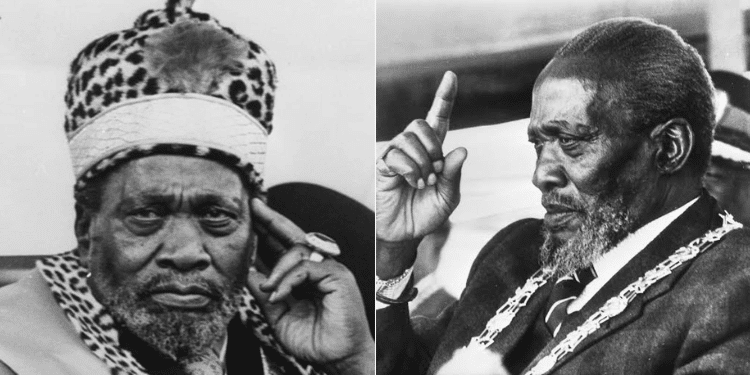
Sideto-Side Photos Of Kenya'S Founding President Jomo Kenyatta. Photos/Courtesy

Sideto-side photos of Kenya's founding President Jomo Kenyatta. photos/courtesy

FacebookTwitterLinkedInRedditWhatsApp
Advertisement

Kenya’s legacy as a state is deeply intertwined with Jomo Kenyatta influence on the nation. Kenya’s founding president died on 22 August 1978 in his sleep at State House, Mombasa.

Kenyatta is generally typecast as the “father of the nation”, guiding the newly independent Kenya onto the path of independence and development.

It is an image he carefully crafted.

Jomo Kenyatta was a writer. His body of work includes two historical books, a fable, essays and a semi-autobiography. In these works, he employed literary strategies to construct an identity and build mystique around his administration.

He created the image of the mythical father of the nation; one leading Kenyans in the fight against oppressive British colonialists and then ushering them into a newly independent state.
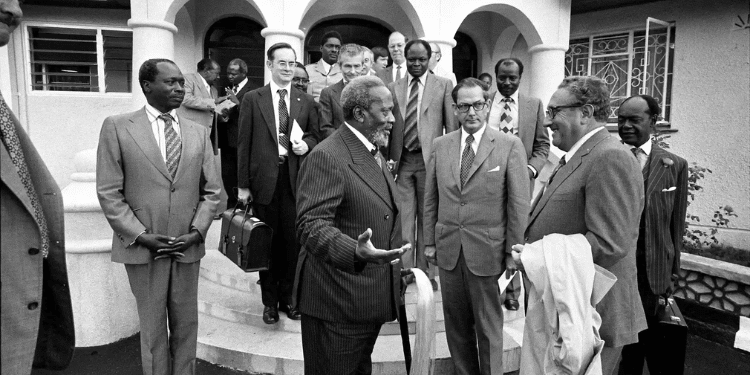
A File Of Photo Kenya'S First President Mzee Jomo Kenyatta In A Moment With Other Senior Government Officials. Photo/Courtesy
A file of photo Kenya’s first President Mzee Jomo Kenyatta in a moment with other senior government officials. photo/courtesy

This image was aimed at dazzling readers, making them stand in awe of him. The intended effect was to conceal his non-democratic and opportunistic tendencies and manipulate ethnic sentiment to shield Kenya’s leadership from other communities other than his, the Kikuyu.

As a literary scholar, I have been captivated by the way leaders like Kenyatta employ myth and religious tropes to shape their images and control how they are remembered. Kenyatta’s work – particularly his seminal anthropological book Facing Mount Kenya (1938) and the semi-autobiography (co-authored with his staff and published under his name) Suffering Without Bitterness: The Founding of the Kenyan Nation (1968) – is a testament to the power of literature in self-representation.

In my study of Kenyatta, I argue that the former president strategically used myth. Myths are symbolic narratives associated with religious beliefs about superhuman, hero or demigod beings of an earlier age. Kenya’s preliterate society considered Kenyatta’s myth-building to be a true account. This is similar to what Julius Nyerere in Tanzania and Yoweri Museveni in Uganda did in their writings, Freedom and Unity/Uhuru na Umoja (1968) and Sowing the Mustard Seed (1997), respectively.

That Jomo Kenyatta is still remembered as the father of independent Kenya is testament to the profound influence of myth in shaping history. The power of myth to captivate the imagination of the masses made it a potent strategy for Kenyatta to assume and maintain power.

Facing Mount Kenya

Kenya was a British colony from 1920 to 1963. During this period, Jomo Kenyatta gained popularity for his anti-colonial position. He advocated for the rights and independence of Kenyans.

Kenyatta’s writings were a powerful tool that propelled him to Kikuyu leadership. He used this position to reach national leadership when Kenya gained independence in 1963.

In Facing Mount Kenya, first published in 1938, Kenyatta crafted his identity as a saviour. A luminary who fought against evil white colonialists and ushered in a new age of black rule and independence.

However, while he was writing the book, he was in the midst of a 15-year absence from local and national politics. At the time, he was in Europe, studying and teaching. This, paradoxically, shielded him from the ethnic conflicts in Kenya during the colonial years. His absence cast him in the eyes of Kenyans as someone free from ethnic bias and who wasn’t part of the factional infighting of the new political parties.


Also Read: Uhuru, Mama Ngina Build Church in Honor of Mzee Jomo Kenyatta


This perception led Kenyatta to receiving a hero’s welcome upon his return to Kenya in 1946. His writings while he was away spared him close scrutiny. People only engaged with the person he said he was in his literature.

Throughout the colonial period, other nationalists made sacrifices for Kenyatta’s sake, stepping down to let him take leadership. James Gichuru, who became the first Kenyan finance minister, stepped down for Kenyatta twice. First in 1947 from the leadership of the Kenya African Union, a nationalist party. And then 15 years later from the presidency of the Kenya African National Union, which became the country’s first ruling party.

The literary investment Kenyatta put in Facing Mount Kenya was an early indication of his later investment in ethnic patronage. This is evident in his championing of “female circumcision” as a rite of passage, and his vision of a society in which the desires of women were subjugated to those of men. To quote him:

No proper Gikuyu man would dream of marrying a girl who has not been circumcised. It is a taboo for a Gikuyu man to have sexual relations with someone who has not undergone this operation. (page 132)

This belief indicates cultural chauvinism and can be an early sign of a leader with a hardline position. However, for Kenyatta, he was illustrating his being all-knowing. When it came to his leadership, this depiction allowed him to establish an authoritarian regime that revolved around him and his inner cabinet.

Kenyatta presented himself as a leader who struggled against dark forces, conquered them and returned home to spearhead the liberation of his people. His true self only began to emerge later in the post-colonial period.

Suffering Without Bitterness

After Kenya attained independence in 1963, the effort to prioritise national interests over ethnic ones was elusive, and Kenyatta risked being seen as a false messiah. He sought to revitalize the myth he had created. This is what Suffering Without Bitterness, published in 1968, sets out to do.


Also Read: Kenya at 60: Six Key Moments That Shaped Post-Colonial Politics


Kenyatta used myth and religious tropes to create the image of a leader persecuted for the benefit of Kenyans. He makes a metaphor of his suffering in the north of Kenya where he was held in detention. Kenyatta and five other nationalists were arrested and detained in 1952 by the British for leading the fight for independence.

In this book, Kenyatta creates the identity of a patriotic person who has suffered more than anyone else and has not lost hope. He portrays himself as a character tormented by the forces of colonialism. He is exposed to hard labour and a deficient diet.

He uses his suffering to extol his leadership, which with time became despotic, using an iron fist to silence opposition.

With Kenyatta struggling to steer the post-colonial state onto the development path, Suffering Without Bitterness sought to rhetorically revive the image of a larger-than-life hero.

Complex legacy

The former president’s self-mythologisation was a complex process. He had an abstract notion of an ideal leader, but his personal ambition for power prevented him from being that.

He focused his energy and attention on concealing his ambition-deformed personality behind the mask of “father of a nation”.

In the hide-and-seek game with those critical of his leadership, the opportunity for genuine leadership and genuine service to nation-building was lost.The Conversation

Stephen Mutie, the author of this story is a Literature lecturer at Kenyatta University

This article is republished from The Conversation under a Creative Commons license. Read the original article.
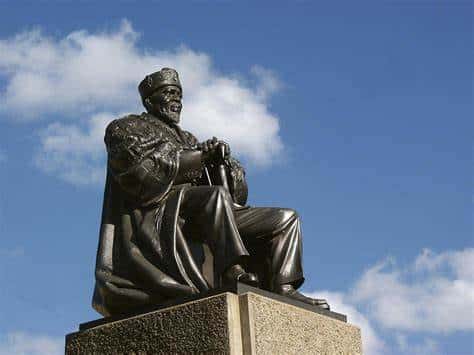
A Statue Of Kenya'S Independence President Mzee Jomo Kenyatta Outside The Jomo Kenyatta International Convention Center (Kicc). Photo/Courtesy
A statue of Kenya’s independence President Mzee Jomo Kenyatta outside the Jomo Kenyatta International Convention Center (KICC). photo/courtesy
Tags: Jomo KenyattaKenya first president
The Conversation

The Conversation

The Conversation is an independent news organization that publishes evidence-based articles written by experts to help readers understand diverse topics. We cover a wide range of areas including arts, culture, education, health, politics, science, and more¹. Their content is characterized by in-depth analysis, research, news, and ideas from leading academics and researchers. The Conversation aims to provide academic rigor with journalistic flair.

Related Posts

Milk Shortage In Kenya? Supermarkets Limit Purchases As Popular Brands Disappears From Shelves

Milk Shortage in Kenya? Supermarkets Limit Purchases as Popular Brands Disappear From Shelves

August 28, 2026
From Healthcare Pioneer To Microsoft East Africa Boss: Angela Nganga’s Unlikely Path To Power  

 From Healthcare Pioneer to Microsoft East Africa Boss: Angela Nganga’s Unlikely Path to Power  

August 28, 2026
Rosemary Koech Death: Kcb Mourns Head Of Data Protection As Kictanet Sets Up Ksh1M Fund

KCB Publicly Mourns Rosemary Koech as KSh 1M Children’s Fund Is Seeded

August 28, 2026
The Role Of The United Nations In Addressing Severe Diseases In Africa 

The Role of the United Nations in Addressing Severe Diseases in Africa 

August 28, 2026
ADVERTISEMENT

The Kenya Times Facebook

LATEST NEWS

  • Milk Shortage in Kenya? Supermarkets Limit Purchases as Popular Brands Disappear From Shelves
  •  From Healthcare Pioneer to Microsoft East Africa Boss: Angela Nganga’s Unlikely Path to Power  
  • KCB Publicly Mourns Rosemary Koech as KSh 1M Children’s Fund Is Seeded
  • The Role of the United Nations in Addressing Severe Diseases in Africa 
  • Who Is Fredah Onduso, the Actress Now Making Waves in Linda Mwananchi?
  • How Kenyans Can Check and Claim HELB Refunds After Overpaying Their Loans
  • Njeri Maina Wants DCI to Probe Wangui Ngirici Over Gachagua Rally Violence
  • Kericho Referral Hospital Upgrades Bring New Services Closer to Residents
  • Kenya’s Next Football Stars Are Rising Through the SportPesa League
  • Protests Erupt in Nairobi CBD After Govt Directive
  • Another Police Recruitment Coming Before 2027 Elections?
  • CBK Invites Investors to Bid in KSh10 Billion Treasury Bond Switch Auction
  • Key Features of New Police Uniform Unveiled by Ruto
  • Gladys Wanga Recounts Her Battle with Cancer and Role Beth Mugo Played in Her Journey
  • Ruto Honors Top Police Recruits: What the Awards Mean
ADVERTISEMENT

Company

About Us

Our Authors

Our Experts

Social Media

Policies

Privacy Policy

House Rules

Standards and Policies

Terms and Conditions

Subscription

My Account

Contact Us

Contact Us

Join Our Team

Advertise With Us

© Copyright 2026 | The Kenya Times | All Rights Reserved

Welcome Back!

Sign In with Facebook
Sign In with Google
Sign In with Linked In
OR

Login to your account below

Forgotten Password? Sign Up

Create New Account!

Sign Up with Facebook
Sign Up with Google
Sign Up with Linked In
OR

Fill the forms below to register

All fields are required. Log In

Retrieve your password

Please enter your username or email address to reset your password.

Log In
Your Privacy and Cookies
We use cookies on our website to give you the most relevant experience by remembering your preferences and repeat visits. By clicking “Accept”, you consent to the use of ALL the cookies.
Do not sell my personal information.
Cookie settingsACCEPT
Privacy & Cookies Policy

Privacy Overview

This website uses cookies to improve your experience while you navigate through the website. Out of these cookies, the cookies that are categorized as necessary are stored on your browser as they are essential for the working of basic functionalities of the website. We also use third-party cookies that help us analyze and understand how you use this website. These cookies will be stored in your browser only with your consent. You also have the option to opt-out of these cookies. But opting out of some of these cookies may have an effect on your browsing experience.
Necessary
Always Enabled
Necessary cookies are absolutely essential for the website to function properly. This category only includes cookies that ensures basic functionalities and security features of the website. These cookies do not store any personal information.
Functional
Functional cookies help to perform certain functionalities like sharing the content of the website on social media platforms, collect feedbacks, and other third-party features.
Performance
Performance cookies are used to understand and analyze the key performance indexes of the website which helps in delivering a better user experience for the visitors.
Analytics
Analytical cookies are used to understand how visitors interact with the website. These cookies help provide information on metrics the number of visitors, bounce rate, traffic source, etc.
Advertisement
Advertisement cookies are used to provide visitors with relevant ads and marketing campaigns. These cookies track visitors across websites and collect information to provide customized ads.
Others
Other uncategorized cookies are those that are being analyzed and have not been classified into a category as yet.
SAVE & ACCEPT
LOGIN | REGISTER
  • Login
  • Sign Up
  • Cart
No Result
View All Result
  • News
    • Latest News
    • Breaking News
    • Investigations
    • Explainers
    • Fact Check
  • Politics
    • Global Politics
    • Conflicts & Security
    • Elections
    • Diplomacy
    • Government & Policy
    • Political Analysis
  • Business
    • Global Economy
    • Markets
    • Technology
    • Startups
    • Energy
    • Finance
  • World News
    • Americas
    • Asia
    • Asia Pacific
    • Africa
    • Europe
    • Middle East
  • Africa
    • East Africa
    • West Africa
    • Southern Africa
    • Central Africa
  • Health
    • Global Health
    • Public Health
    • Health Policy
    • Medical Research
    • Diseases & Conditions
    • Mental Health
    • Nutrition
    • Climate & Health
    • Health Explainers
  • Sports
    • World Cup 2026
    • Athletics
    • Basketball
    • Boxing
    • Cricket
    • Football
    • Formula 1
    • Golf
    • Rugby
  • Weather
    • Climate Business
    • Climate Change
    • Climate Solutions
    • Living Green
  • Culture
    • Arts
    • Film & TV
    • Food and Recipes
    • Lifestyle
    • Music
    • Travel
  • Opinion
    • Editorials
    • Letters
  • Behind The Brand
  • Contact Us

Not enough quota to unlock this post
Unlock left : 0
Are you sure want to cancel subscription?