Kenya Pipeline Company (KPC) has entered a 25-year crude oil storage and handling deal with Gulf Energy, projected to generate approximately KSh93.68 billion in gross revenue, as the company expands its role in petroleum storage and logistics through its subsidiary, Kenya Petroleum Refineries Limited (KPRL).
In a notice on August 26, the company said KPRL had entered into the long-term contract with Gulf Energy E&P B.V. (GEBV) for the receipt, storage, handling, and delivery of crude oil for export through the Kipevu Oil Terminal II (KOT II).
“Kenya Petroleum Refineries Limited (KPRL), a wholly owned subsidiary of KPC, has entered into a long-term Crude Oil Storage and Handling Contract with Gulf Energy E&P B.V. (GEBV),” the company said.
KPC Signs 25-Year Gulf Energy Deal Projected to Generate KSh93.68 Billion
KPC said its internal projections estimate that the contract will generate approximately KSh93.68 billion in gross revenue over the 25-year period.
Also Read: Storm Brews at KPC Over CEO Recruitment After Transition to Private Company
The company, however, clarified that the figure is based on projected crude oil throughput and tariff assumptions and does not constitute a guaranteed revenue commitment.
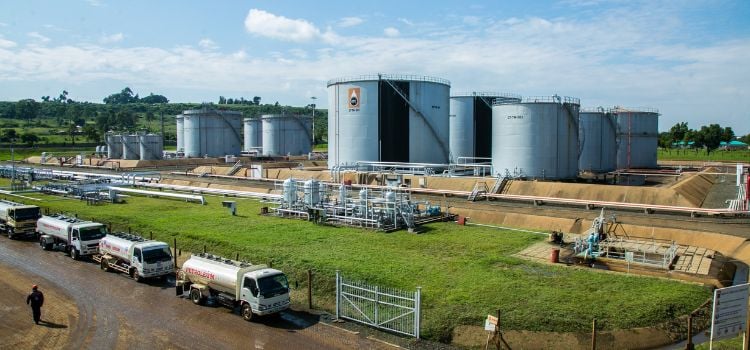
The contract is expected to support the commercial utilization of KPRL’s existing and upgraded infrastructure while broadening the company’s participation in petroleum logistics.
According to the company, the agreement is expected to contribute to its long-term revenue outlook through fixed service fees and the recovery of qualifying variable costs.
“Current internal projections estimate gross revenue of approximately KES 93.68 billion over the 25-year contract period. This estimate is, however, based on projected throughput and tariff assumptions and does not constitute a guaranteed revenue commitment,” the company stated.
KPC and KPA Revise KOT II Agreement
In a separate development, the company said KPC and the Kenya Ports Authority (KPA) have revised their Service Level Agreement governing the operation and maintenance of KOT II.
KOT II is owned by KPA and serves as the principal marine interface through which KPC receives petroleum products for transfer into its pipeline and storage network.
KPC said the revised agreement replaces the earlier arrangement and clarifies the respective responsibilities of the two organizations.
Also Read: Kenyans to Pay More for Electricity After EPRA Review and Leadership Crisis at KPC
It also strengthens provisions on accountability, performance monitoring, maintenance coordination, and business continuity at the terminal.
While the revised KPA agreement is not expected to generate significant direct monetary returns, KPC described it as critical to the reliability of petroleum supply operations.
“Although the agreement is not expected, by itself, to have a significant direct monetary value, it is operationally critical to KPC and to the reliable receipt and onward transportation of petroleum products serving Kenya and regional markets,” the notice stated.
KPC said the two agreements collectively reinforce its strategic role in the petroleum supply chain while supporting the optimization of KPRL assets.
The company said they also provide a platform for diversified and sustainable revenue generation as the company expands its participation in petroleum logistics.
The company said it will continue to monitor implementation of the agreements and make further disclosures as required under applicable law and the Nairobi Securities Exchange Listing Rules.
Follow our WhatsApp Channel and X Account for real-time news updates.