The Motorists Association of Kenya (MAK) has called for a forensic investigation into Kenya’s government-to-government (G-to-G) fuel importation arrangement after Ugandan President Yoweri Museveni recently made remarks on fuel procurement.
In a statement on September 19, MAK said President Museveni had publicly confirmed that Uganda was sourcing petroleum products through intermediaries in Kenya, a revelation the association said raised fresh questions about the country’s fuel procurement system and pricing model.
“EPRA currently calculates maximum pump prices under the statutory pricing formula, with landed cost, transport, storage, margins, taxes and other approved costs forming part of the calculation. But the public must be satisfied that every component is independently verified and free from political or commercial interference,” stated MAK.
MAK Demands Investigation Into Fuel Deal
According to MAK, motorists and consumers have for years questioned the G-to-G fuel deal and the rising cost of petroleum products.
The association argued that Museveni’s remarks seemed to validate concerns that middlemen were involved in the supply chain, even though the arrangement was introduced to stabilize fuel supplies and prices.
Also Read: Uganda Explains Why It Cut Kenya Out of Its Fuel Imports
The association questioned why governments were not buying fuel directly from suppliers if intermediaries were still part of the process. It also sought answers on who benefited from the arrangement and at whose expense.
“If governments were supposedly buying directly from governments, why were middlemen sitting between governments and the petroleum suppliers? Who benefited from this arrangement, and at whose expense?” stated MAK.
MAK said the matter should no longer be treated as speculation or political debate, calling instead for a full, independent and transparent investigation into Kenya’s petroleum importation, procurement, pricing and distribution systems.
The association noted that high fuel prices have directly affected the cost of living, including transport, food, construction materials, education and healthcare costs. It added that motorists, drivers, transport operators and businesses had continued to bear the burden of rising fuel expenses.
Association Demands Full Disclosure of Fuel Import Costs
MAK said ordinary Kenyans have borne the burden of what it described as a fuel-pricing system that lacks transparency.
The association called for a forensic audit of the government-to-government (G-to-G) fuel import deal, including a review of the intermediaries, contracts, commissions, pricing formulas and beneficiaries involved.
MAK also called for public disclosure of the actual landed cost of every petroleum shipment, including the parties involved and all margins added before fuel reaches consumers.
Also Read: Motorists Reject 30-Year Highway Toll, Float Fuel Price Hike Instead
The association further argued that all elements used in calculating pump prices should be independently verified and protected from political or commercial interference.
MAK also urged that any investigations uncovering fraud, abuse of office, unlawful enrichment or other criminal conduct should lead to legal action, including recovery of public funds and prosecution of those found responsible.
The association said it was not calling for charity but demanding accountability, transparency and fair fuel prices for consumers.
“President Museveni has opened the door. Kenya must now walk through it,” the statement concluded.
Museveni Explains Why It Cut Kenya Out of Its Fuel Imports
Ugandan President Yoweri Museveni explained how Uganda changed the way it imports petroleum products from Kenya, saying a Kenyan senator first drew his attention to the role of intermediaries in the trade.
Speaking while presiding over the groundbreaking ceremony for a 320-million-liter petroleum storage terminal in Mpigi District, Uganda, on September 17, Museveni said he was surprised to discover that Uganda had been sourcing fuel through middlemen in Kenya instead of dealing directly with refineries and bulk petroleum suppliers.
The President said the revelation eventually prompted Uganda to rethink its fuel-importation model, with the Uganda National Oil Company (UNOC) taking a more direct role in importing petroleum products.
Museveni said Uganda had for years obtained petroleum products through intermediaries operating in Kenya before a Kenyan senator raised the issue with him.
The intervention prompted him to question why Uganda was not purchasing fuel directly from companies involved in refining and bulk supply.
“The Republic of Uganda was buying petroleum products through middlemen in Kenya. And the person who woke me up first was a senator from Kenya,” Museveni said.
He said he later contacted Irene Muloni, then Uganda’s Minister of Energy and Mineral Development, after learning about the arrangement.
Follow our WhatsApp Channel and X Account for real-time news updates.
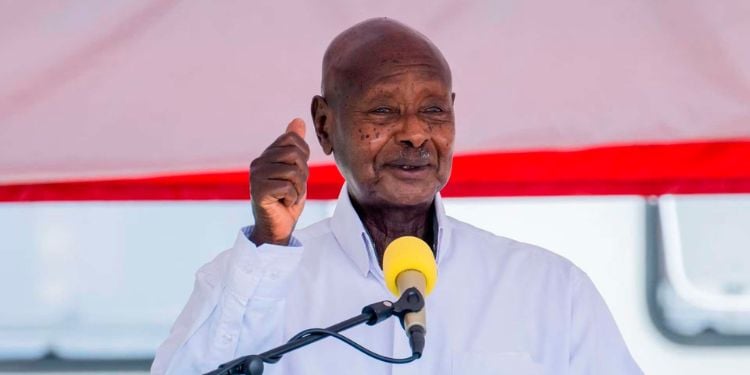
PHOTO | Yoweri Museveni | X