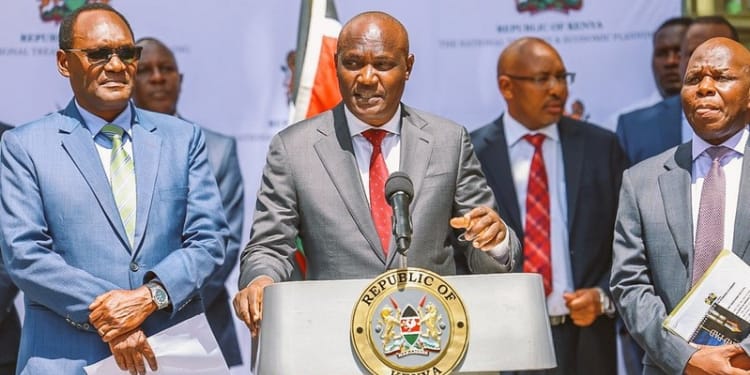

Speaking at the National Prayer Breakfast on May 28, Ruto said workers earning up to KSh24,000 had previously paid PAYE at a rate of 10 per cent.
He stated that the government now plans to raise the tax-free income threshold to KSh30,000 per month.
“We will be putting a proposal before Parliament to say all the low-income earners, the people who earn up to 24,000, they’ve been paying pay as you earn at 10%. We’re saying they will not pay anymore,” Ruto said.
Ruto Says Kenyans Earning Up to KSh30,000 Will No Longer Pay PAYE
According to the President, Kenyans earning KSh30,000 and below will no longer pay income tax if Parliament approves the proposal.
“That category should be moved to anybody who is earning 30,000 and less. They will not pay any taxes,” he added.
Ruto said Treasury officials had raised concerns that the move could reduce government revenue by about KSh40 billion within the budget.
Despite the projected cost, the President said the government had decided to proceed with the proposal as part of efforts to reduce the financial burden on low-income earners.
Also Read: Mbadi Clears Air on Bread and Motor Vehicle Tax Fears
He added that the government is exploring new and more innovative approaches to support development while easing pressure on ordinary Kenyans.
Treasury Says Proposal to Exempt KSh30,000 Salaries From PAYE Still Under Review
John Mbadi Ng’ongo has stated that the proposal to exempt the first KSh30,000 of employment income from Pay As You Earn (PAYE) tax is still under consideration by technical teams.
In a statement dated May 25, 2026, Mbadi said the proposal is linked to an earlier plan involving a 5 percent reduction in PAYE, although it was not included in the Finance Bill, 2026.
Also Read: Treasury Responds to Viral Finance Bill 2026 Tax Claims
“On 5% reduction in PAYE – I believe this one follows the earlier proposal of making the first Kshs 30,000 employment income exempt – though this did not make it to the Finance Bill and is still being explored by the technical teams,” Mbadi said.
He noted that the National Treasury remains committed to maintaining a balanced fiscal framework that supports revenue mobilisation, economic growth, investment, innovation, and long-term economic sustainability.
Mbadi added that the Treasury is also taking into account prevailing economic conditions and concerns raised by the public.
The Treasury further encouraged continued public participation on the Finance Bill, 2026 through the ongoing parliamentary process.
Follow our WhatsApp Channel and X Account for real-time news updates.