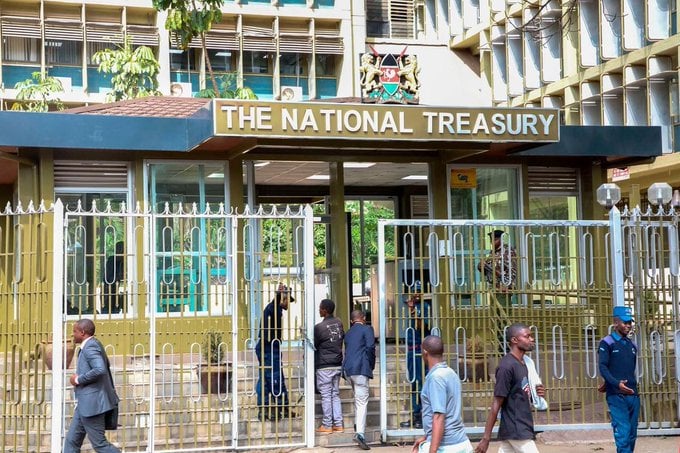
The National Treasury has issued clarifications on proposals under the Finance Bill, 2026, following widespread public debate and media reports.
According to the Treasury, some of the commentary on the Bill has been mixed with that of past proposals, leading to inaccurate misinterpretation by the public.
In a statement dated May 25, the National Treasury explained that some tax proposals in the Finance Bill 2026, including taxes on mobile phones, were inappropriate.
“Recent media reports and public discussion on the Finance Bill 2026 are an important part of the process. The National Treasury, however, notes that some commentary has mixed proposals contained in the current Finance Bill with past proposals and interpretations that do not accurately reflect the contents and intent of the Finance Bill, 2026,” part of the statement read.
National Treasury on Mobile Phone Excise Duty
Addressing the proposed 25% excise duty on mobile phones, the treasury emphasized that the Bill does not impose such a tax.
Further, the Treasury explained that mobile phones are currently subject to multiple domestic taxes and levies during importation and along the supply chain.
Among the taxes and levies that mobile phones in Kenya are currently subjected to include 16% VAT, 10% excise duty, 25% import duty, 2.5% import declaration fee, and 2% railway development levy.
With the mobile phones, taxes and levies accumulating to a tax burden of approximately 55.5% within the current taxation framework, the proposal in the Finance Bill 2026 seeks to simplify the taxation framework to a 25% excise duty collection upon activation.
Upon implementation of the new tax rule, the 25% import duty will be removed, thereby simplifying the tax structure and lowering the overall domestic tax burden.
Also Read: Mbadi Clears Air on Bread and Motor Vehicle Tax Fears
Virtual Asset Service Providers Requirements
Under the Finance Bill 2026, an amendment to the Tax Procedures Act proposes applying reporting and record-keeping principles to the virtual asset sector.
According to the National Treasury, the record-keeping and reporting principles for virtual assets will ensure that ownership is easily determined and ease the identification of transactions and the facilitation of the tax system.
In addition, the reporting requirements will help address the existing gap in the legal framework and unclear obligations governing the virtual asset sector in the digital financial environment.
Card Payment Fees
The Finance Bill 2026 proposal on digital payment and card transaction services will seek to provide clarity on the consistent treatment of fees charged.
The proposal aims to address recent court rulings on taxation fees arising from card transactions and digital payment platforms.
Moreover, the proposal aims to solve the uncertainty on whether some of the digital services should be treated as exempted financial services or as ordinary commercial services for taxation.
Digital Content Monetization
The Finance Bill 2026 does not include any proposal to withhold taxes on digital content monetization, according to the National Treasury.
Explaining the proposal on tax measures, the Treasury noted that the Bill does not include a proposal the introduce a 5% withholding tax on digital monetization, as reported by some media.
Also Read: How New Tax Proposals in Finance Bill 2026 Will Affect Mitumba and Smartphones
Finance Bill 2026: Difference from Earlier Proposals
Unlike the Finance Bill 2024 proposals the introduce VAT, the Finance Bill 2026 maintains a zero rating on basic staple food products.
Further, the Bill does not include any proposals on motor vehicle circulation tax, access to mobile money transaction data, or the levy on phones as contained in the 2024 Finance Bill.
On the VAT Act, the Finance Bill 2026 is targeting the digital services that are ICT-driven as opposed to traditional financial services such as cash deposits, withdrawals, and forex exchange.
Noting the VAT targeting financial services, the National Treasury had previously held a meeting with Safaricom service providers, explaining that the Bill proposal does not target their services.
Additionally, with the introduction of withholding taxes on card transactions, the Finance Bill 2026 has defined management, professional, and royal fees to include fees on cards following judicial interpretation and the expansion of the tax base.
The National Treasury emphasized that the 5% PAYE reduction proposal from earlier discussions for employees earning KSh 30,000 did not make it into the Finance Bill 2026.
However, the Treasury stated that the technical team is still exploring the proposal on the employee income tax exemptions.