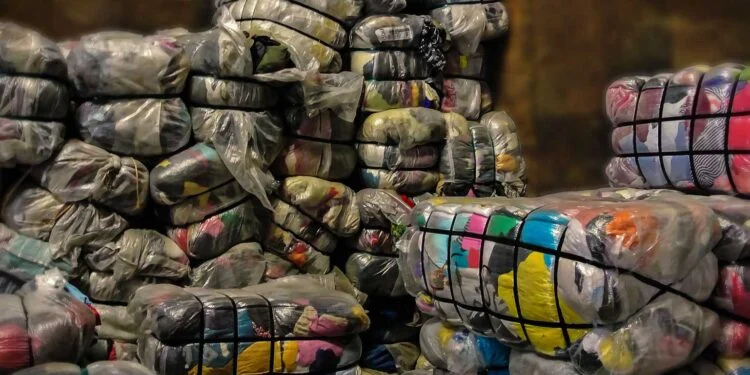
The Finance Bill 2026 has proposed new tax measures targeting imported second‑hand clothes, mitumba, and mobile phones, a move the government says is meant to simplify tax collection, improve fairness, and reduce uncertainty for traders and consumers.
Although consumer groups worry that the changes could raise prices and put extra strain on low‑income households, the government says the new taxes aim to make taxes clearer and more predictable while helping to close gaps in revenue collection.
Simpler and More Predictable Taxes for Mitumba Traders
Under the proposals, mitumba imports will be placed under a presumptive tax system applied at the point of entry.
If the proposals in the Finance Bill 2026 are adopted, the government will continue charging 16% VAT when the goods enter the country, after which the tax authority will assume that traders make a 5 % profit margin on the sale of the clothes.
That assumed profit will then be taxed at 30 % income tax, with no further taxes charged along the trade chain.
According to the government, this approach replaces the multiple, often unclear tax demands that mitumba traders face upon importation.
The government says the new framework is intended to eliminate unpredictable enforcement, reduce repeated tax visits along the supply chain, and make it easier for traders to plan their costs.
By settling taxes upfront in a single process, the government says traders will no longer face overlapping or discretionary tax claims once goods are already in the market.
The model, according to the National Treasury, was developed following consultations with mitumba traders, who called for a streamlined and more transparent system that clearly defines tax obligations at the point of import rather than exposing them to multiple assessments later.
At the same time, the government says the system will help stop reporting by large importers who bring in big volumes of goods but have previously paid little or no tax.
Also Read: Select Kenyans to Receive Ksh25,000 Each in Second Batch of Government Project
Government Assures Traders of Stability Under New Tax Reforms
Although the changes are meant to help traders, some traders and consumer groups worry that the upfront taxes could be added to prices, making mitumba more expensive and reducing demand, especially among low‑income households that depend on second‑hand clothes.
There are also fears that reduced demand could affect jobs in the trade, which supports thousands of small traders, transporters, and market workers across the country.
The government, however, says the reforms are designed to balance revenue needs with trader protection, noting that greater predictability and reduced harassment could help stabilize the sector over time.
Smartphone Taxes Aimed at Improving Enforcement and Broadening the Tax Base
The Finance Bill 2026 also proposes a 25% excise duty on mobile phones, to be charged at device activation rather than at import.
According to the government, charging tax when a phone is activated will make it easier to enforce the law by ensuring that all phones in use are taxed, including those brought into the country informally or without paying taxes at the border.
Also Read: AAK Raises Alarm Over Exclusion of Local Architects and Engineers in Government Projects
The government says this approach strengthens coverage and fairness in the taxation of the digital economy and supports national revenue mobilization.
The move also aligns with the shift in the Finance Bill toward final presumptive taxation, in which taxes are settled upfront and once, reducing the need for repeated tax filings and enforcement actions.
Finance Bill 2026 Balancing Revenue Needs and Digital Access
Consumer groups say the excise duty could make smartphones more expensive, limiting access for young people and low‑income users who rely on phones for school, mobile banking, and online work.
The government acknowledges the concerns but maintains that improved revenue mobilization is necessary to support public services, infrastructure, and digital systems.
It says enforcement‑focused measures under the Finance Bill 2026 are intended to spread the tax burden more evenly, rather than relying on a small number of compliant importers and consumers.