The Architectural Association of Kenya (AAK) has expressed concern over the continued exclusion of local professionals from the design and supervision of key government projects.
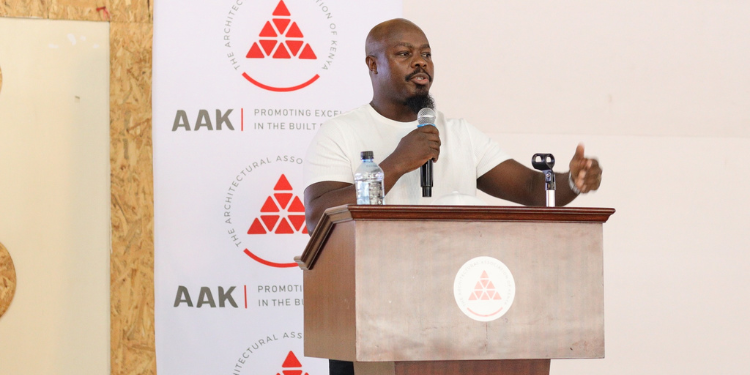
In a statement dated April 22, Dancan Odhiambo, Chairperson of AAK Coast branch, said the trend reflects a growing disregard for local expertise in major public developments.
“The Architectural Association of Kenya is disturbed by the continuous exclusion of professionals from the design and supervision of key government projects,” said Dancan Odhimbo.
Dancan Odhiambo cited previous concerns raised by the Institution of Engineers of Kenya, which reported that more than 15,000 local engineers remain jobless.
Architectural Association of Kenya raises concerns over architects’ exclusion.
He added that the situation has worsened for architects, noting that about 90% are either unemployed, downsizing, or working under constrained conditions in government projects.
In addition, Dancan criticized the Affordable Housing Program, alleging that the architects involved are paid about 0.8% of project costs, below the 6% fee set out in Cap 525 of the Laws of Kenya.
“Today, 90% of architects in Kenya are either unemployed, downsizing, or engaged in the Affordable Housing Program where they are paid a paltry 0.8% of the project cost – against the 6% stipulated in Cap 525 of the Laws of Kenya,” said Dancan.
Also Read: Inside the Chinese Company Set to Build the Naivasha–Kisumu–Malaba SGR Extension
He argued that this pay structure has contributed to financial strain within the profession and to reduced participation in public-sector work.
Govt Condemned for Relying Heavily on Foreign Architectures
AAK also raised concerns about Kenya’s overreliance on foreign professionals for government infrastructure projects.
It argued that some designs do not reflect Kenya’s tropical climate and local construction needs.
Additionally, Odhiambo argued that it undermines local expertise despite significant public investment in training professionals through Kenyan universities and technical institutions.
He highlighted that the Commonwealth Association of Architects (CAA) previously reported that 57% of architects in Kenya have considered leaving the profession as a result of poor working conditions and limited opportunities.
Odhiambo also criticized government appointments and decision-making in public institutions, alleging that merit is sometimes overlooked in favor of political considerations.
He further questioned the use of National Social Security Fund (NSSF) resources in large-scale infrastructure projects, arguing that such investments should prioritize social services and public welfare.
The Chinese Company Mandated to Build SGR Extension in Kenya
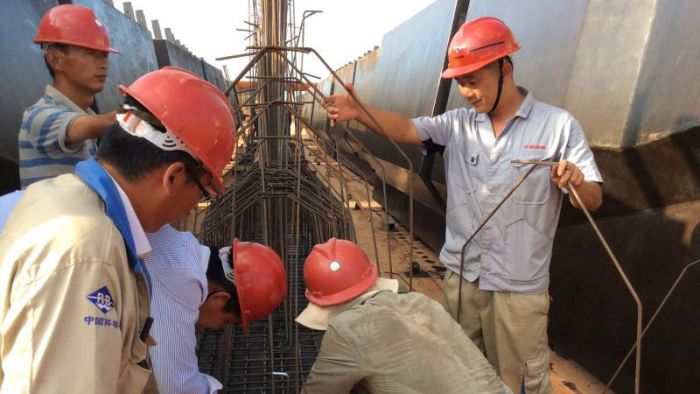
These growing concerns come shortly after the government announced China Communications Construction Company (CCCC), a Chinese infrastructure firm specializing in transport and urban development projects, as the firm set to undertake the construction of the Naivasha–Kisumu–Malaba SGR line.
Other Chinese companies that have won Kenyan projects include China Wu Yi, Synohydro, Jiangxi Engineering, China Railways 21 Bureau Group, and Third Engineering Bureau of China City Construction Group.
Also Read: Naivas, Quickmart, and Carrefour Change Tact as China Village Sends Strong Signal
These Chinese companies started participating in Kenya’s mega projects with the construction of the Thika Superhighway between January 2009 and November 2012, with the cost of the project being about KSh 32 billion.
Therefore, since then, China Road and Bridges Corporation (CRBC) and CCCC have started dominating the sector and have claimed the largest share of Kenya’s mega projects, including at least two railways, two ports, and 23 road projects.