The Kennedy Center is still considering a partial closure for renovations, even after a federal judge ordered it to remain open and continue programming.
Board Considers Multiple Options
In a court filing late Friday, June 19, officials said the center’s board will meet in mid-July to choose among a full closure with no public programs, a partial closure with some access and limited shows, or phased closures that allow more programming.
This comes as the Trump administration works to comply with a court order blocking a full shutdown.
U.S. District Judge Christopher Cooper blocked the planned two-year closure for renovations last month. He ruled after a lawsuit from Democratic Rep. Joyce Beatty of Ohio. Cooper also stopped the addition of President Trump’s name to the center.
Also Read: Trump’s Name Removed from Kennedy Center After Court Battle
The judge told the administration to explain its construction plans, board decisions, and its plans for handling public access and operations after July 5. That’s when the closure was supposed to start.
Kennedy Center Executive Director Matt Floca said in the filing that the board is weighing those three options. Attorneys for the Justice Department asked the judge for more time. They suggested both sides file a joint status report two weeks after the board’s meeting.
The government lawyers said the center still plans capital repairs. They noted that Cooper’s order did not require the board to reinstate canceled programming or book new shows. The judge did not completely rule out a future closure, they added.
Beatty’s Team Pushes Back
Beatty’s lawyers pushed back in their own filing, accusing officials of trying to shut down the center through inaction and turn it into “a lifeless husk.” They said the government has gutted programming and is not taking clear steps to restore it.
One example they gave was the end of “Shear Madness,” the long-running interactive play which wrapped up its decades-long run at the center earlier this month. The lawyers said the center could have tried to keep it going.
“To be clear, again, Plaintiff is not asking the Court to pick and choose what programming Defendants present, or to micromanage operations,” Beatty’s team wrote.
“Defendants must do something, however, to ensure there are meaningful operations come July 5, 2026, in order to comply with the plain terms of the preliminary injunction, and they must do so in good faith.”
They asked Cooper to require weekly updates on steps to resume programming. They also suggested starting talks on a discovery schedule for the lawsuit.
Name Dispute Adds Tension
The fight goes beyond programming as Trump’s name on the center sparked weeks of legal back-and-forth.
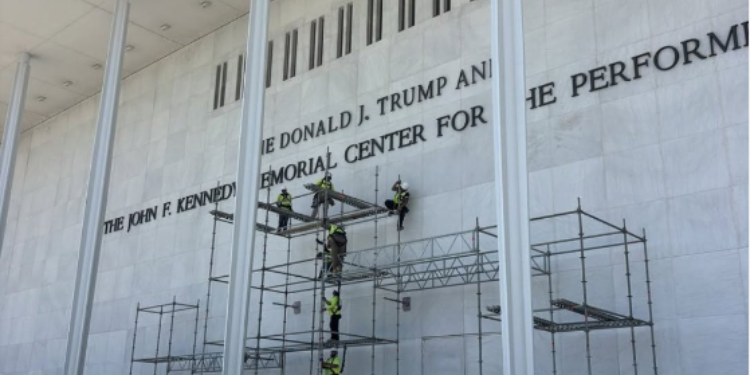
Workers removed signage bearing the president’s name from the facade last week to comply with the judge’s order. The center also updated its website, pulled trademark applications, and stripped references from emails, brochures, and other materials.
However, a tarp still covers part of the facade where the name had been, as photos from Friday showed. Beatty’s lawyers criticized the center for leaving it up. They called it a breach of fiduciary duty tied to “vanity or broken egos.”
Judge’s Key Ruling
Cooper’s ruling found that the Kennedy Center board, stacked with Trump allies, went beyond its authority by renaming the place and voting to close it.
Congress named the center after John F. Kennedy, and only Congress can change that, he wrote. The board acted “derelict” in its duties, the judge said.
Repairs can go ahead, but any major decisions need careful balancing of the center’s obligations, Cooper ruled.
Trump moved quickly on the center after taking office again, replacing board members with advisers, family, donors, and supporters.
Also Read: Trump Fumes After “Shocking” Court Blow, Threatens to Hand Kennedy Center Back to Congress
The board elected him chair. In December, it voted to rename the center the Donald J. Trump and The John F. Kennedy Memorial Center for the Performing Arts.
Legal experts and the judge said the board could not do that on its own. Trump first posted on Truth Social that he would work with Congress to hand the “failing Institution” back to them.
But as the deadline to remove his name approached, the Justice Department sought a stay from the appeals court. Appeal Judges turned it down.
Next Steps Ahead
The board’s mid-July meeting will decide the following steps. The judge wants concrete plans to keep the center active as a performing arts hub while repairs are underway.
Beatty’s side wants regular reports to make sure the injunction is followed in good faith.