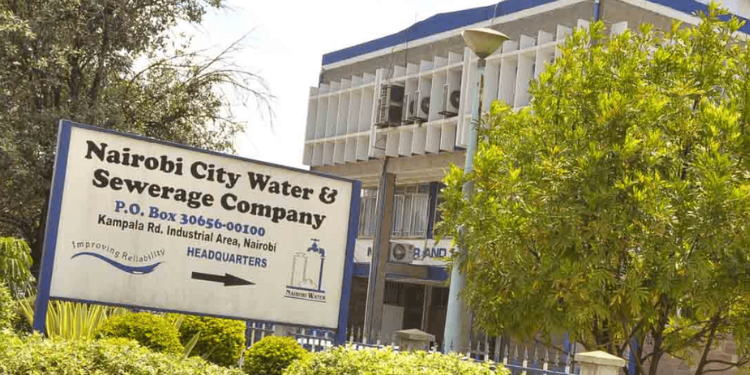
Nairobi Water and Sewerage Company has announced a temporary water supply interruption affecting several parts of the city following a leak on the NCT Raw Water Pipeline near the Kigoro Treatment Works.
In a notice on June 19, Nairobi Water said the shutdown will run from Saturday, June 20, 2026, at 6:00 a.m. to Sunday, June 21, 2026, at 6:00 a.m., lasting 24 hours.
“We wish to inform customers residing in the listed areas of a temporary water supply interruption caused by leakage on the NCT Raw Water Pipeline near Kigoro Treatment Works,” read part of the statement.
Nairobi Water Lists Areas to Be Affected by Supply Interruption
The affected areas include Westlands, Lavington, Kilimani, Upperhill, Ngong Road, Madaraka, Langata, Kibera, Karen, Uthiru, and Kawangware.
Other areas will include Kangemi, Ruai, Ngundu, Kamulu, MAVWASCO, and Oloolaiser Water Company supply zones.
Customers in the affected areas have been advised to store enough water for domestic and commercial use ahead of the interruption.
Nairobi Water said its technical teams are already working on repairs and pledged to restore supply once the works are completed.
Residents have been advised to contact Nairobi Water via its toll-free customer care line at 0800 724 366 for any inquiries or assistance. The service will be available daily from 7:30 a.m. to 9:30 p.m.
Also Read: Save the Children Pushes for Clean Water Access as Africa Marks Day of the African Child 2026
Other Counties Affected By Water Shortage
The CS told the committee that the government has rolled out several short-term measures, including water rationing, emergency pipeline repairs, reduction of non-revenue water losses, and tighter regulation of water vendors to curb price exploitation during shortages.
Also Read: EPRA Rolls Out Rules Requiring Solar Water Heating Systems In New Buildings
He further reported that the Mwache Dam project, expected to ease supply in Mombasa and Kwale counties, is now 86 percent complete, with civil works projected to conclude by September 2026 and water impoundment set for October 2026.
Once completed, the dam is expected to supply an additional 186,000 cubic metres of water per day.
Mugaa noted that the region’s combined daily water demand stands at approximately 512,000 cubic metres against a supply of about 185,000 cubic metres, leaving a deficit of 327,000 cubic metres.
He added that key bulk water sources, including Mzima Springs, Baricho Water Works, Marere Springs and Tiwi Boreholes, continue to support supply but remain insufficient.
On the long-delayed Mzima II Pipeline project, the CS said the proposal is under review by the National Treasury’s Public-Private Partnership (PPP) Directorate following submission of a privately initiated proposal, with the PPP model being considered for implementation.
Follow our WhatsApp Channel and X Account for real-time news updates.