Public servants could soon see their salaries, promotions, and career progression linked directly to their productivity and performance under new government resolutions.
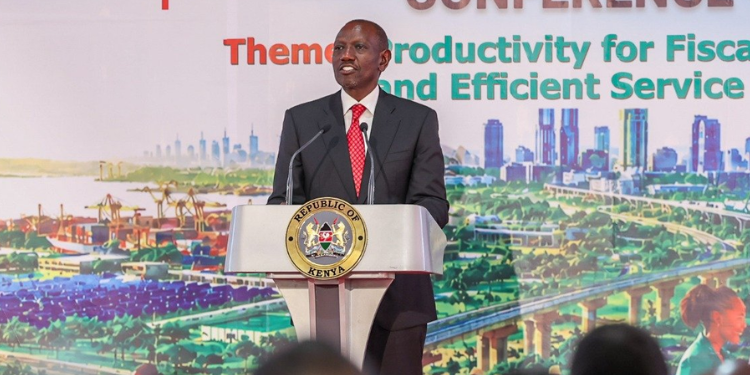
In resolutions adopted at the First National Productivity and Performance Conference held from June 17 to 19, 2026, at the Kenya School of Government, Lower Kabete Campus, in Nairobi, the government aims to progressively phase out automatic salary progression and career advancement for public servants, replacing them with a performance-based remuneration system across ministries, departments, agencies, and county governments.
Public Servants’ Pay, Promotions to Be Tied to Performance Under New Resolutions
The goal is to boost labour productivity growth from the current 1.38 percent to at least 20 percent by June 2027.
“The Conference resolves that all public sector compensation systems shall progressively transition from automatic salary progression and career progression to productivity and performance-based remuneration (Variable Pay), for Ministries, Departments and Agencies at national and county governments,” reads part of the resolutions.
“The implementation of the Framework shall be leveraged to increase annual labour productivity growth from the current 1.38 percent to at least 20 percent by June 2027.”
The implementation will be led by key state agencies, including the Salaries and Remuneration Commission (SRC), Public Service Commission (PSC), National Productivity and Competitiveness Centre (NPCC), Public Service Performance Management and Monitoring Unit (PSPMMU), the Ministry of Public Service, Human Capital Development and Special Programmes, and the Council of Governors (CoG).
Other collaborating institutions include the Head of Public Service (HOPS), the Intergovernmental Budget and Economic Council (IBEC), the State Corporations Advisory Committee (SCAC), and the Kenya School of Government (KSG).
Additional partners are the Central Organization of Trade Unions (COTU), Federation of Kenya Employers (FKE), Teachers Service Commission (TSC), National Police Service Commission (NPSC), Parliamentary Service Commission (PARLSCOM), Judicial Service Commission (JSC), and county and national public service boards.
Also Read: TSC Proposes New Salary Rates and Job Grades for Teachers
Govt Overhauls Performance Contracting
In a parallel reform, the conference also resolved to overhaul the existing performance contracting framework to strengthen productivity measurement across government.
Under Resolution 3, performance contracting will be transformed into performance and productivity contracting, with productivity indicators given significantly greater weight in evaluation systems.
The resolution states that “the Government shall re-engineer the existing Performance Contracting Framework and increase the weighting of productivity indicators from the current 3 percent to at least 50 percent by June 2028″.
The objective is to institutionalize a productivity-driven public service, accelerate labour productivity growth, and improve service delivery outcomes.
The resolution also aims to strengthen fiscal sustainability, enhance citizen satisfaction, and support Kenya’s transformation into a globally competitive economy.
Lead actors driving the performance contracting reforms include the Head of Public Service (HOPS), the Public Service Performance Management and Monitoring Unit (PSPMMU), and the National Productivity and Competitiveness Centre (NPCC), working with agencies such as the Public Service Commission, SRC, and the Kenya National Bureau of Statistics (KNBS).
Also Read: Ruto Reveals How Africa Will Drive Global Economic Growth
New Reforms to Embed Productivity in Public Service Planning and Budgeting
The conference also resolved that the Government shall, by June 2027, develop, enact, review, and operationalize all necessary policy, legislative, institutional, and administrative frameworks required to mainstream productivity as a core pillar of public sector planning, budgeting, performance management, remuneration, service delivery, and accountability systems.
At the same time, all public institutions have been directed to strengthen human capital development, organizational culture transformation, and change management interventions in order to improve compliance with constitutional values and principles. The reforms aim to raise the current performance index from 46.5 percent to at least 75 percent by June 2028.
The Conference further resolved that improving productivity must be accompanied by enhanced domestic revenue generation at both national and county levels, as well as prudent utilization of public resources. This is expected to increase the revenue-to-GDP ratio from the current 14.6 percent to 20 percent by June 2028.
In addition, the conference emphasized that the Government shall, by June 2027, develop, enact, review, and operationalize all necessary policy, legislative, institutional, and administrative frameworks required to mainstream productivity as a core pillar of public sector planning, budgeting, performance management, remuneration, service delivery, and accountability systems.
It further resolved that a permanent governance, coordination, monitoring, and financing framework shall be established to oversee the implementation of the National Productivity Reform Agenda. It stressed the need for coordinated action among national and county governments, Constitutional Commissions and Independent Offices, development partners, academia, professional bodies, the private sector, and civil society organizations.
It further resolved that a permanent governance, coordination, monitoring, and financing framework shall be established to oversee the implementation of the National Productivity Reform Agenda.