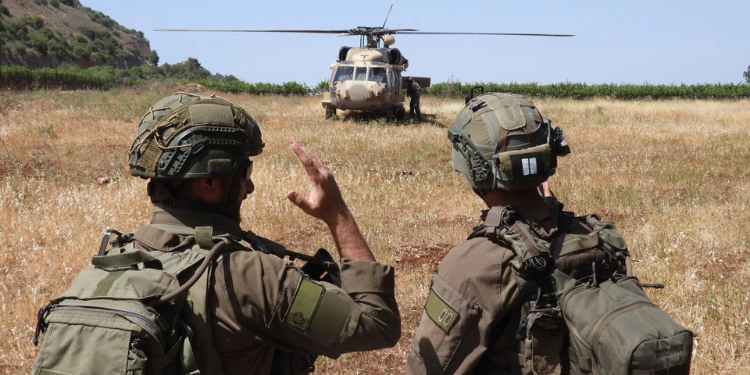
A senior Israeli minister called for overwhelming force against Lebanon on Friday, June 19, after four Israeli soldiers died in fresh fighting with Hezbollah, declaring that “All of Lebanon must burn” even as the United States and Iran tried to hold together a shaky ceasefire.
Itamar Ben-Gvir, Israel’s national security minister and leader of the far-right Jewish Power party, made the remarks on X hours after the deaths.
Ben-Gvir Says ‘All of Lebanon Must Burn’
The clashes broke out overnight despite a U.S.- and Iran-backed ceasefire aimed at stopping the cross-border fighting.
“With all due respect to the Americans, Israel must make it clear to the entire world that the blood of our sons and the security of our citizens are not forfeit,” Ben-Gvir wrote.
“All of Lebanon must burn. Our supreme duty is to protect the citizens of Israel and the soldiers of the IDF, and this commitment takes precedence over every other consideration.”
Ceasefire Faces Immediate Test After Border Violence
Ben-Gvir’s comments came as a new ceasefire, mediated by Qatar, the U.S., and Iran, was reportedly set to take effect at 4 p.m. local time Friday.
A source familiar with the talks told NewsNation that Israel, Hezbollah, and Lebanon had reached the agreement.
The latest violence has complicated efforts to end months of fighting along the Israel-Lebanon border.
President Trump had publicly warned Prime Minister Benjamin Netanyahu to show restraint in any retaliation against Hezbollah attacks.
How the Deaths of Four IDF Soldiers Threatened the Truce
A first round of U.S.-Iran talks in Switzerland over a major nuclear agreement was postponed after the overnight fighting.
Ben-Gvir, who holds a key spot in Netanyahu’s narrow coalition, has repeatedly pushed back against outside pressure.
Earlier this week, he wrote that “Trump’s agreement does not bind us. Israel is not subject to the United States, and we are an independent and sovereign nation!”
Vice President JD Vance offered a sharp response to Ben-Gvir’s earlier criticism of the U.S. memorandum of understanding with Iran, which included the Lebanon ceasefire.
“If I was in the Cabinet of the Israeli government, I might not be attacking the only powerful ally that I have anywhere left in the entire world,” Vance said at a White House press conference.
He also noted that American weapons and tax dollars have supported much of Israel’s recent defense.
Also Read: JD Vance Warns Israeli Critics Over Trump Iran Deal, Says Israel Depends on U.S. Weapons
Ben-Gvir sits on the far-right edge of Israeli politics but has gained real power in the current government. In March, his allies helped pass a law allowing the death penalty for Palestinians convicted of murdering Israelis.
He has multiple past convictions related to support for a terrorist organization, and the Biden administration once called his comments about Palestinians “inflammatory and irresponsible.”
The fighting that killed the four Israeli soldiers broke out despite the existing ceasefire terms.
Senior U.S. officials have said the agreement does not require Israel to pull forces out of southern Lebanon.
Tensions have simmered for months along the border, with Hezbollah firing rockets into Israel and Israeli forces striking back at the Iranian-backed group.
The latest deaths appear to have triggered a new round of escalation just as diplomatic efforts were gaining ground.
Also Read: JD Vance Cancels Switzerland Trip for Iran Nuclear Talks, White House Confirms
While Netanyahu’s office has not directly echoed the call to “burn” Lebanon, the prime minister faces pressure from hardliners who want a much tougher response to any attacks on Israeli troops.
The fresh violence also puts strain on the wider U.S.-Iran talks. Iran has made a Lebanon ceasefire a key condition for progress on its nuclear program.
U.S.-Iran Talks Delayed as Regional Tensions Rise
With the meeting in Switzerland now delayed, both sides are waiting to see whether the new 4 p.m. truce holds.
Israeli officials have not released many details about the overnight incident that killed the soldiers. The IDF said only that the troops died during operational activity near the border.
Meanwhile, much attention has turned to whether the Qatar-mediated ceasefire announced Friday will actually stop the shooting.
U.S. officials led by President Trump have been urging all parties to honor the pause, even as Ben-Gvir and other hardliners insist Israel must put its own security first.