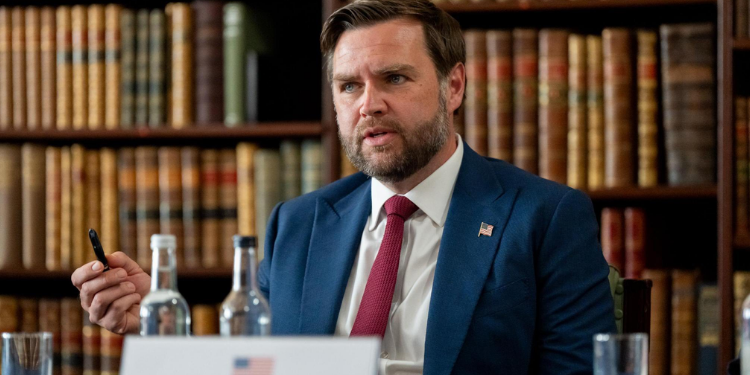
Vice President JD Vance sharply criticized Israeli officials who oppose the new U.S.-brokered Iran deal, warning them not to attack President Donald Trump and reminding them that much of Israel’s defense rests on American weapons and taxpayer money.
Vance made the comments on Thursday, June 18, at a White House news briefing while defending the agreement reached this week to end the conflict with Iran.
JD Vance Defends Trump Iran Deal Amid Israeli Backlash
The deal has drawn fire from critics in both the U.S. and Israel for not doing enough to limit Iran’s missile program or provide a clear way to dismantle its nuclear sites. It also limits Israel’s actions against Hezbollah militants in Lebanon.
“Donald J. Trump is the only head of state in the entire world who is sympathetic to the nation of Israel at this moment in time,” Vance told reporters.
“If I was in the cabinet of the Israeli government, I might not be attacking the only powerful ally that I have anywhere left in the entire world.”
He pointed directly to Israel’s reliance on U.S. support by reminding Benjamin Netanyahu’s state that most of the weapons they use are paid for by Americans’ taxes.
“Two-thirds of the defensive weapons that have protected Israel have been built by American hands and paid for by American tax dollars,” Vance said.
According to reports, the United States gives Israel about $4 billion in military aid each year, and the two countries are working on a new aid package.
Vance added a warning that Israel should know that Trump is not their enemy, but their only powerful ally.
“The problem for Israel is not Donald J. Trump and anybody in Israel who thinks their biggest problem is the president of the United States needs to wake up and smell the reality of the situation that country is in.”
Israeli Critics Raise Concerns Over Missile and Nuclear Limits
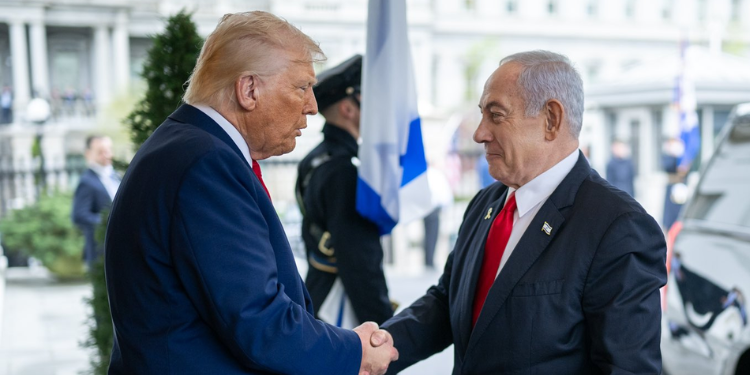
The remarks come after reports that Israeli Prime Minister Benjamin Netanyahu was upset with the agreement.
Reuters reports that Israeli officials said the deal falls short on key security issues involving Iran’s nuclear program and ballistic missiles. That view runs across much of Israel’s leadership, the report added.
Tensions between Trump and Israel have grown in recent months. The two countries worked together to strike Iran earlier, but the war disrupted global oil markets and led Tehran to close the Strait of Hormuz, a vital shipping route.
At the Group of Seven summit in France on Wednesday, Trump suggested Netanyahu take a “softer touch” in the fight against Hezbollah in Lebanon.
In his first public comments since the deal, Netanyahu said Israel values its ties with the U.S. but plans to keep forces in southern Lebanon for as long as needed for security.
“This requires maintaining the security strip in southern Lebanon; it requires that we not leave there as long as Israel’s security needs require it,” Netanyahu said.
Also Read: No Israel, No America? Marjorie Taylor Greene Blasts Mike Huckabee Over Biblical Israel Comments
Israel also released a map Thursday showing an expanded military control area in southern Lebanon and left open the possibility of strikes beyond that zone.
Vance also pushed back against far-right members of Netanyahu’s coalition in a New York Times interview published earlier Thursday. He singled out National Security Minister Itamar Ben-Gvir and Finance Minister Bezalel Smotrich.
“What is your exact proposal? You’re a country of 9 million people. You can’t just kill your way out of solving every single national security problem that you have,” Vance said in the interview.
He described the backlash in Israel as odd. “I find this whole freakout in Israel a little bit odd because I think that it comes from a place of mistrust, and I think that America has earned the trust of that region of the world,” he said.
Concerns Over Limits on Strikes Against Hezbollah and Iran
Trump weighed in later on social media, urging all sides in the Middle East to stick with negotiations. “We expect a complete Ceasefire on all fronts, including Lebanon, Hezbollah, and Israel,” he posted.
The Iran deal marks a shift after months of joint U.S.-Israeli military action against Tehran. Supporters say the deal ends the fighting and opens the door to major talks.
Trump lauded it after gas prices began to fall, but critics argue it leaves Israel exposed and lets Iran keep dangerous capabilities.