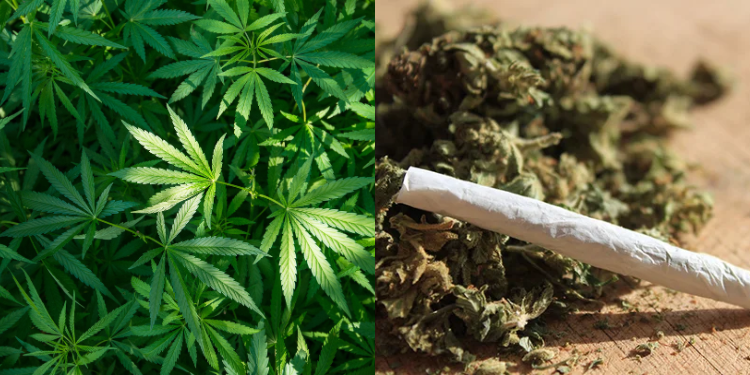
The Supreme Court ruled Thursday unanimously that a federal law barring marijuana users from owning guns violates the Second Amendment when applied to individuals who are not considered dangerous.
The decision sided with Ali Danial Hemani, a Texas man charged under a provision of the 1968 Gun Control Act that prohibits firearm possession by anyone who uses illegal drugs.
Justice Neil Gorsuch wrote the opinion, limiting the government’s ability to automatically disarm drug users without evidence that they pose a threat.
Hemani faced no other criminal charges and was not accused of using a weapon while impaired.
“We do not address efforts to ban addicts, or those presently intoxicated, from possessing a firearm,” Gorsuch wrote. Prosecutors can still bring charges if they have evidence that a marijuana user poses a specific danger.
Ruling Expands Supreme Court’s Gun Rights Approach
The ruling marks another expansion of gun rights under the Court’s post-2022 legal framework established in New York State Rifle & Pistol Association v. Bruen.
In that decision, the justices ruled that firearm regulations must align with the nation’s historical tradition of gun laws.
Also Read: Republicans Angered as Marijuana Reclassification Under Trump Sparks Political Backlash
Since then, the Court has upheld some restrictions, including protections for domestic violence victims and regulations on ghost guns, while striking down others such as the ban on bump stocks.
Federal Marijuana Gun Ban Faces New Limits
The 1968 law’s drug user provision has been used in thousands of cases, often alongside other criminal charges. It gained national attention during the prosecution of Hunter Biden, who was convicted in 2024 of buying a gun while addicted to cocaine. He was later pardoned by his father, former President Joe Biden.
The Donald Trump administration defended the law in Hemani’s case despite its broader support for Second Amendment protections.
Recreational marijuana remains illegal under federal law, although the administration reclassified medical marijuana as a less dangerous drug in April. About half of U.S. states have legalized recreational cannabis, and millions of Americans use marijuana regularly.
Justice Gorsuch on Cannabis Landscape
Gorsuch pointed to the changing reality around marijuana use, arguing that the government’s position had become harder to defend as cannabis use has expanded nationwide.
Also Read: Trump’s Administration Moves Medical Marijuana to Lower-Risk Drug Category
“All of which leaves it awkwardly positioned to suggest that the millions of Americans who now regularly use marijuana are categorically and unusually dangerous,” Gorsuch wrote.
The case attracted support from groups that rarely align politically. The American Civil Liberties Union, National Rifle Association, and cannabis advocacy group NORML backed Hemani’s challenge.
Gun safety organizations, including Everytown for Gun Safety, opposed the case.
Public Safety and Gun Access
ACLU legal director Cecillia Wang said the ruling rejected broad restrictions based on assumptions about marijuana users.
“Nearly half of Americans have reported using marijuana at some point in their lives,” she said, arguing that the government cannot criminalize large groups of people based on assumptions that they are dangerous.
Kevin Sabet, CEO of Smart Approaches to Marijuana, criticized the decision, saying public safety concerns were overlooked.
“Public health and safety are the collateral damage in this decision,” he said.