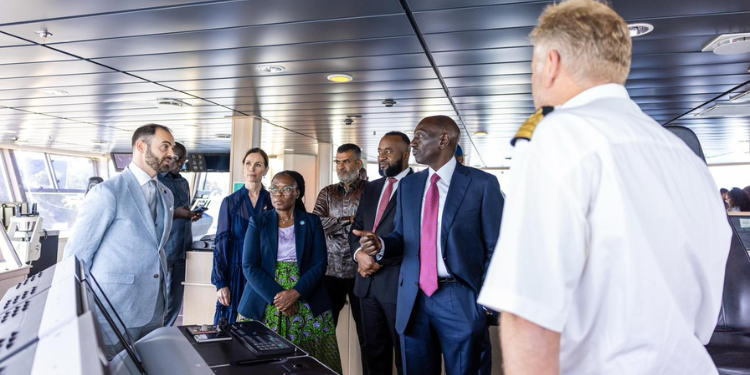
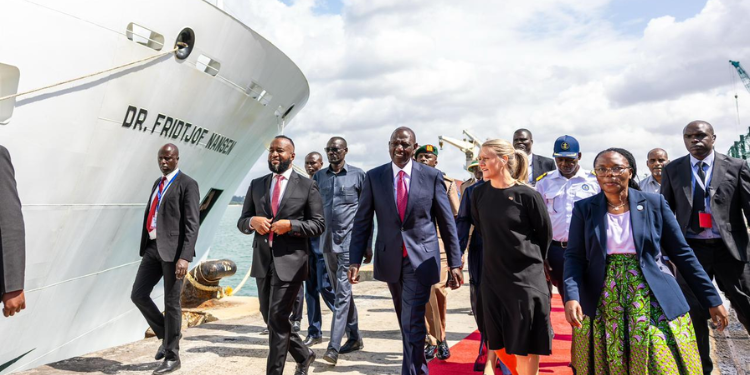
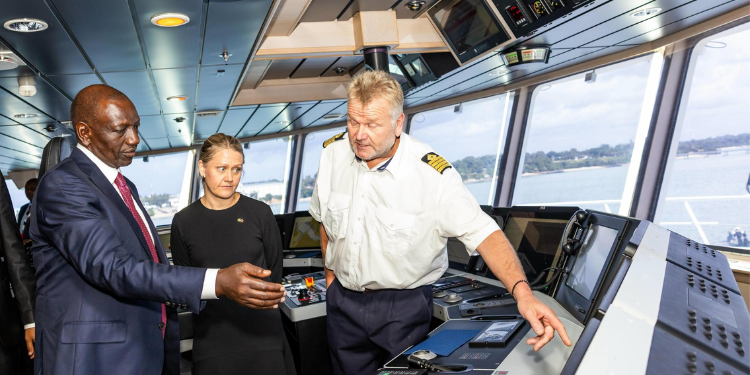
On June 18, President William Ruto toured the Dr Fridtjof Nansen Research Vessel, where he was slated to interact with stakeholders involved in ocean governance and maritime research programmes.
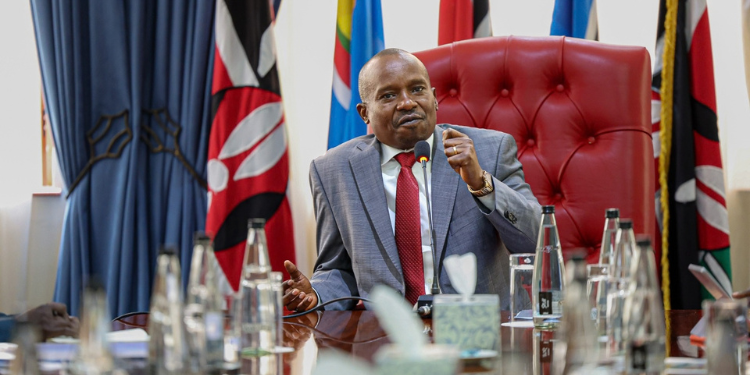
The visit took place on the sidelines of the ongoing African Ocean Governance Ministerial meeting in Mombasa, which has convened regional leaders and development partners to enhance cooperation on the sustainable management of marine resources.
What is the History of Dr Fridtjof Nansen Research Vessel
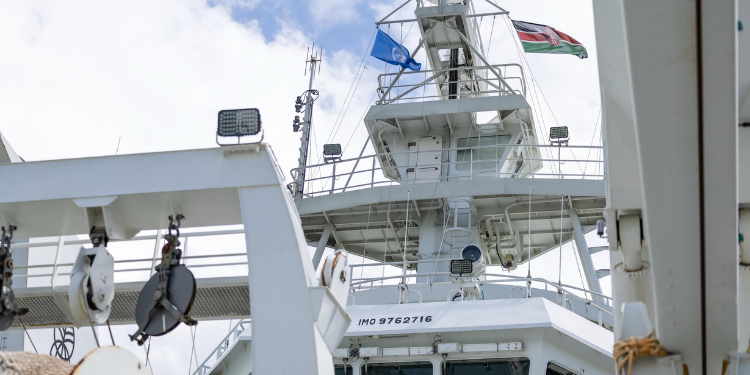
The Dr Fridtjof Nansen Research Vessel is one of the world’s most advanced ships dedicated to marine and fisheries research.
Named after renowned Norwegian scientist, explorer and humanitarian Fridtjof Nansen, the vessel serves as a key platform for international cooperation in ocean science and sustainable resource management.
The ship is at the heart of the EAF-Nansen Programme, a partnership that supports developing countries in improving the management of marine resources through scientific research.
The current Dr Fridtjof Nansen is the third vessel to carry the name. The first ship was launched in 1974 and operated for nearly two decades, while the second entered service in 1993 and traveled more than 605,000 nautical miles before being retired in 2016.
The present vessel began operations in 2017, replacing its predecessor and continuing a research legacy that dates to 1975.
Also Read: Inside Luxurious Norwegian Dawn Ship Ruto Toured
Design and Construction
The vessel was designed by Norwegian ship design company Skipsteknisk and built by Spanish shipyard Astilleros Gondan.
Construction began after the design contract was awarded in 2013, with the vessel delivered in January 2017 and officially launched later that year.
The Dr Fridtjof Nansen is equipped with state-of-the-art scientific technology designed to study marine ecosystems in detail.
Measuring 74.5 meters in length and 17.4 meters in breadth, the vessel was constructed to meet stringent international standards that minimize underwater noise, ensuring accurate scientific observations.
Also Read: Mombasa and Lamu Ports to Receive 53 Vessels in Major Shipping Surge
On board are several specialized laboratories, including facilities for fish and plankton analysis, oceanographic research, climate studies, seawater testing, and photographic documentation.
The vessel also houses a large operations center, offices, a library and dedicated scientific workspaces.
Its scientific equipment includes advanced water-sampling systems, weather-monitoring instruments, acoustic sensors, and sonar technologies capable of mapping the ocean floor and tracking marine life at various depths.
These tools allow researchers to assess fish stocks, monitor ocean conditions, and study marine biodiversity with a high degree of precision.
The vessel also features sophisticated echo-sounding systems, acoustic current profilers and high-definition underwater cameras that support real-time observation and data collection during research missions.
Follow our WhatsApp Channel and X Account for real-time news updates.