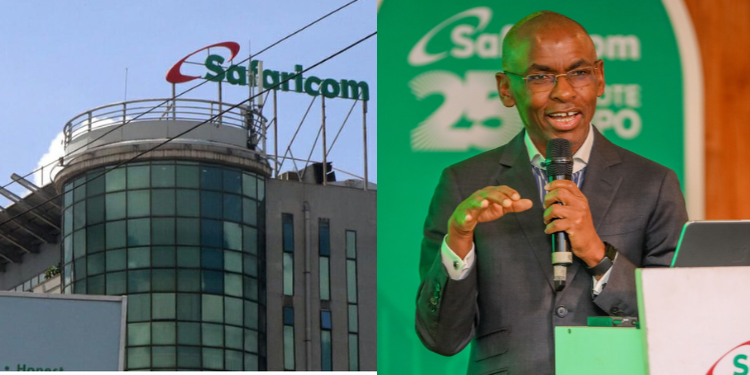
The High Court in Nairobi has dismissed applications seeking to disqualify lawyers representing the Attorney General and Safaricom PLC in a petition challenging the government’s sale of a 15% stake in Safaricom to Vodacom Group.
In a ruling delivered on June 9, 2026, the court held that the applicants had not established any valid legal basis to remove Senior Counsel John Ohaga and advocate Andrew Mukite Musangi from the proceedings, and dismissed all three applications for lack of merit.
“In the end, we find that the Applicants have not established a case for the disqualification of or barring or removal or restraining of Mr. John M. Ohaga SC, and Mr. Andrew Mukite Musangi as advocates representing the 5th and 6th Respondents in the present proceedings. Consequently, the three Applications are dismissed for want of merit,” the ruling read.
The court’s decision now allows the legal teams to continue representing their clients in the case for public assets, corporate governance, and regulatory oversight in Kenya’s telecommunications.
Dispute Over Alleged Conflicts of Interest
Petitioners raised concerns about whether the continued participation of lawyers compromised the integrity of the proceedings.
Also Read: Court Delivers Landmark Ruling on Employees Rejecting Job Transfers
The 1st and 2nd petitioners argued that Senior Counsel John Ohaga should be barred from representing the Attorney General due to his position as Chairman of the M-Pesa Foundation, an entity linked to Safaricom PLC, and his firm’s historical professional engagements with the Safaricom.
They further claimed that Advocate Andrew Mukite should not act for Safaricom PLC because of his role as non-executive Chairman of the Central Bank of Kenya (CBK) Board, arguing that such dual responsibilities created an appearance of conflict in a matter involving a regulated financial ecosystem.
However, the court found that the applicants failed to demonstrate any legal conflict that would justify disqualification.
The court stated that allegations of conflict must be supported by clear evidence showing how continued representation would undermine fairness in the proceedings.
The court noted that Safaricom PLC and the M-Pesa Foundation are separate legal entities and, therefore, fiduciary obligations owed to one do not automatically extend to the other.
On Andrew Mukite’s role, the court held that his position as non-executive Chairman of the CBK Board does not render him a State Officer under Article 260 of the Constitution. The court further stated that the CBK Board’s role is supervisory and policy-oriented.
“This Court respects the parties’ autonomy in the choice of legal representation and will not interfere where there is no proof of apparent and actual conflict. We hold the view that as long as disclosure is made and no demonstrable prejudice arises, such representation remains lawful and acceptable,” read part of the ruling.
Also Read: Ndindi Nyoro Explains How Ruto Govt Could Have Sold Safaricom Stake for Ksh2.5 Trillion
Attorney General’s Right to External Counsel
The ruling also addressed arguments citing a prior decision from the Nakuru High Court, which the petitioners had cited to support restrictions on public institutions engaging external lawyers.
High court clarified that the earlier ruling was intended to prevent unnecessary public expenditure by certain state bodies and did not limit the constitutional mandate of the Attorney General.
It reaffirmed that the Attorney General retains the authority to engage external counsel where necessary in the discharge of legal responsibilities.
In dismissing the applications, the court made no order as to costs, noting that the advocates whose removal was sought were not parties to the petition.
Follow our WhatsApp Channel and X Account for real-time news updates.